One Bullet Hole
The physical evidence problem the prosecution doesn't want you to think about
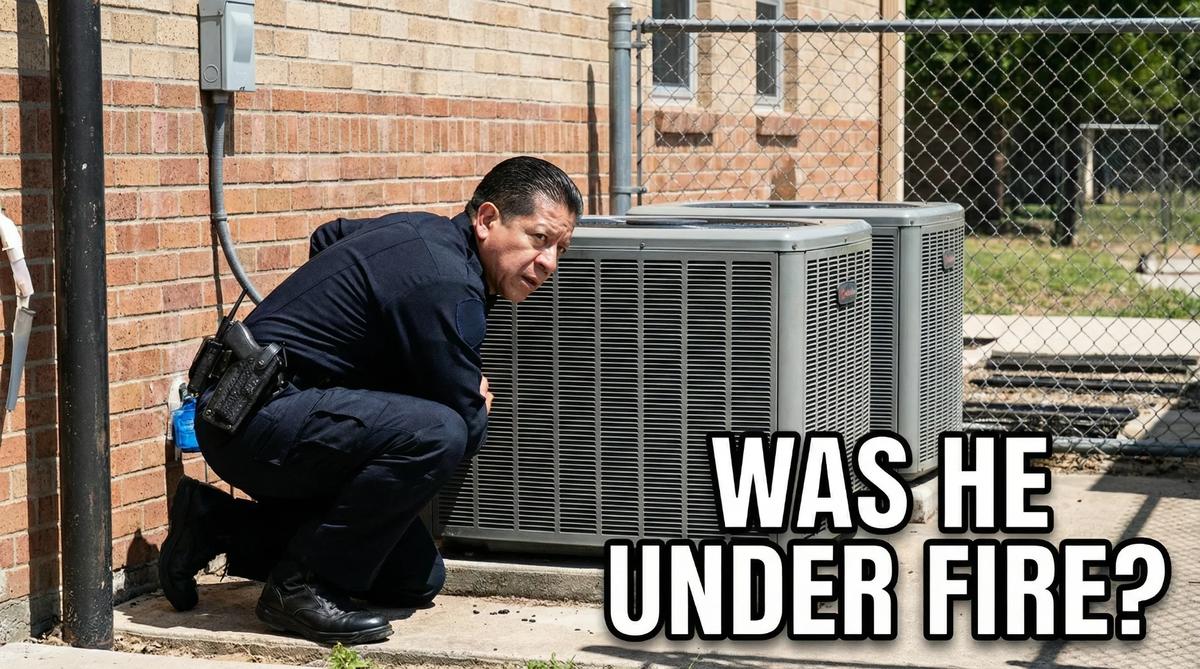
Today a Texas Ranger took the stand and handed the defense a gift. He probably didn't mean to. The prosecution certainly didn't want him to. But that's what happens when physical evidence tells a different story than the one you're trying to sell.
Lieutenant Brent Bina, a 27-year law enforcement veteran who specializes in crime scene investigation, testified about a bullet defect he found on Room 24 at Robb Elementary. Room 24 is on the south side of the campus. That matters because Adrian Gonzales was positioned on the south side of the building. The prosecution's theory requires you to believe the shooter was firing in Gonzales's direction, that Gonzales knew he was under fire, and that despite knowing this, he failed to engage.
Here's the problem: Ranger Bina searched the entire south side of that school. He and Ranger Scott Swick saw shell casings flagged in the area, indicating shots may have been fired toward Room 24. They went looking for bullet impacts. Buildings to hit. Evidence of fire in that direction.
They found one.
"There was one."
"One defect. So if somebody took the position that this murderer fired multiple rounds to the south side of the building, it would be fair to say there should be way more than one defect."
"All I found was one. So all I can say was there was at least one."
The Math That Doesn't Add Up
Think about this for a second. The prosecution wants you to believe the shooter was firing at Gonzales. Not one shot. Multiple shots. That's their theory. That's why Gonzales should have known where the shooter was. That's why he should have engaged.
But bullets don't disappear. If someone fires multiple rounds in a direction, those rounds go somewhere. They hit things. They leave marks. They create what the Rangers call "defects" in structures.
Ranger Bina searched that entire area. His job was to find exactly this kind of evidence. And he found one defect. One. High on the building near the roofline. Not at a level consistent with targeting someone on the ground.
Defense attorney Nico LaHood drove this point home over and over. If the shooter fired multiple shots at someone on the south side, where are the bullet holes? Where are the defects on the buildings in that direction? Where is the physical evidence that supports this theory?
The answer Ranger Bina had to give, because he's an honest witness, was devastating: "All I can tell you is there was one. I didn't see any more than one."
The Accidental Discharge Theory
LaHood offered an alternative explanation that Bina couldn't rule out. What if that single defect wasn't intentional fire at all? What if it was accidental discharge?
The shooter was moving. He was firing at the west side of the building into classroom windows. He had what the testimony suggests was a modified trigger system. If he had poor trigger discipline, if he was swinging the rifle while moving toward his target, a round could discharge accidentally. It would go high. It would go in a random direction. It would leave exactly what they found: a single defect, high on a building, nowhere near any potential human target.
Ranger Bina, to his credit, admitted he couldn't distinguish between intentional fire and accidental discharge based on trajectory analysis alone. He also admitted trajectory analysis is "not exact science." It's, in his words, a "ballpark estimate."
That's not the kind of language that proves guilt beyond a reasonable doubt.
What The Shell Casings Tell Us
We've heard from multiple witnesses now about where the shell casings were found. They were on the west side of the building, along the edge of the parking lot, leading up toward the door the shooter entered. They were not found on the south side. No casings south of the building at all.
Shell casings eject to the right and slightly behind the shooter. If casings are found in a line going up the west side of the building, the shooter was moving up the west side, firing at the west side. Not firing south. Not firing at Gonzales.
The FBI agent who testified earlier confirmed this. No casings found to the south. The defense has established this through multiple witnesses now. The physical evidence consistently points to a shooter moving up the west side of the building, firing into classroom windows, not firing toward the south where Gonzales was positioned.
The Echo Problem
Here's what makes this even more significant. We know from the defense opening statement that multiple officers on scene thought they were being shot at. Officer Mendula on the west side thought he was under fire. Sergeant Coronado thought he was under fire. Melody Flores, the teacher who was with Gonzales, thought she was being shot at.
But there's no physical evidence that any of them actually were.
Gunfire echoes. It bounces off buildings. It creates confusion about where shots are coming from. This isn't speculation. This is established fact that the defense has been building toward throughout this trial.
So when the prosecution says Gonzales should have known where the shooter was because he was being shot at, the physical evidence says: probably not. One bullet defect, high on a building, possibly accidental discharge, with no shell casings anywhere to the south. That's not "being shot at." That's confusion in a chaotic scene where everyone thought they were being shot at and the physical evidence suggests none of them were.
Why This Matters For The Charges
Adrian Gonzales is charged with child endangerment for allegedly failing to engage, distract, or delay the shooter. The prosecution has to prove he had the opportunity and ability to do this. They have to prove he knew where the shooter was. They have to prove his failure to act placed children in danger.
If Gonzales didn't know where the shooter was because the shooter wasn't actually firing in his direction, that's a problem for the state. If the perception of being under fire was false, created by echoes and chaos rather than actual incoming rounds, that's reasonable doubt.
The defense theory is that Gonzales was on the opposite side of the building, never saw the shooter, and was confused about what was happening. Today's testimony supports that theory. The physical evidence supports that theory. One bullet defect doesn't prove Gonzales was being targeted. It might prove exactly the opposite.
▶️ WATCH THE TESTIMONY Was Gonzales Actually Under Fire? Crime Scene Evidence Examined | Uvalde TrialThe Burden Hasn't Shifted
I want to be clear about something. Adrian Gonzales is presumed innocent. He doesn't have to prove he wasn't under fire. He doesn't have to prove the single defect was accidental discharge. He doesn't have to prove anything.
The state has to prove, beyond a reasonable doubt, that he had the opportunity to engage and failed to do so. They have to prove he knew where the shooter was. They have to prove his inaction placed children in imminent danger.
One bullet hole high on a building doesn't do that. Shell casings only on the west side doesn't do that. A Texas Ranger admitting he can't distinguish intentional fire from accidental discharge doesn't do that.
The prosecution has a physical evidence problem. And after today, the jury knows it.
What I'm Watching For
The prosecution needs to answer this. They need witnesses who can establish what Gonzales knew and when he knew it. They need something other than "he should have known" because "should have known" isn't proof beyond a reasonable doubt.
The defense, meanwhile, has been methodical. They've attacked the precision of shell casing analysis. They've established the chaos on scene. They've shown that physical evidence doesn't support claims of shots fired toward the south. Now they've shown that the one piece of evidence that might support it is a single defect that could easily be accidental discharge.
This is what reasonable doubt looks like. Not a smoking gun for innocence. Just enough questions, enough gaps, enough "I can't say for certain" from prosecution witnesses to make a juror pause.
The prosecution put a Texas Ranger on the stand to establish physical evidence of the shooter's fire direction. That Ranger ended up admitting the evidence shows one defect, high on a building, possibly accidental, with no corroborating defects despite a thorough search.
Sometimes witnesses don't say what you need them to say. Today was one of those days for the prosecution.
Watch the system. Question everything.
— Justice
Latest from the Desk
Want More?
Subscribe to Justice Is A Process on YouTube for live trial coverage, No Breaks editions, and breaking news as it happens.
🔴 Subscribe on YouTube111,000+ subscribers watching the system with us
Join the Discussion