The South Side Problem
How defense demolished the prosecution's crime scene theory in the Uvalde officer trial
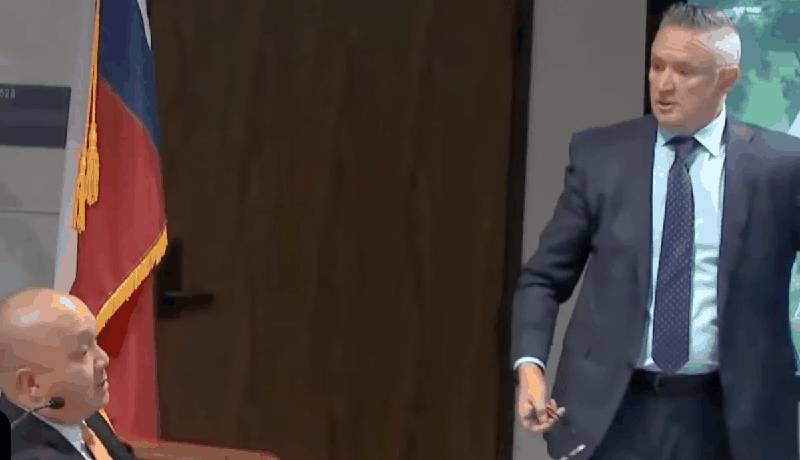
Day 2 of the Adrian Gonzales trial should have been a straightforward evidence day for the prosecution. FBI crime scene photos. Shell casing locations. The physical record of where the shooter fired from before entering Robb Elementary.
Instead, it became a masterclass in reasonable doubt.
The prosecution has a problem. They need to prove that Adrian Gonzales, the first officer on scene, failed to engage a shooter he should have engaged. That requires proving where the shooter was and when. And today, the defense systematically dismantled any certainty about that.
The Struck Witness
It started this morning with Stephanie Hail, a third grade teacher who survived that day by getting her students inside before the lockdown alert. The prosecution called her to establish that she saw the shooter on the south side of the building. The same south side where Gonzales was positioned.
There was just one problem. Her original statement to the Texas Rangers, given four days after the shooting when memories were freshest, never mentioned seeing a shooter. Never mentioned seeing anyone in black. Never mentioned dirt clouds being kicked up by gunfire. She told the ranger she learned about the active shooter from her husband's text message while she was already sheltering in her classroom.
The first time she ever mentioned seeing the shooter on the south side? December 2025. During trial preparation with prosecutors. Three and a half years later.
Defense attorney Nico LaHood played her original statement for the jury. Then he called the prosecution's own investigator to the stand and established that when Hail suddenly "remembered" seeing the shooter, the prosecution never asked a single follow-up question. Never asked where exactly. Never asked to reconcile this new memory with her contemporaneous statement.
And they never told the defense.
Before she left the stand, the judge addressed her directly. He told her she did absolutely nothing wrong. He explained that traumatic memories change over time, sharing his own experience of being hit by a drunk driver and how each time he remembers it, the details shift slightly. "Nothing about this is on you," he said.
That's the thing about trauma and memory. What you remember years later isn't necessarily what happened. The prosecution tried to use a memory that appeared three years after the fact to establish where the shooter was. The defense caught them hiding that this was new information. Brady violation. Testimony struck.
The South Side Gets Worse
The next witness, Amy Franco Marin, testified about seeing the shooter "firing towards the south side" of the building. On cross, the defense established something critical: from where she was looking through a door window, everything to the left of the east entrance appeared to be "towards the south side." The prosecution's theory about shots fired at the south side was based on perception through a narrow window, not actual observation of where bullets landed.
Then came FBI Special Agent Huy Nguyen. Twenty-eight years of crime scene experience. Acting team leader for the Evidence Response Team that processed the exterior of Robb Elementary. He walked the jury through 65 photographs documenting 21 rifle casings, an empty magazine, a backpack full of ammunition.
On cross, defense attorney Gary Hillier went to work.
The "Educated Guess"
Hillier established the fundamentals first. Shell casings on concrete can bounce, roll, and spin. The direction a casing lands depends on how the gun is held, the ammunition used, the weapon's individual characteristics. Without test-firing the actual weapon in controlled conditions, which wasn't done, you can't know precisely how far casings traveled from the shooter's position.
Then he asked the question that matters: How specific can you be about a shooter's location based on where casings end up?
"It's kind of like an educated guess," Agent Nguyen admitted.
An educated guess. The FBI's crime scene analysis of where the shooter was firing from is an educated guess.
But the defense wasn't done. Hillier asked about the south side of the building. The same south side where the prosecution claims shots were fired. The same south side where their struck witness claimed to see the shooter. The same south side where Gonzales was positioned.
Did the FBI find any shell casings south of the building?
No.
None on the east side either. Despite searching with eight agents doing line searches, despite going over the area multiple times, they found zero evidence of shots being fired from the south.
374 Officers and the Contamination Problem
Then came the chaos factor. How many officers were on scene at Robb Elementary that day?
"374 officers there at some point," the agent confirmed. "It was kind of crazy. I've never seen that many before at one time."
And what does foot traffic do to shell casing locations?
Casings can get kicked. They can get stuck in boots. They can get run over by tires. By the time the FBI arrived to process the scene, hundreds of officers had already walked through it.
The defense's point landed: You're asking this jury to convict a man based on crime scene reconstruction that the FBI itself calls an "educated guess," from a scene contaminated by 374 officers before evidence collection even began, where no physical evidence supports the prosecution's theory about shots being fired from the south.
What This Means
The prosecution's burden in this case is to prove beyond a reasonable doubt that Adrian Gonzales had the ability and opportunity to engage the shooter but failed to do so. That requires proving where the shooter was and when.
After today, here's what they have:
A struck witness whose testimony about seeing the shooter on the south side is inadmissible.
A witness whose perception of "firing towards the south" was established to be ambiguous based on her viewing angle.
An FBI agent who admits casing locations are "educated guesses."
No shell casings found on the south side of the building.
A crime scene processed after 374 officers had already walked through it.
Reconstructing exactly where the shooter was standing at any given moment? The defense has made a compelling case that it's effectively impossible. And if you can't prove where the shooter was, how can you prove what Gonzales should have done differently?
▶️ WATCH NOW No Evidence of Shots Fired South of Building | Gonzales Murder TrialThis is Day 2. The prosecution is still presenting their case. There's more testimony to come. But the pattern is becoming clear: every witness called to establish the shooter's location is either getting struck, getting their testimony limited on cross, or outright admitting the limitations of their evidence.
The state needs to prove their case beyond a reasonable doubt. After today, reasonable doubt is exactly what the defense is building.
Latest from the Desk
Want More?
Subscribe to Justice Is A Process on YouTube for live trial coverage, No Breaks editions, and breaking news as it happens.
🔴 Subscribe on YouTube111,000+ subscribers watching the system with us
Watch the system. Question everything.
— Justice
Join the Discussion