What They Never Tested
The fingerprint expert revealed a gap in the Banfield investigation that should trouble everyone watching
The prosecution's entire theory in Virginia v. Brendan Banfield rests on one word: catfishing. They say Brendan used his wife Christine's devices to create fake profiles, lure Joe Ryan to the house, and orchestrate the murders of both his wife and Ryan. Two people are dead. One man's freedom hangs on whether this theory holds.
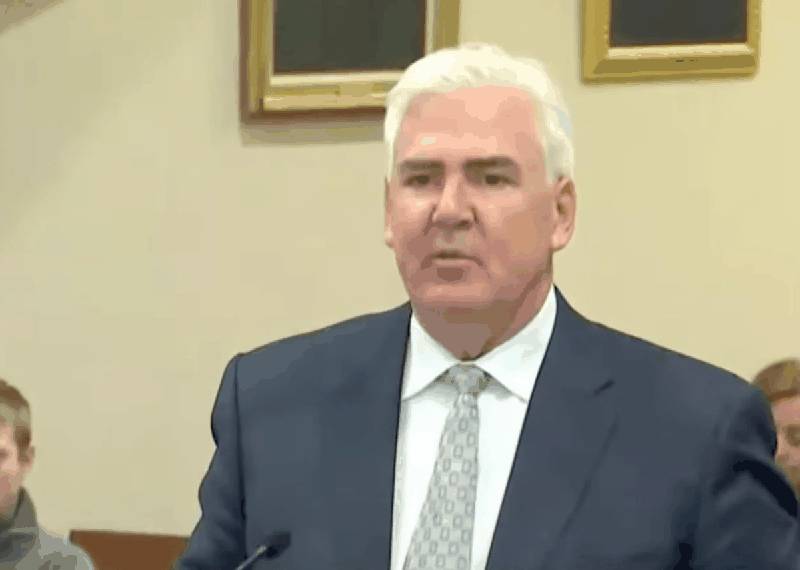
So when the fingerprint expert took the stand today, defense attorney John Carroll asked a question that cut straight to the bone: Did anyone ask you to test the cell phones?
No.
The laptops?
No.
The gun safe?
No.
Douglas Gudakunst has been a fingerprint specialist for nearly eight years. He's examined hundreds of thousands of prints. He compared latent prints from the murder weapon to known prints from all four people involved: Christine Banfield, Juliana Perez Magalhaes, Joe Ryan, and Brendan Banfield. His conclusions on the knife? Inconclusive on both Ryan and Banfield. Excluded on both women.
But that's not what made today's testimony significant. What made it significant is what he was never asked to do.
The Digital Devices
Think about what the prosecution is asking this jury to believe. Brendan Banfield allegedly created accounts on FetLife using Christine's email. He allegedly communicated with Joe Ryan through Telegram. He allegedly orchestrated this entire scheme through digital means.
The phones and laptops are the crime scene for catfishing. They're where the prosecution says the plot was hatched, the messages were sent, the trap was set. And nobody asked the fingerprint expert to examine them.
Carroll didn't let this slide. He walked Gudakunst through each category of evidence. Cell phones? Never submitted. Laptops? Never submitted. Gun safe? Never submitted. The answers came quick because there was nothing to explain. The requests simply never came.
The Abandoned Investigation
But Carroll wasn't done. He asked about a letter that was submitted for fingerprint analysis. Gudakunst confirmed he found friction ridge marks on it. Good news for any investigation, right? You've got prints, you can potentially identify who touched the document.
Except he never got to finish the analysis. He needed known exemplars to compare against. He requested them. Multiple times. He was never scheduled to collect them. The investigation just... stopped.
On redirect, the prosecution tried to shift blame, suggesting the exemplars were supposed to come from defense counsel's office. Maybe that's true. But it doesn't explain why an investigation with friction ridge marks just sat there incomplete.
What This Means
I'm not telling you Brendan Banfield is innocent. I'm not telling you he's guilty. That's for the jury to decide, and they're going to hear a lot more evidence before they do.
What I'm telling you is that when the state builds a case on a theory, they need to support that theory with evidence. The catfishing theory requires proving Brendan, not Christine, was controlling those devices. Fingerprint evidence could have helped establish that. Or it could have contradicted it. Either way, the jury would have more information.
Instead, they have a gap. And gaps matter in criminal trials.
My father spent his career asking questions the system didn't want asked. He taught me that an investigation isn't just about what they found. It's about what they chose to look for, and what they didn't.
Today, we learned what Fairfax County Police didn't look for. And if I were on that jury, I'd want to know why.
▶️ WATCH NOW Fingerprint Expert Reveals Police Never Tested Phones or LaptopsWatch the system. Question everything.
— Justice
Latest from the Desk
Want More?
Subscribe to Justice Is A Process on YouTube for live trial coverage, No Breaks editions, and breaking news as it happens.
🔴 Subscribe on YouTube111,000+ subscribers watching the system with us
Join the Discussion
Comments are moderated and will appear after approval.