The Blood Evidence Nobody Tested
Day 3 of the Banfield trial reveals a gap in the investigation that should concern every juror
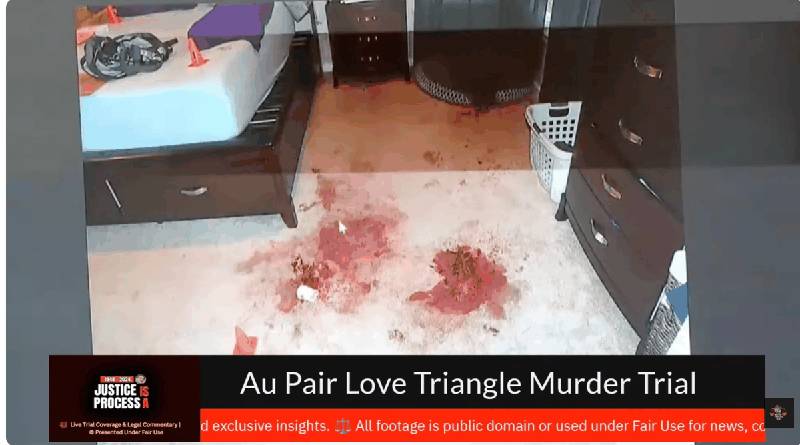
Today we watched Detective Terry Leech walk the jury through the blood evidence in the Banfield case. He explained how he documented blood stains on the carpet, on the bed linens, on clothing, on the laundry basket. He talked about sending items to the state lab for testing. He talked about the blood patterns and what they might show.
And then John Carroll, the defense attorney, asked a simple question: Were those two large blood stains on the carpet tested for DNA?
No, sir.
What about the blood on the gun?
No, sir.
The detective explained that the state lab decided what to test and what not to test. When it came to the carpet stains, the lab said there was no "probative value" since Christine Banfield's body was found in that area. When it came to the gun, he said once firearms testing was done, the lab wouldn't do DNA testing due to contamination concerns.
What We Don't Know
The prosecution's theory is that Brendan Banfield shot Joe Ryan in the head, then picked up Ryan's knife and stabbed his wife Christine. If that's true, whose blood is in those carpet stains? Christine's? Ryan's? Both? Was there a struggle? Did someone fall there? Did someone bleed there before being moved?
We don't know. Nobody tested it.
The blood on Brendan Banfield's gun. Whose is it? Did it get there from him shooting Ryan and the blood splashing back? Did it get there from him stabbing Christine? Did it get there from him trying to save Christine, as he claims, getting blood on his hands and then handling his firearm?
We don't know. Nobody tested it.
The Timing Problem
Then there's the matter of Banfield's jeans. The detective testified those weren't submitted to the state lab until May 15, 2024. That's fourteen months after the murders. Fourteen months for a key piece of evidence in a double homicide. The prosecution pointed to blood droplets on the front right leg as evidence of staging. But the defense now has a timeline question: why so long?
The detective said new questions came up as the investigation progressed. Maybe so. But when you're asking a jury to convict someone of aggravated murder, asking them to believe your theory of how the crime occurred, the evidence gaps matter.
The Standard
Brendan Banfield is presumed innocent. The state has to prove his guilt beyond a reasonable doubt. That's not my rule. That's THE rule. The foundation of our entire system.
Every untested blood sample is a question the prosecution cannot answer. Every question they cannot answer is potential reasonable doubt. That's not defense spin. That's how the system is supposed to work.
My father spent his career making prosecutors prove their cases. He taught me that the burden of proof isn't just a technicality. It's a protection. For all of us.
▶️ WATCH NOW Day 3: Detective Testimony on Blood EvidenceWatch the testimony yourself. Listen to the questions. Notice what was tested and what wasn't. That's how you watch the system. That's how you hold it accountable.
Watch the system. Question everything.
— Justice
Latest from the Desk
Want More?
Subscribe to Justice Is A Process on YouTube for live trial coverage, No Breaks editions, and breaking news as it happens.
🔴 Subscribe on YouTube111,000+ subscribers watching the system with us
Join the Discussion
Comments are moderated and will appear after approval.