370 Officers Stood in That Hallway. The State's Own Witness Just Said It Out Loud.
Day 4 of Texas v. Adrian Gonzales: When the prosecution's witness builds your defense
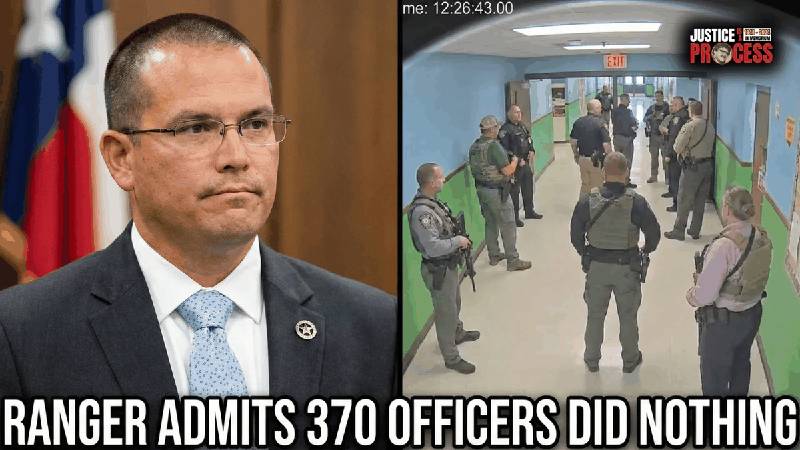
I've been watching trials for years. I've seen prosecutors call witnesses who underperform. I've seen witnesses who don't quite deliver what the state was hoping for. But I've rarely seen a witness walk into a courtroom, raise their right hand, and systematically dismantle the prosecution's own theory of the case.
That's what happened today in Corpus Christi.
Texas Ranger Roberto Montaro Jr. took the stand as a prosecution witness. He was there to establish chain of custody for evidence. Routine stuff. But defense attorney Jason Goss had other plans. By the time Montaro stepped down, he had admitted, under oath, that 370 officers stood in that hallway and none of them kicked the door in. That Texas Rangers, trained just like him, didn't breach. That "a dead police officer cannot save a child."
Let me say that again. The prosecution called this witness. The prosecution put him on the stand. And he just told the jury that the defendant did what 370 other officers did.
The 370 Question
This number matters. It's not just a statistic. It's the entire defense theory in a single data point.
Adrian Gonzales is charged with 29 counts of child endangerment for allegedly failing to engage, distract, or neutralize the shooter at Robb Elementary. The prosecution's theory is that he had information, he had training, and he failed to act. But here's the problem with that theory: so did everyone else.
Montaro acknowledged that Rangers, SWAT teams, Border Patrol, local police, all of them stood in that hallway. All of them had training. All of them knew children were inside. And none of them kicked the door in until Vortac finally breached at 12:50 PM, 77 minutes after the shooter entered the building.
If the standard is that failure to breach endangered children, then 370 officers endangered children. But only one is on trial. The prosecution has never explained why.
The Fatal Funnel Reality
Goss pressed further. He asked Montaro about the tactical reality of that hallway. The Ranger acknowledged that when Vortac finally went in, the point man, Wayne Jackson, got shot in the head. The ballistic shield took rounds. The shooter was in a closet directly across from the door, waiting to kill cops.
"A dead police officer cannot save a child," Goss said. Montaro agreed.
This is the part that makes people uncomfortable. We want to believe that heroism is simple. That officers should have just run in. That Adrian Gonzales should have just done something. But the tactical reality is more complicated. That doorway was a fatal funnel. The first officers through were going to get shot. Some of them might die. And dead officers can't save anyone.
I'm not saying officers shouldn't go in. They should. That's the job. That's what they signed up for. But there's a difference between criticizing an institutional failure that involved hundreds of officers and pinning criminal liability on one guy who did what everyone else did.
One Second Too Late
Here's where the timeline evidence gets devastating for the prosecution.
Goss established through Montaro that Adrian communicated the shooter's location over the radio. He relayed that the shooter was on the west side of the building, supposedly wearing black, near the teacher parking lot. That's what his training told him to do. Get information, relay it to other officers.
But here's the problem: by the time Adrian made that radio call, the shooter had already entered the building. One second earlier. The information was immediately outdated. The shooter wasn't outside anymore. He was already inside with the children.
The prosecution wants to argue that Adrian had information and failed to act on it. But the timeline shows his information was obsolete the moment he transmitted it. He told officers where the shooter had been. The shooter wasn't there anymore.
The Systemic Failures Nobody Wants to Talk About
Montaro also acknowledged something else that should make everyone angry: the doors were unlocked.
Had the classroom doors been locked, the shooter would have been stuck in the hallway. He was shooting at the door trying to get in. Officers were approaching from both sides. They could have caught him in a crossfire. They could have isolated him. They could have done exactly what the ALERRT training says to do.
But the doors weren't locked. He just walked in. Before anyone had time to respond, he was inside those classrooms with the children.
This is the systemic failure that the prosecution doesn't want to address. It's easier to blame one officer than to explain why a school's security protocols failed. Why doors that should have been locked weren't. Why the shooter had a clear path to those children.
And speaking of systemic failures: Montaro testified that he was sent to collect evidence that was missed during the initial crime scene processing. Shell casings. A Hellfire trigger device. Evidence found by a cleaning crew weeks after the shooting. The crime scene was so compromised that civilians were finding evidence the Rangers missed.
Echo and Chaos
There's another piece of testimony that matters. Montaro explained how gunfire echo can deceive your senses. Officers at the ditch on the west side of the building thought they were being shot at. They took cover. But the shooter was actually firing 180 degrees the other direction, into the building.
This wasn't cowardice. This was physics. Sound bounces off buildings. It echoes. Your brain tells you the shots are coming from one direction when they're coming from another. Add in auditory exclusion, tunnel vision, time compression under stress, and you have a recipe for confusion. For chaos. For officers who genuinely don't know where the threat is.
The prosecution's theory requires Adrian to have perfect situational awareness in a moment of absolute chaos. The evidence shows that nobody had that. Not Adrian. Not the other officers. Not even the Rangers.
The Question This Trial Won't Answer
Here's what keeps bothering me. Of the nearly 400 officers who responded to Uvalde that day, two face criminal charges. Adrian Gonzales and Pete Arredondo. Everyone else walked away.
If the law says that failing to engage an active shooter constitutes child endangerment, then why aren't 370 officers on trial? If the standard is that officers with training must act, then every Ranger, every SWAT officer, every tactical team member who stood in that hallway violated the same standard.
But they're not on trial. Only Adrian is. And the prosecution has never adequately explained why.
I have a theory. Adrian was first on scene. He was the easiest target. He was the most visible. And somebody had to be held accountable for what happened in Uvalde. The families demanded it. The public demanded it. So the state picked Adrian Gonzales, and they're trying to make him carry the weight of a systemic failure that involved hundreds of people.
That's not justice. That's scapegoating.
The State of the Case
Four days in, the prosecution's case is struggling. Their own witnesses keep helping the defense. The 370 officers admission. The crime scene failures. The timing evidence. The unlocked doors. The tactical reality of that fatal funnel. All of it came from the state's witnesses.
The burden of proof is on the prosecution. They have to prove beyond a reasonable doubt that Adrian Gonzales endangered children by his inaction. After today, they haven't just failed to meet that burden. They've actively created reasonable doubt through their own witnesses.
Adrian Gonzales is presumed innocent. The jury will decide his fate. But if I'm the prosecution, I'm looking at today's testimony and wondering how I recover from having my own witness validate the defense's entire theory of the case.
▶️ WATCH NOW 370 Officers Stood in That Hallway. Only One Is on Trial.Watch the testimony yourself. Listen to Ranger Montaro admit what everyone watching the body cam footage already knew. And ask yourself the same question I keep asking: if 370 officers made the same choice, why is only one of them on trial?
Watch the system. Question everything.
— Justice
Latest from the Desk
Want More?
Subscribe to Justice Is A Process on YouTube for live trial coverage, No Breaks editions, and breaking news as it happens.
🔴 Subscribe on YouTube111,000+ subscribers watching the system with us
Join the Discussion