They Both Had Money Problems
The prosecution's motive theory just got a lot more complicated
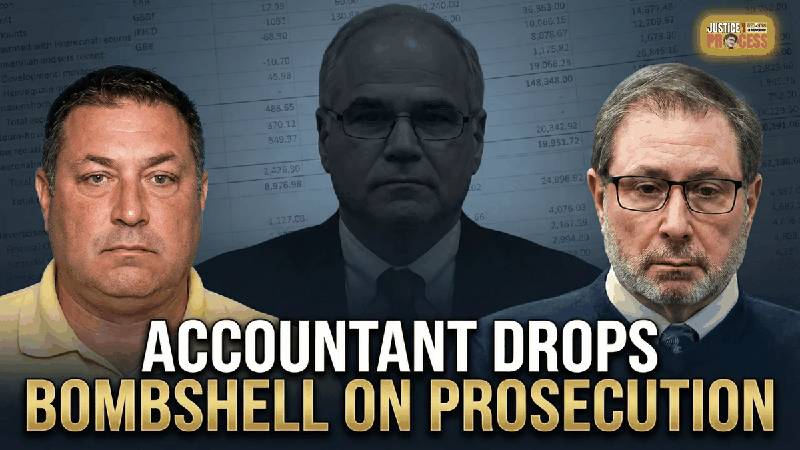
The prosecution spent their opening statement painting Paul Caneiro as a desperate man. A house of cards about to collapse. A brother who had stolen from Keith and was about to lose everything when Keith cut off his salary.
Then their own witness took the stand.
Steven Weinstein has been the Caneiro family's accountant for over 35 years. He prepared their taxes, managed their books, handled their business finances. If anyone knows where the money went and who was struggling, it's him.
And under cross-examination, he dropped a bomb the prosecution probably wishes he hadn't.
But here's where it gets really interesting.
The Income That Would Survive
Paul Caneiro was collecting disability. Over $200,000 a year. That money wasn't tied to Square One or Ecostar. If those businesses collapsed tomorrow, if the Duke contract disappeared, if everything Keith had built came crumbling down, Paul would still have that income coming in.
Keith? He had nothing else.
Square One was getting over 90% of its revenue from a single client: the Doris Duke Foundation. That contract was on the chopping block. The foundation was looking at other managed service providers. They wanted better service for less money. And Keith knew it.
So who was really desperate here?
The Money Trail Goes Back Years
The prosecution wants you to believe Paul started raiding the trust account in 2017 and 2018. That this was a recent pattern of theft that Keith discovered.
But Weinstein's testimony revealed something the jury needs to understand: money had been moving between accounts, between the trust and the business, going back to at least 2014. Withdrawals to company accounts. Loans from officers. Cash flowing in every direction to keep things running.
This wasn't Paul secretly stealing. This was how the business operated. Both brothers knew it. The accountant knew it. It had been happening for years.
Does that mean the $78,000 the prosecution is focused on was legitimate? I'm not saying that. But I am saying the narrative of Paul as a thief operating in secret doesn't match what the evidence actually shows.
The Brother They Never Investigated
There's a third Caneiro brother. His name is Corey.
The defense mentioned him in their opening statement. They pointed out that police never searched Corey's house. Never took his DNA. Never looked at his phone or electronic devices. Never pulled surveillance video from his neighborhood.
Under that $3 million life insurance policy the prosecution keeps talking about? If Keith and his family all died, half would go to Paul. Half would go to Corey.
Same motive. Zero investigation.
When Weinstein was asked about Corey on the stand, there was an awkward pause. The accountant confirmed he hadn't worked consistently with Corey over the years. That Corey wasn't really part of the business operations the way Paul and Keith were.
But after November 2018? After Keith was dead? Suddenly Corey was at the Asbury Park office. Suddenly he was involved in administering the businesses.
I'm not accusing Corey Caneiro of anything. I'm pointing out what the defense is pointing out: the investigation locked onto Paul immediately and never seriously considered anyone else.
What This Means for the Case
The prosecution's motive theory rests on Paul being financially desperate while Keith had everything under control. Day one of testimony already poked holes in that narrative.
Keith had IRS debt. Keith was facing the potential collapse of his primary revenue source. Keith had no fallback income if Square One went under.
Paul had disability income that wasn't going anywhere. Paul was pushing for a higher sale price on Ecostar because he believed they could do better than $850,000. Paul wasn't acting like a man about to lose everything.
Does any of this prove Paul didn't commit these murders? No. But it does prove the prosecution's simple story of desperate brother kills successful brother over money isn't as clean as they want you to believe.
This is day one. We have weeks of testimony ahead. But pay attention to how the financial picture develops, because it's already more complicated than the state's opening suggested.
▶️ WATCH THE TESTIMONY 35-Year Family Accountant: Victim Was Taking Money Too | Caneiro TrialThe presumption of innocence exists for exactly these moments. When the state presents a clean narrative, it's our job to watch whether the evidence actually supports it.
So far? It's not as clean as they claimed.
Watch the system. Question everything.
— Justice
Latest from the Desk
Want More?
Subscribe to Justice Is A Process on YouTube for live trial coverage, No Breaks editions, and breaking news as it happens.
🔴 Subscribe on YouTube111,000+ subscribers watching the system with us
Join the Discussion