The Motive Story Is More Complicated Than They Want You to Believe
Day 1 of Paul Caneiro's trial revealed a messy financial picture the prosecution wants to simplify
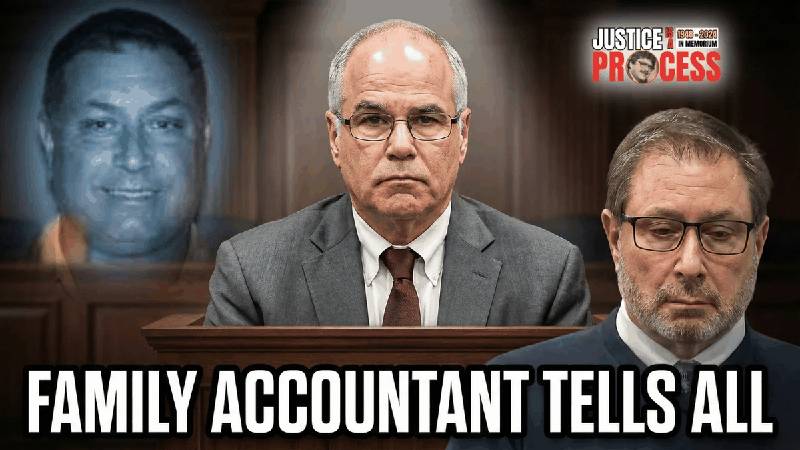
Steven Weinstein sat on that witness stand for nearly two hours today. The family accountant. Forty years with the Caneiros. He watched Keith and Paul build businesses together from nothing in Brooklyn. He did their taxes, their corporate filings, their trust paperwork. If anyone knew where the bodies were buried financially, it was him.
And the prosecution used him exactly the way you'd expect. Keith called Weinstein three times the night before he was murdered, furious about missing trust money. "Very upset," Weinstein said. Paul had sent an email months earlier admitting he'd paid the "wrong bill" with trust funds. $25,000 to a student loan instead of the insurance company. In that email, Paul wrote he'd had his "head up my ass."
The state wants this to be simple. Paul was stealing. Keith found out. Paul killed him and his entire family to cover it up. Clean motive. Easy to understand. Easy to convict.
Except it's not that simple. And if you only watched the prosecution's direct examination, you missed half the story.
What the Defense Revealed
Cross-examination told a very different tale. The defense attorney walked Weinstein through years of financial records, and what emerged was a picture of two brothers whose money was constantly entangled. Cash flowing in every direction. Keith putting personal money into the company. Paul putting personal money into the company. Money coming out. Money going back in. Loans on the books. 401k borrowing. Company credit cards for both families.
And here's the number that should make everyone pause: According to a November 2016 balance sheet, Paul was owed $179,000 by the company. Keith was owed $118,000.
That doesn't fit the "greedy brother stealing everything" narrative, does it?
There's more. Weinstein admitted that withdrawals from the trust account to unknown accounts had been happening for years. Not just in 2017 and 2018. He'd been reconciling those statements annually. He saw the debits. And either he didn't notice, or he didn't think they were a big deal. His words: "Everything's a big deal, but right now you're pulling things out of context."
Context. That's exactly what this trial needs more of.
Six Months of Nothing
Here's what really got my attention. In April 2018, Keith discovered the student loan payment. He was furious. Weinstein testified Keith was "overly upset with everyone." Not just Paul. Everyone. The bookkeeping department. Maybe even Weinstein himself.
Keith wanted to remove Paul as trustee.
So what happened?
Nothing.
Six months passed. Paul stayed trustee. The brothers kept working together. They were actively negotiating the sale of Ecostar, their pest control company, with Paul putting together the financial projections. Keith was relying on Paul's numbers. An $850,000 offer came in from Terminix. Paul thought they could do better. Keith, by November, wanted to take a reduced offer of $750,000.
A disagreement about a business sale price. That's what this was in November. Not "Paul is stealing and Keith is about to expose him." Keith already knew about the trust issues. He'd known for six months. And he kept Paul as trustee. Kept working with him. Kept building toward a sale that would have given them both significant payouts.
The Third Brother Nobody Mentions
During opening statements, the defense dropped something the prosecution barely acknowledged: there's a third brother. Corey Caneiro.
Under the terms of Keith's life insurance trust, if Keith, Jennifer, and the children all died, the $3 million policy would be split. Half to Paul. Half to Corey.
Same motive. Exact same motive.
The defense told the jury that Corey's financial situation was actually worse than Paul's. That police never searched Corey's house. Never searched his phone. Never got his DNA. Never investigated him at all.
I don't know if Corey Caneiro had anything to do with this. Neither do you. Neither does anyone, because law enforcement apparently never looked. They locked onto Paul from the beginning and never turned their heads.
That's tunnel vision. And tunnel vision gets innocent people convicted.
What I'm Watching For
Look. I'm not saying Paul Caneiro is innocent. I don't know what happened in that house on November 20, 2018. Nobody does except the person who did it.
But I am saying the motive story the prosecution is selling is too clean. Too simple. The real financial picture is messy. Complicated. Full of money moving in every direction for years. Two brothers entangled in ways that don't fit into a neat "thief and victim" box.
The prosecution's theory requires you to believe Paul murdered his brother, his sister-in-law, and his 11-year-old nephew and 8-year-old niece over approximately $78,000 in disputed trust withdrawals. To men who had made millions together over decades. To a man who was owed $179,000 by the company. To a man who stood to receive hundreds of thousands from the Ecostar sale. To a man whose brother already knew about the trust issues and had done nothing about it for half a year.
Does that make sense to you?
The jury needs to see the complexity. They need to understand that "Keith was upset about the trust" and "Paul murdered four people over it" are two very different things. Proving the first doesn't prove the second.
▶️ WATCH THE FULL TESTIMONY Family Accountant Describes Keith Caneiro's Final Phone Call The Night Before MurderThis trial is just getting started. Today was Day 1. We heard from the accountant who knew everything. What we learned is that "everything" is a lot more complicated than a simple theft story.
The presumption of innocence exists precisely for cases like this. Where the accusation is horrific. Where emotions run high. Where it's tempting to see a motive and assume guilt. That's when the system has to work hardest to ensure the state proves its case beyond a reasonable doubt.
My father spent his career making sure the system did its job even when everybody in the room wanted it to cut corners. That's what we do here. We watch. We question. We hold the system accountable.
I'll be watching to make sure it does its job in this courtroom.
Watch the system. Question everything.
— Justice
Latest from the Desk
Want More?
Subscribe to Justice Is A Process on YouTube for live trial coverage, No Breaks editions, and breaking news as it happens.
🔴 Subscribe on YouTube111,000+ subscribers watching the system with us
Join the Discussion