Wrong Man on Trial?
The Caneiro Defense Just Named Another Suspect. Police Never Investigated Him.
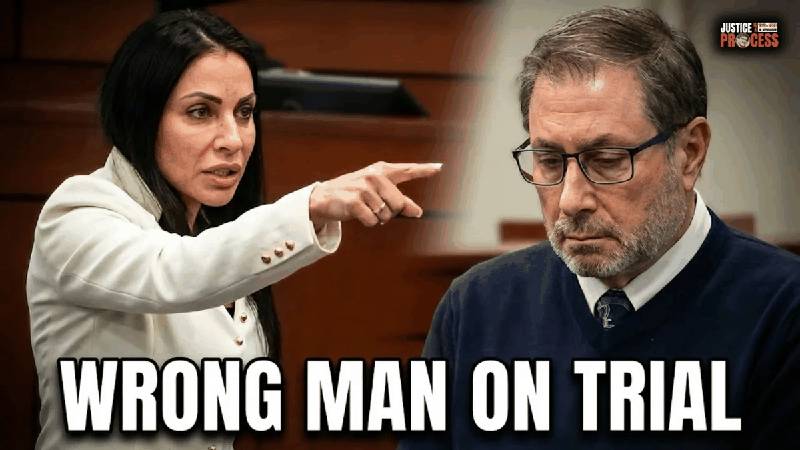
The prosecution spent their entire opening telling the jury that Paul Caneiro murdered his brother Keith, his sister-in-law Jennifer, and their two children over money. DNA in his basement. Bloody jeans. Gun parts in his bag. A timeline that allegedly puts him at the scene.
Then the defense stood up and asked one question the prosecution never addressed: What about the third brother?
His name is Corey Caneiro. And according to defense attorney Monika Mastellone, he had the exact same financial motive the state claims drove Paul to commit quadruple murder. The same $1.5 million from the family trust. Worse financial circumstances than Paul. And here's the part that should concern anyone who cares about how investigations are conducted:
Let that sink in. In a case built heavily on DNA evidence found on bloody clothing, investigators never collected DNA from the third brother who stood to inherit the same money they claim motivated the murders.
Why the Untested DNA Matters
This isn't just a procedural complaint. It goes to the heart of how DNA evidence works in cases involving family members.
The prosecution will present DNA analysis using software called STRmix. Mastellone flagged this specifically. STRmix doesn't work like the DNA matching you see on TV. It doesn't say "this blood is definitely from Person X." Instead, it analyzes mixed samples and calculates likelihood ratios. How likely is it that this mixture contains DNA from a particular person?
Here's the problem: family members share significant portions of their DNA profiles. Brothers even more so. When you're trying to determine whose DNA is in a mixed sample, and you're comparing it only to Paul's profile but never obtained Corey's, you've created a gap in your analysis that can never be filled.
The defense put it plainly: the jury will never know whether that DNA evidence points to Corey instead of Paul. Because investigators never tested him. They never even tried.
Tunnel Vision
Mastellone used words like "tunnel vision," "blinders," and "rush to judgment." These aren't just defense attorney talking points. They describe a documented phenomenon in criminal investigations where early suspicion of a particular suspect causes investigators to interpret all subsequent evidence through that lens.
The defense's theory is that police focused on Paul Caneiro immediately and "to the incredible exclusion of anyone else." Every piece of evidence, no matter how it could be interpreted, was viewed through the assumption that Paul was guilty.
And the evidence that didn't fit? According to the defense, it was ignored.
Think about the prosecution's narrative for a moment. Paul allegedly drove to his brother's home, murdered four people including two children, set a slow-burn fire, drove home, stuffed bloody clothes in his basement, put gun accessories in his bag, left a gas can on his driveway, and then set his own house on fire so all the investigators would come directly to him and find everything.
As Mastellone put it: "The fact that the evidence in this case appears to be so conveniently overwhelming is the very reason why you should call into question their theory."
The Relationship Nobody Talked About
The prosecution painted Paul and Keith as business partners with financial tension. The defense painted a different picture entirely.
Paul and Keith weren't just brothers. According to Mastellone, they were best friends. "Each other's person." One year apart their entire lives. Their families were so close they considered themselves one big family instead of two.
And Corey? He was "on the outside." Not part of the businesses. Not part of that close relationship.
The prosecution wants the jury to believe Paul murdered his brother, his sister-in-law, and his niece and nephew over $78,000 and the threat of losing his salary. The defense says there's no world in which Paul would do that. Not over that money. Not to the brother he loved. Not to those kids he treated like his own.
But someone did do it. Someone murdered Keith, Jennifer, Jesse, and Sophia. Someone stabbed an 8-year-old girl 17 times. If it wasn't Paul, then who?
The defense is pointing at Corey. And the jury will have to wrestle with the fact that police never even looked.
What This Means Going Forward
Opening statements are roadmaps, not evidence. Mastellone made promises today that she'll need to deliver on through cross-examination and, if they choose to present one, the defense case.
Watch for these threads as the trial continues:
The DNA experts. When the forensic analysts testify about STRmix results, expect the defense to hammer on what they didn't test. Can the expert say with certainty that the DNA came from Paul and not another male family member? What would they need to make that determination? Why wasn't Corey's sample collected?
The investigation. Every detective who testifies will face questions about Corey. Did you consider him a suspect? Did you attempt to interview him? Did you request a search warrant for his home? Did you pull surveillance from his neighborhood? Why not?
The financial motive. The prosecution built their case around money. The defense will try to show that the $78,000 wasn't enough to motivate murder between brothers who had made millions together over the years, and that Corey had the same $1.5 million incentive from the trust.
This is going to be a long trial. The prosecution has a lot of evidence. DNA. Ballistics. Surveillance footage. A timeline. But the defense has planted a seed that will be hard to ignore: there was another brother with the same motive, and police never investigated him.
That's reasonable doubt in its purest form. Not "maybe Paul didn't do it." But "maybe they arrested the wrong brother, and we'll never know because they didn't do their job."
▶️ WATCH THE FULL OPENING STATEMENT Paul Caneiro Defense Points Finger at Third Brother In Bombshell Opening StatementI'll be covering this trial daily. There's a lot more to come.
Watch the system. Question everything.
— Justice
Latest from the Desk
Want More?
Subscribe to Justice Is A Process on YouTube for live trial coverage, No Breaks editions, and breaking news as it happens.
🔴 Subscribe on YouTube111,000+ subscribers watching the system with us
Join the Discussion