The Night Before: What the Insurance Broker's Testimony Really Tells Us
Ronald Artis took the stand to describe Keith Caneiro's final frantic hours. But the defense exposed something the prosecution didn't want the jury thinking about.
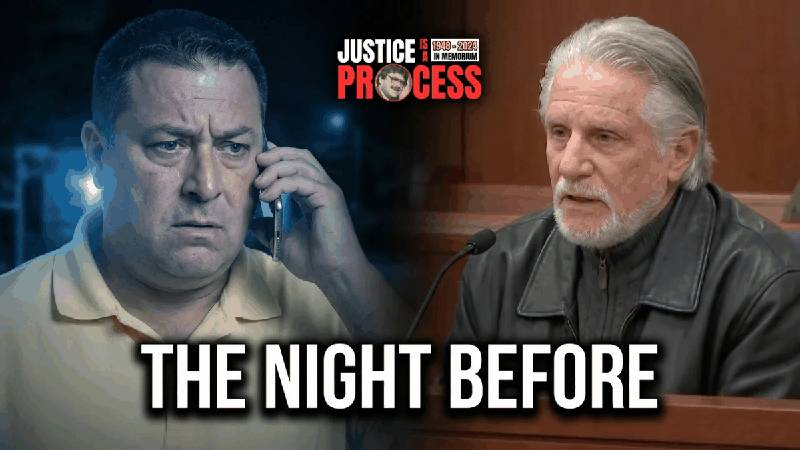
Ronald Artis has been in the insurance business for 45 years. He's seen everything. Policies lapse. Premiums go unpaid. Clients panic when they realize their coverage isn't what they thought. It happens.
But he'd never had a client call him in a panic one night and turn up dead with his entire family the next morning.
That's what happened on November 19, 2018. Keith Caneiro called Artis that evening, frustrated and confused. His $3 million life insurance policy with Canada Life showed a growing loan balance. Keith thought the premiums had been paid. The bank statements showed money going to Canada Life. But Canada Life said they hadn't received anything since April.
Eight hours later, Keith, his wife Jennifer, and their two children Jesse and Sophia were dead. His brother Paul is now on trial for their murders.
The Prosecution's Narrative
The state wants this testimony to paint a picture of discovery and confrontation. Keith found out Paul had been stealing from the trust account. Keith was about to expose him. So Paul murdered an entire family to keep his secret buried.
It's a compelling story. Artis described Keith as "frustrated" that night. Earlier that day, the family accountant Steve Weinstein had been looped in. Emails were flying. Keith was demanding the online banking password from Paul. The pressure was building.
And here's the detail the prosecution really wants you to remember: Keith sent Artis his resume that same night. He was planning to leave the businesses entirely. He wanted to become a Chief Information Officer somewhere in the corporate world. He was done with Paul.
What the Defense Exposed
Defense attorney Andy Murray didn't need long on cross-examination. He had one point to make, and he made it with surgical precision.
He showed Artis the payment history for that Canada Life policy going back to 1999. And what that history revealed is something the prosecution would rather the jury not think about too hard.
The payment problems didn't start in 2018. They didn't start in 2017. They went back to 2003. Fifteen years of inconsistent premium payments. Fifteen years of the policy accumulating loan balances. Fifteen years of this exact same pattern the prosecution now calls "sudden fraud."
In 2003, only about half the quarterly premiums were paid. In 2007, the loan balance was already over $45,000. Year after year, the same story. Money coming in erratically. Premiums not fully covered. The automatic premium loan provision kicking in to keep the policy from lapsing.
This isn't a picture of a man who suddenly started stealing in 2017 and got caught in 2018. This is a picture of two brothers running businesses together for decades with messy, intermingled finances. Cash flow problems. Money moving between personal accounts and business accounts. The kind of financial chaos that happens when family runs businesses together without clean boundaries.
The Question Nobody Asked
Here's what struck me about Artis's testimony. When asked who actually wrote the checks from the trust account to the insurance company, he didn't know. When asked who had access to that TD Bank trust account, he said he assumed Paul did because Paul was the trustee. But he didn't have specific knowledge.
The prosecution wants "trustee" to equal "sole person responsible for everything." But Artis's own testimony showed that Keith was receiving bank statements. Keith was communicating with Canada Life. Keith was looped into the finances of his own life insurance policy.
If Keith had no idea what was happening with his $3 million policy for 15 years, that's one thing. But the payment history suggests these problems were visible the entire time. To everyone.
The Impersonation Detail
There was one other moment worth noting. Murray got Artis to admit that he had called insurance companies in the past and identified himself as Paul Caneiro. Not to commit fraud. Just to get information and move things along. Standard industry practice, Artis said.
Why does that matter? Because the prosecution's entire case depends on Paul being uniquely responsible for financial irregularities. If the family's own insurance broker was comfortable impersonating Paul to handle business, that tells you something about how blurred the lines were in these brothers' financial lives.
Nobody thought twice about it. Because that's how they operated.
What This Means for the Case
Artis's testimony was supposed to establish the night-before timeline. Keith discovered the fraud. Keith confronted Paul. Paul murdered everyone. Case closed.
But the defense put a crack in that foundation. If Paul had been "stealing" for 15 years without killing anyone, why would he suddenly commit quadruple murder over it now? If the payment problems were visible in the records the whole time, was this really a sudden discovery that triggered panic?
The prosecution has to prove motive beyond a reasonable doubt. They're telling the jury that Paul killed his brother, his sister-in-law, and his 11-year-old nephew and 8-year-old niece over money. Over being exposed.
The defense is asking: exposed for what? For the same financial chaos that had been happening since 2003?
▶️ WATCH THE FULL TESTIMONY $3 Million Life Insurance: What Keith Discovered Hours Before His MurderThe Burden Remains
Paul Caneiro is presumed innocent. The state has to prove its case. And right now, on Day 1 of testimony, they've established that Keith was upset the night before he died. They've established that money was missing from a trust account. They've established that Paul was the trustee.
What they haven't established is that any of this was new. That any of this was hidden. That any of this was worth murdering four people over.
The defense's job is to create reasonable doubt. And in a case built on financial motive, showing that the "fraud" was a 15-year pattern rather than a sudden crisis is exactly the kind of doubt that matters.
We're just getting started. The prosecution has a lot more evidence to present. DNA. Ballistics. Security footage. The financial testimony is just the foundation they're trying to lay.
But foundations matter. And today, the defense put some cracks in theirs.
Watch the system. Question everything.
— Justice
Latest from the Desk
Want More?
Subscribe to Justice Is A Process on YouTube for live trial coverage, No Breaks editions, and breaking news as it happens.
🔴 Subscribe on YouTube111,000+ subscribers watching the system with us
Join the Discussion