Did Police Pressure the Caneiro Family?
Lead Detective Takes the Stand as Defense Drops Bombshell About How Police Treated Paul's Wife and Daughters
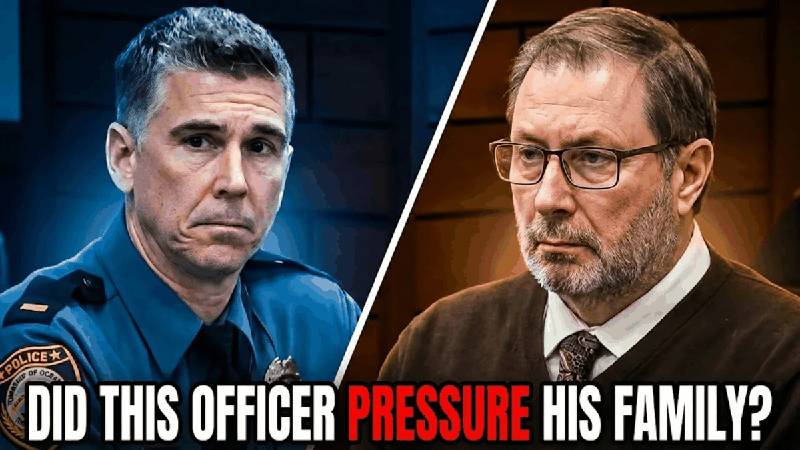
Lieutenant Christopher Brady spent over two hours on the stand today. He's the lead Ocean Township detective on the Tilton Drive fire investigation, and the prosecution called him to walk the jury through what happened on November 20, 2018. What they got was a detailed account of the morning. What the defense got was an opportunity to expose holes in the investigation and drop a bombshell that left the prosecution blindsided.
Let me walk you through all of it.
What Paul Told Police at the Scene
Brady arrived at 27 Tilton Drive around 6:15 a.m., about an hour and fifteen minutes after the initial call. By then, multiple fire departments were on scene, crime scene tape was up, and the Caneiro family was sitting in a white Porsche Cayenne parked two houses down the street.
Brady spoke to Susan Caneiro first, then Paul. According to Brady, Paul told him he was asleep in his bedroom when he heard an alarm going off. He woke up to smoke coming out of the vents. He got his family up and told them to get out. Then, instead of leaving with them, he went back inside, got in one of the cars in the garage, backed it out, and closed the garage door behind him.
Why close the garage door? Paul told Brady he "didn't know if any more air was going to be a problem."
Brady also noticed an injury on Paul's left hand. Paul said he hit it on a doorknob while evacuating. Brady offered first aid. Paul declined. Brady noted that the injury did not resemble a burn. Photos taken later that evening showed the swelling had increased.
The Consent Searches
Paul consented to two searches that morning. The first was the Porsche Macan parked in the driveway. The fire marshal wanted to check whether the fire had extended into the engine compartment because there were burn markings on the hood. Paul signed a consent form at 9:50 a.m. He was read his rights, including his right to refuse. He consented. He was supposed to be present for the search, but defense attorney Monika Mastellone showed photos of the search actually happening, and Paul is nowhere in frame.
The second consent was for the DVR from the home security system. Officers had already seized it from the garage. Paul signed consent to view it at 11:37 a.m. He told Brady there had been connectivity issues with the system, some kind of firewall problem, and he wasn't even sure it was working. But he consented anyway.
During the search of the Macan, with detectives opening and closing the burned garage door nearby, Paul made an unprompted statement: "That door is making me nervous."
Brady said he assumed Paul was referring to the garage door with the burn marks. But he didn't follow up. He didn't ask what Paul meant.
"That Door Is Making Me Nervous"
Think about that for a second. The state's theory is that Paul set this fire himself. And here he is, watching detectives examine the garage door, and he volunteers that it's making him nervous. Is that consciousness of guilt? Is it just a man watching strangers poke around his burned property? The jury will have to decide what to make of it.
The 12 Hours at Police Headquarters
Around 11:50 a.m., Brady asked the Caneiro family to come to the Ocean Township Police Department to give statements. They wanted time to get cleaned up, find new clothes. Paul had run out of the house without shoes. Brady told them he wanted them there as quickly as possible because memories fade.
They followed him to the station. They arrived just after noon. They didn't leave until approximately 11 p.m. That's nearly 12 hours.
At first, they waited in the lobby. Then, sometime around 1 p.m., Brady brought them down to the detective bureau in the basement. He said it was for their safety. The front lobby was open to the public, and they didn't know what was happening yet.
What was happening was this: Around noon, detectives reviewing the DVR received notifications on their phones about another fire in Monmouth County. This one was in Colts Neck. Brady pulled up the shared police database and saw a narrative entry about a body on the front lawn. The homeowner's name was Keith Caneiro.
Brady put it together. Same last name. Brothers.
Learning About the Deaths
The family already knew something was wrong. They'd received a text from a family friend about a fire at Keith's house. But as the hours passed, they learned more. Through their phones. Through the news. They learned that four people were dead. Keith. Jennifer. Jesse, 11. Sophia, 8.
Brady testified there were "emotional outbursts and crying." The family was "demanding answers" that police couldn't provide. But Paul? Brady said Paul was "very quiet." He "did not say a lot." He "looked upset at times" but was mostly silent.
Paul did tell Brady one thing: Keith had sent him four text messages during the overnight hours. Paul said he wished he had heard them.
What the Defense Exposed
On cross examination, Mastellone went to work.
She established that Brady never recorded any of his conversations with Paul. Not a single one. Despite knowing that patrol officers on scene had body cameras. Despite being an experienced detective. He never asked an officer to stand nearby so the conversations would be captured.
"Obviously the thing about recording is if we had it, we would be able to watch it and see if what you're testifying to years later matches what actually occurred," Mastellone said.
Brady agreed.
She then went after the surveillance video canvas. Officers collected footage from three houses: 30 Tilton, 308 Green Grove Road, and 19 Oxford. All on one side of the street. Mastellone pulled up a map and had Brady circle the houses. Then she asked about the other side of Tilton Drive. The side with the other intersection. The side where someone could have come and gone without being captured.
Brady said officers canvassed the area on November 20th. But there's no documentation of which houses they tried. No notes saying "this house had no cameras" or "no one was home." And when they got their three videos from one side, no one went back to try again on the other side.
There was also a wet footprint on a stone near the shed. By the time Brady got there, it had dried. No photo. No measurement. Gone.
The Bombshell
Then came the moment that stopped everything.
Mastellone asked Brady whether he was aware of any officers "leveraging" information about what was happening to the family as a mechanism to get statements from them.
The prosecution objected. The judge called a sidebar. What followed was an extended legal argument outside the jury's presence.
Mastellone revealed that she had learned, approximately two weeks ago, that Paul's wife Susan and their daughters told the defense team they felt "mistreated" and "pressured" by police on November 20, 2018. The family has refused to speak to prosecutors for years. They've had to be served subpoenas at their homes because they won't engage voluntarily.
The prosecution was blindsided. They had no idea this allegation existed. They argued they should have been told. Mastellone cited State v. Tier, a New Jersey Supreme Court case holding that defense attorneys don't have to turn over information from their confidential investigations unless it's memorialized in a report.
The judge read the case during the break. He ruled in the defense's favor. The question was allowed.
When Brady returned to the stand, Mastellone asked again: Were you aware of any officers leveraging information to get statements from the family?
Brady said no.
What This Means
The jury now knows that Paul Caneiro's wife and daughters believe they were pressured by police. They know the family has refused to cooperate with prosecutors for years. They know the lead detective never recorded his conversations with the defendant. They know surveillance video was only collected from one side of the street. They know evidence was lost.
None of this proves Paul Caneiro is innocent. But it raises questions about the investigation. It gives the jury reasons to scrutinize what police did and didn't do. And it puts the family's silence in a new light.
The prosecution says they'd welcome the chance to cross-examine Susan and the daughters about the leveraging claim. The defense hasn't said whether they'll call them. But the allegation is now part of the trial record, and the jury heard every word of it.
▶️ WATCH NOW Did This Officer Pressure Paul Caneiro's Family While Their Relatives Lay DeadPaul Caneiro is presumed innocent. The state has the burden to prove every element beyond a reasonable doubt. Today, the defense made sure the jury knows that burden includes answering hard questions about how this investigation was conducted.
Latest from the Desk
Want More?
Subscribe to Justice Is A Process on YouTube for live trial coverage, No Breaks editions, and breaking news as it happens.
🔴 Subscribe on YouTube111,000+ subscribers watching the system with us
Watch the system. Question everything.
— Justice
Comments
Comments are moderated and will appear after approval.