The Bus Stop Was Empty
How a neighbor's testimony locks in the prosecution's timeline
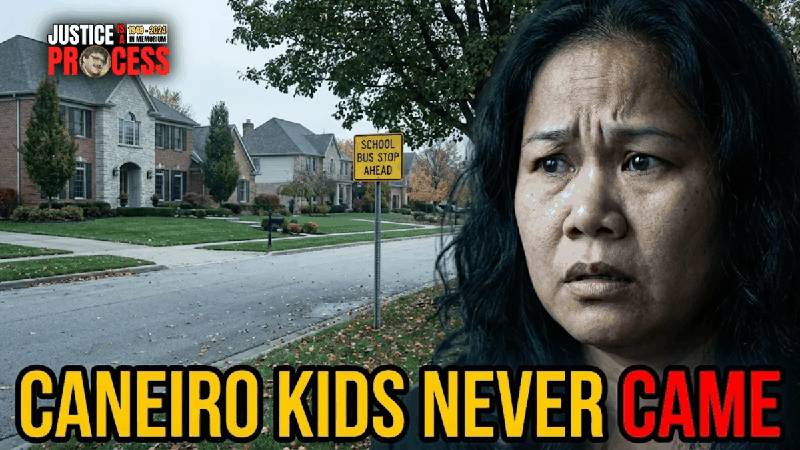
Katherine Luchese stood at the bus stop that Tuesday morning, November 20, 2018, with her own children. She was waiting for the same bus that always picked up Jesse and Sophia Caneiro from across the street.
They never came.
Neither did Jennifer. Neither did Keith. The Caneiro family, who had been her first friends when she moved to Willow Brook Road in 2017, whose kids did sleepovers with her kids, who she saw at that bus stop almost every morning, simply weren't there.
At the time, she didn't think much of it. Maybe the kids were sick. She knew Sophia had been under the weather recently. Jennifer had texted her about it after the kids played at her house.
Hours later, around 12:30 PM, her landscaper called. Smoke was pouring from the Caneiro mansion.
The Timeline Locks In
Here's what the prosecution needs the jury to understand: by the time Kathy Luchese was standing at that bus stop in the morning, the Caneiro family was already dead.
The state's theory is that Paul Caneiro killed his brother Keith, his sister-in-law Jennifer, and their two children Jesse and Sophia sometime in the early morning hours. Then he set a slow-burning fire in the basement, one designed to smolder for hours before erupting into a full blaze. By 12:30 PM, when the landscaper spotted smoke, the fire had been burning all morning.
Luchese's testimony supports this timeline from two angles.
First, the bus stop. She was there. The Caneiro kids weren't. That means whatever happened to this family happened before the school bus came that morning. Not during the day. Not after noon. Before sunrise. Before the neighborhood woke up.
Second, she called the school. She was worried. When she confirmed that Jesse and Sophia never made it to school that day, it cemented what she already suspected: something was very wrong long before anyone saw smoke.
The 911 Call
The jury heard Kathy's actual 911 call. Her voice was urgent. She reported smoke coming from 15 Willow Brook Road. The dispatcher asked if anyone was inside. Kathy said she was calling her neighbors but they weren't answering. She didn't think anybody was home.
She was wrong about that last part. Everyone was home. They just couldn't answer.
Her home surveillance footage, timestamped 12:32 PM on November 20, 2018, shows her standing outside on the phone, watching the property. You can see a portion of the white Caneiro house in the frame. David the landscaper arrives. Boris the neighbor arrives. Then police.
All of this happened hours after the family should have been at that bus stop. Hours after the kids should have been at school. The slow-burn fire theory requires exactly this kind of gap, and Luchese's testimony provides it.
The Defense Angle
On cross-examination, defense attorney Monika Mastellone drew out one detail: when Luchese tried to call Jennifer during the emergency, Jennifer's phone wasn't just ringing. It was off.
Luchese couldn't remember this detail seven years later. But her written statement from December 4, 2018, just two weeks after the murders, confirmed it. The defense's point wasn't to dispute the timeline. It was to remind the jury that memories fade. Seven years is a long time. If Luchese was wrong about the phone, what else might she be wrong about?
It's a fair point for the defense to make. But here's the thing: the phone being off actually helps the prosecution. A methodical killer who cut power at the street and severed the FiOS line in the basement would logically disable cell phones too. Jennifer's phone being off at noon is consistent with someone making sure nobody could call for help.
The defense scored a procedural point about witness memory. The prosecution got substantive evidence about the timeline. Both sides got something. That's how trials work.
▶️ WATCH NOW Neighbor Who Called 911 Says Caneiro Kids Weren't at the Bus Stop That MorningWhat This Means
Katherine Luchese wasn't a detective. She wasn't an expert witness. She was a neighbor and a friend who happened to be at the bus stop that morning and happened to have security cameras on her house.
But her testimony matters. It puts the jury at that empty bus stop. It lets them hear the 911 call of someone who just realized her friends might be in danger. It establishes that the Caneiro family was already gone while everyone else in the neighborhood was living a normal Tuesday.
The prosecution's case depends on proving that Paul Caneiro drove eleven miles in the middle of the night, killed four people, set a fire designed to burn slowly, and drove home before dawn. Luchese's testimony doesn't prove he did it. But it proves that the family was dead before the sun came up. That's one piece of the puzzle locked into place.
More pieces to come.
Latest from the Desk
Want More?
Subscribe to Justice Is A Process on YouTube for live trial coverage, No Breaks editions, and breaking news as it happens.
🔴 Subscribe on YouTube111,000+ subscribers watching the system with us
Watch the system. Question everything.
— Justice
Comments
Comments are moderated and will appear after approval.