"I Am a Prisoner of War": Maduro Pleads Not Guilty in Manhattan Court
The arraignment that tests everything I wrote about Ker-Frisbie
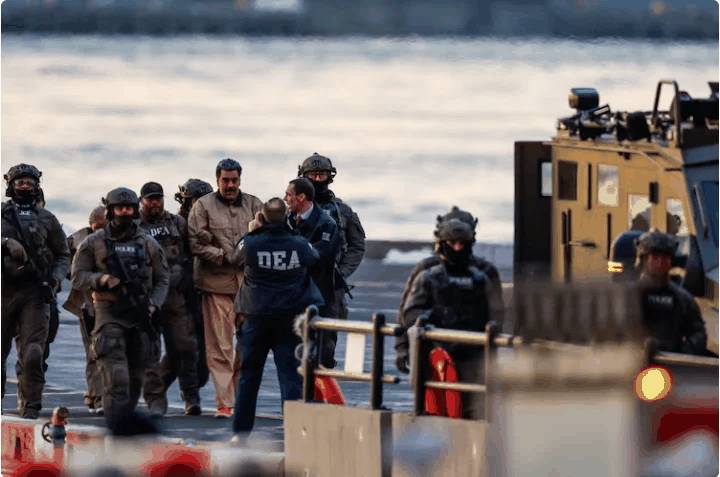
Two days ago, I wrote about the Ker-Frisbie doctrine. The 140-year-old legal principle that says U.S. courts can try defendants regardless of how they were brought before the court. Kidnapped from another country? Doesn't matter. Seized without extradition? Doesn't matter. The body is before the court, and that's enough.
I wrote that piece because I knew we'd need it. Because I knew this moment was coming.
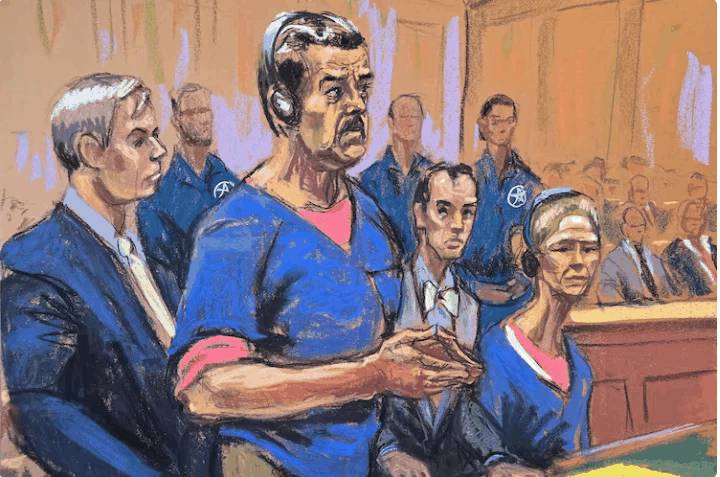
Today, at 12:00 p.m. Eastern, Nicolás Maduro stood in a Manhattan federal courtroom wearing blue prison scrubs with orange trim, headphones clamped over his ears for the Spanish interpreter, and told Judge Alvin Hellerstein: "I am innocent. I am not guilty. I am a decent man. I am still president of my country."
The judge cut him off.
As he was led out of the courtroom thirty minutes later, a man in the gallery shouted at him in Spanish. Pedro Rojas, 33, a former Venezuelan political prisoner who spent four months in Maduro's jails, told him he would pay for what he did to Venezuela.
Maduro's response: "I am a kidnapped president. I am a prisoner of war."
That exchange tells you everything about what this case is going to be. Not just a drug trial. Not just a narco-terrorism prosecution. This is going to be a constitutional collision between American law enforcement power and international sovereignty, between the Ker-Frisbie doctrine and the basic principle that you cannot invade a country to arrest its leader without consequences.
And it's going to play out in Judge Hellerstein's courtroom for months, maybe years, to come.
The Arraignment
Maduro and his wife Cilia Flores were transported by helicopter from the Metropolitan Detention Center in Brooklyn to the Wall Street heliport this morning. The motorcade that carried them to the Daniel Patrick Moynihan Courthouse was the kind of security apparatus you'd expect for a sitting president, which is what Maduro still claims to be.
When Judge Hellerstein asked him to identify himself, Maduro didn't give his name. He gave his title.
"I am the president of Venezuela," he said through the interpreter. Then, before the judge could stop him: "I was captured at my home in Caracas, Venezuela."
Hellerstein interrupted. "There will be a time and a place to go into all of this."
That time is coming. But not today. Today was about the formalities.
When asked if he wanted the indictment read aloud, Maduro said he had it in his hands for the first time. He'd rather read it himself. When asked how he pleaded to the four counts against him, narco-terrorism conspiracy, cocaine importation conspiracy, possession of machineguns and destructive devices, and conspiracy to possess those weapons, he said he was innocent. Not guilty. A decent man.
And still president.
The Defense Strategy Emerges
Barry Pollack is not your average federal defender. He's the attorney who brokered Julian Assange's release from prison, negotiating a plea deal that let Assange walk free after pleading guilty to a single Espionage Act charge. He secured the acquittal of former Enron accountant Michael Krautz when nearly two dozen other executives went down. He won the exoneration of Martin Tankleff, a Long Island man who spent 17 years in prison for murders he didn't commit.
When Pollack speaks, federal prosecutors pay attention.
And today, Pollack made clear what this defense is going to look like. He told Judge Hellerstein there are "questions about the legality of his military abduction" and promised "voluminous" pretrial filings to address those challenges.
He's going to argue that Maduro is entitled to sovereign immunity as a head of state. He's going to challenge the entire premise of the U.S. operation, the military strikes on Caracas, the Delta Force raid on the presidential compound, the seizure of a sitting president from his own home in his own country.
Here's where it gets interesting from a due process perspective.
The United States doesn't recognize Maduro as the legitimate president of Venezuela. The Biden administration didn't. The Trump administration doesn't. After the disputed 2024 election, the U.S. position has been that opposition candidate Edmundo González actually won, that Maduro stole it, that he's an illegitimate ruler clinging to power through fraud and force.
So when Pollack argues sovereign immunity, the government is going to say: what sovereign? We don't recognize him as head of state. You can't claim immunity for a position we don't acknowledge you hold.
Dick Gregorie, the retired federal prosecutor who indicted Manuel Noriega back in 1989, put it plainly: "There's no claim to sovereign immunity if we don't recognize him as head of state. Several U.S. administrations, both Republican and Democrat, have called his election fraudulent and withheld U.S. recognition. Sadly, for Maduro, it means he's stuck with it."
But Pollack knows this. Which means the real fight isn't going to be about immunity. It's going to be about Ker-Frisbie.
The Ker-Frisbie Question
I laid out the doctrine in detail two days ago, but here's the short version: In 1886, the Supreme Court ruled in Ker v. Illinois that courts have jurisdiction over defendants regardless of how they were brought before the court. Frederick Ker was kidnapped from Peru and brought to Illinois to face larceny charges. He argued the court had no jurisdiction because he was illegally seized. The Court disagreed.
In 1952, Frisbie v. Collins reaffirmed it. Shirley Collins was forcibly abducted from Chicago and taken to Michigan. Same argument, same result. The body is before the court. That's enough.
The doctrine has been tested again and again. In 1992, the Supreme Court ruled in United States v. Alvarez-Machain that even kidnapping a Mexican national from Mexico, in violation of an extradition treaty, didn't deprive U.S. courts of jurisdiction.
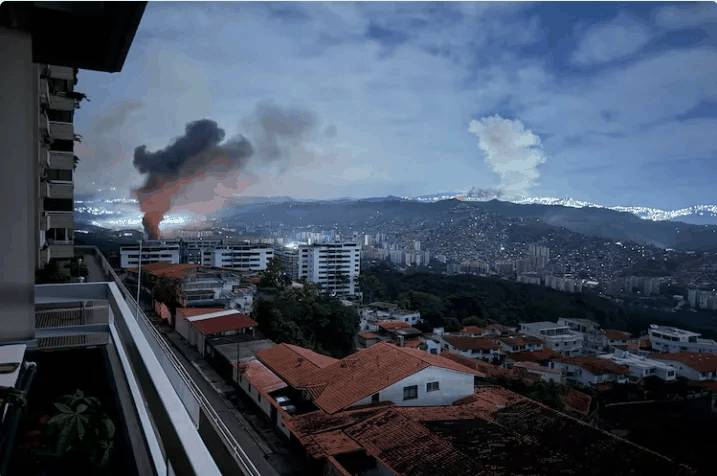
But here's what makes Maduro different: he wasn't just kidnapped. He was extracted through a military operation that killed more than 80 people according to Venezuelan and Cuban officials. The U.S. bombed infrastructure across northern Caracas. 150 aircraft launched from 20 bases. B-1 bombers. F-35 and F-22 fighter jets. This wasn't a covert snatch-and-grab. This was a military assault on a sovereign nation.
Pollack is going to argue that Ker-Frisbie has limits. That the doctrine was developed for situations involving law enforcement overreach, not military invasions. That whatever flexibility courts have shown for irregular arrests, they never contemplated this, never contemplated a sitting president being seized by military force from his own capital city while bombs fell around him.
It's an argument that's never been tested at this scale. And that's exactly what makes this case unprecedented.
The First Lady's Injuries
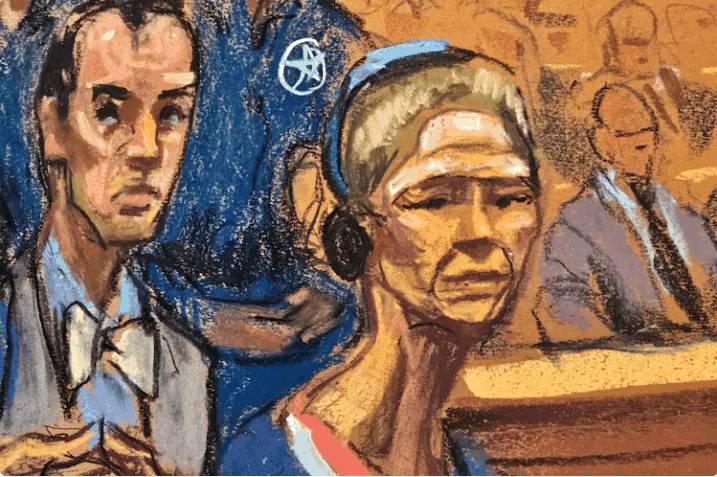
Cilia Flores appeared in court with bandages on her forehead and a visible bruise under her right eye. According to reporters in the courtroom, she appeared to lean on a court officer to keep her balance.
Her attorney, Mark Donnelly, told Judge Hellerstein that his client sustained "significant injuries during her abduction." He said she may have fractured or severely bruised ribs and needs a full medical evaluation, including X-rays.
When asked how she pleaded to the three counts against her, cocaine importation conspiracy and the two weapons charges, Flores responded: "Not guilty. Completely innocent."
She identified herself as the First Lady of the Republic of Venezuela.
The injuries matter. Not because they change the legal calculus, Ker-Frisbie doesn't care about bruises, but because they're evidence of what happened in that compound when Delta Force breached the walls. Whatever resistance occurred, whatever struggle took place, it left marks. And those marks are now visible in an American courtroom, documented in the record, part of the case file.
Flores is 69 years old. She's been at the center of Venezuelan politics for decades, one of the original Chavistas who helped build the movement that Hugo Chávez rode to power. Her nephews have been convicted of drug trafficking in U.S. courts. The indictment alleges she brokered meetings between drug traffickers and Venezuelan officials, accepted hundreds of thousands of dollars in bribes.
None of that justifies broken ribs. None of that changes the fact that a 69-year-old woman was pulled from her home by foreign soldiers and now sits in a federal jail with injuries visible enough that her lawyer felt compelled to raise them in open court.
The details matter. The process matters. That's the whole point.
The International Fallout
While Maduro stood in that Manhattan courtroom, the UN Security Council was meeting across town to discuss whether the United States had violated international law.
Secretary-General António Guterres called the U.S. action a "dangerous precedent." His spokesperson said Guterres is "deeply concerned that the rules of international law have not been respected."
Russia condemned the strikes. China called them a "flagrant violation of international law." Brazil's President Lula said the operation "crossed an unacceptable line" and set a "dangerous precedent." Mexico called it a violation of the UN Charter. France said the military operation "contravenes the principle of non-use of force."
Even allies hedged. The EU issued a careful statement supporting international law while stopping short of direct condemnation. The UK's Keir Starmer said he would "shed no tears" over Maduro's fall but emphasized his "support for international law." Denmark's ambassador pointedly reminded Washington about Greenland's territorial integrity.
The legal analysis from experts has been nearly unanimous. Mary Ellen O'Connell, a Notre Dame Law professor specializing in international law, told NBC News that the operation was effectively a "kidnapping" that violates core principles of the UN Charter. "If you detain someone unlawfully, if you take someone into your custody and you do not have the legal right to do that, then what else would you call it?"
The Chatham House analysis was blunt: "There is no UN Security Council mandate that might authorize force. Clearly, this was not an instance of a US act of self-defence triggered by a prior or ongoing armed attack by Venezuela."
None of this helps Maduro in Judge Hellerstein's courtroom. International law violations don't give U.S. courts a reason to release defendants. The Ker-Frisbie doctrine is specifically designed to prevent that.
But it matters for what comes next. It matters for how the world sees American power. It matters for the precedent being set.
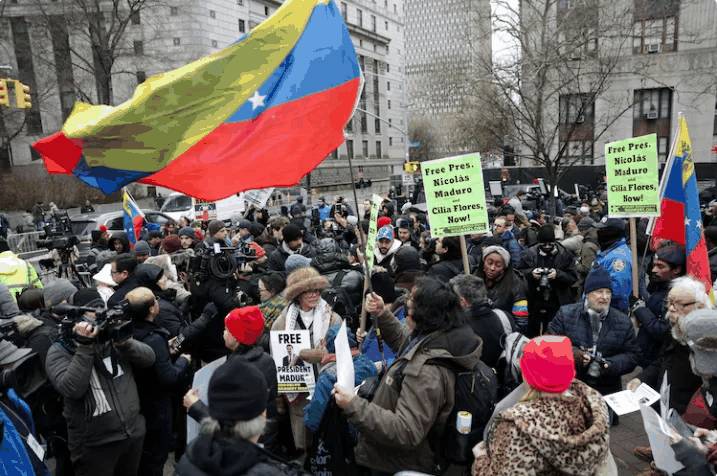
Congress Wakes Up
The Constitution gives Congress the power to declare war. Not the president. Congress.
The Trump administration didn't ask Congress for authorization before launching strikes on Venezuela. Didn't brief the Gang of Eight, the top congressional leaders who are supposed to be notified of sensitive operations. According to multiple sources, the Department of Defense notified congressional staff after the operation had already started.
Trump's explanation: "Congress will leak, and we don't want leakers."
Secretary of State Marco Rubio tried to reframe it. "This is not the kind of mission that you can do congressional notification on," he said at Mar-a-Lago. "At its core, this was an arrest of two indicted fugitives of American justice, and the Department of War supported the Department of Justice in that job."
That framing is doing a lot of heavy lifting. 150 aircraft. B-1 bombers. More than 80 people killed. Strikes on airports, ports, military installations. The largest U.S. military operation in Latin America since Panama in 1989. And it's being characterized as a law enforcement action that didn't require congressional approval.
Senator Tim Kaine called the strikes "clearly illegal." Senator Chuck Schumer said it was "a violation of the law to do what they did without getting the authorization of Congress."
The House tried to pass a War Powers Resolution. It failed 211-213, with three Republicans voting in favor and one Democrat, Henry Cuellar of Texas, voting against. Three votes. That's how close it was.
The Senate will vote this week on a bipartisan resolution sponsored by Schumer, Kaine, Rand Paul, and Adam Schiff. It only needs a simple majority. Paul is the only Republican co-sponsor so far, but Collins, Murkowski, and Hawley have expressed reservations about executive overreach in the past.
Even if it passes, Trump will veto it. And there aren't enough votes to override.
But the vote matters anyway. The record matters. The principle matters.
My father spent his career fighting for constitutional protections. He went to prison for refusing to violate attorney-client privilege when federal investigators wanted him to testify. He was convicted for teaching people their rights from a coffee shop. He understood that the Constitution only works if people insist on it, if they demand that the government follow its own rules even when it's inconvenient, even when the target is someone as unsympathetic as Nicolás Maduro.
Maduro is not a good man. The evidence suggests he presided over a narco-state, that his government facilitated the movement of thousands of tons of cocaine, that people died because of policies he implemented. The human rights abuses documented under his rule are extensive and horrifying.
None of that means the Constitution doesn't apply. None of that means Congress can be bypassed. None of that means we get to ignore the rules because we don't like the defendant.
That's not how this works. That's never been how this works.
What Happens Next
Judge Hellerstein set the next court date for March 17 at 11 a.m. Between now and then, expect what Pollack promised: voluminous filings. Motions to dismiss based on sovereign immunity. Challenges to the legality of the capture. Discovery requests that could expose details of the operation the government would prefer to keep classified.
Neither Maduro nor Flores sought bail today. They're staying at MDC Brooklyn, the same federal jail where Luigi Mangione is being held. Pollack indicated they may file bail applications later, but for now, they're not fighting detention.
That's a tactical choice. Fighting bail creates a record. It requires the government to articulate why they're a flight risk, why they're dangerous. It gives the defense a preview of the prosecution's case. By waiving bail for now, Pollack keeps his options open.
Meanwhile, in Venezuela, Vice President Delcy Rodríguez has been sworn in as interim president. She's offered to "collaborate" with the Trump administration, which is remarkable given that she's named in the same indictment, identified as a co-conspirator. Her brother Jorge, the head of the National Assembly, administered the oath.
Maduro's son, Nicolás Maduro Guerra, is also named in the indictment. He spoke to parliament today demanding his parents' return. "If we normalize the kidnapping of a head of state, no country is safe. Today it's Venezuela. Tomorrow it could be any nation that refuses to submit."
Interior Minister Diosdado Cabello, another indicted co-defendant, is still running the police. The structure of Maduro's government minus Maduro remains in place, now apparently willing to work with the administration that just invaded their country and arrested their leader.
Trump says the U.S. is "in charge" of Venezuela. Rubio says the U.S. is "running policy" there. How that translates into reality, with Maduro's allies still controlling the security apparatus and no American troops on the ground, remains to be seen.
The Test
I've said it before and I'll say it again: the Constitution protects everyone or it protects no one. Due process isn't a reward for good behavior. The presumption of innocence doesn't disappear because the defendant is accused of terrible things.
Nicolás Maduro is entitled to a fair trial. He's entitled to competent counsel. He's entitled to challenge the evidence against him, to confront witnesses, to make the government prove its case beyond a reasonable doubt. That's not a gift we're giving him. That's how the system works.
At the same time, the questions his attorneys are going to raise deserve answers. Not for Maduro's sake. For ours.
Can the United States invade a sovereign nation, kill 80 people, seize a sitting president, and then say the courts have no business asking how he got here? Can the executive branch bypass Congress entirely for an operation of this scale and call it a law enforcement action? Is there any limit to Ker-Frisbie, any line that can't be crossed in pursuit of a defendant?
These are the questions that are going to be litigated in Judge Hellerstein's courtroom. A 92-year-old judge who's handled 9/11 cases and Sudanese genocide claims is now going to decide whether there's a constitutional limit to American power projection.
I'll be watching. We all should be.
The legal framework I wrote about two days ago is no longer theoretical. It's sitting in MDC Brooklyn wearing prison scrubs, waiting for March 17.
Stay tuned. History is happening.
Watch the system. Question everything.
— Justice
Latest from the Desk
Want More?
Subscribe to Justice Is A Process on YouTube for live trial coverage, No Breaks editions, and breaking news as it happens.
🔴 Subscribe on YouTube111,000+ subscribers watching the system with us
Discussion