The United States Just Invaded Another Country to Arrest Its President
Understanding the Ker-Frisbie Doctrine: The 140-Year-Old Legal Principle That Will Decide Maduro's Fate
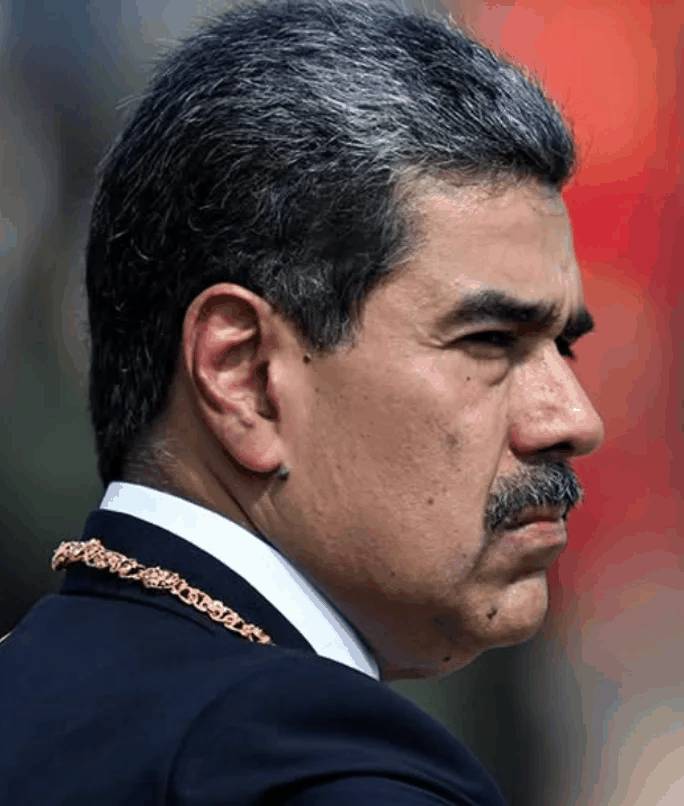
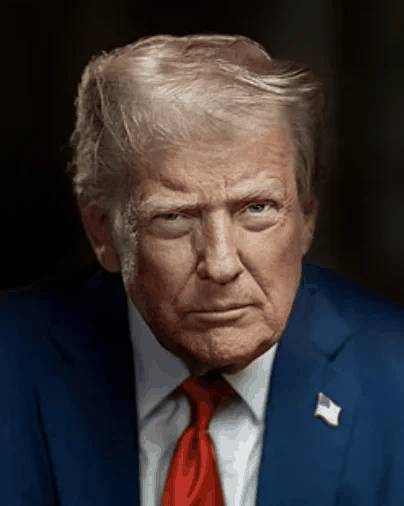
At approximately 1:50 AM local time on January 3, 2026, explosions lit up the night sky over Caracas, Venezuela. Within hours, President Donald Trump announced that U.S. forces had captured Venezuelan President Nicolás Maduro and his wife Cilia Flores, extracted them from their home, and were transporting them via the USS Iwo Jima to New York City to face federal charges.
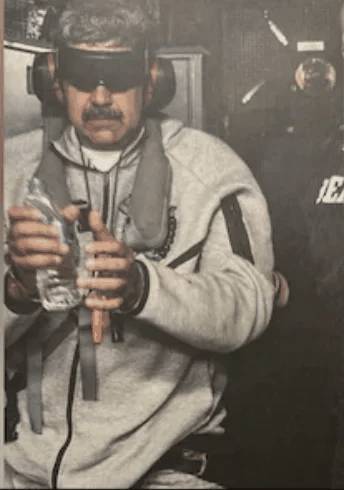
Trump released a photo showing Maduro blindfolded, restrained, and wearing a gray sweatsuit aboard a U.S. warship. He announced that the United States would "run" Venezuela "for a period of time" until a transition could take place.
This is not a movie. This is not a drill. The United States of America just conducted a military invasion of a sovereign nation to arrest its sitting head of state and bring him to trial in a federal courthouse in Manhattan.
Whatever you think about Nicolás Maduro, and there is plenty to criticize, what happens next will test the outer limits of American law, constitutional authority, and the foundational principles that separate a nation of laws from a nation of men. At the center of that test sits a legal doctrine most Americans have never heard of: the Ker-Frisbie doctrine.
This article is your complete guide to understanding what just happened, how we got here, and the legal questions that will determine whether Maduro faces trial or whether this operation represents something the American legal system cannot sanction.
I. What Happened on January 3, 2026
Shortly before 2 AM local time in Caracas, multiple explosions rocked Venezuela's capital city. Witnesses reported at least seven distinct blasts. CNN journalists on the ground described windows shaking from the force of the explosions. Footage verified by multiple news organizations showed strikes on two airports, a port facility, and areas near Fort Tiuna, Venezuela's largest military installation.
The operation was carried out by the U.S. Army's elite Delta Force, working alongside FBI agents who had been positioned to make the formal arrest. According to Trump's own account, CIA operatives had been on the ground since August, tracking Maduro's movements, his eating habits, and his sleeping patterns.
Trump described the target location as "a house that was more like a fortress than a house. It had steel doors, it had what they call a safety space where it's solid steel." According to the President, Maduro "was trying to get into it, but he got bum rushed so fast that he didn't."
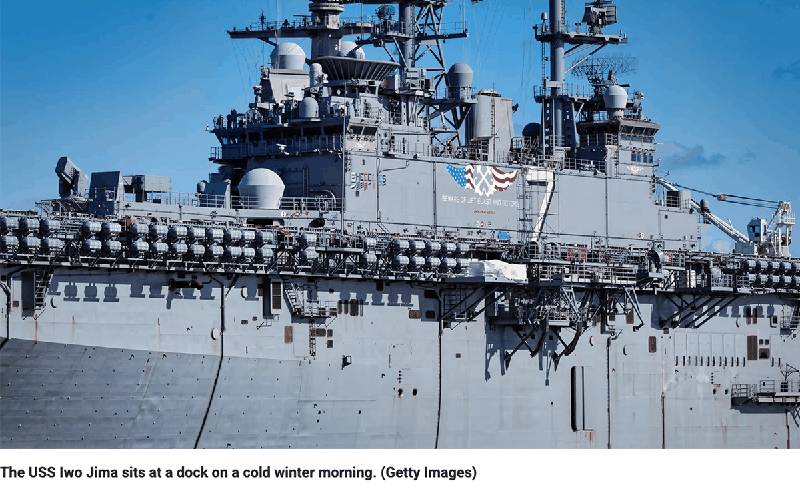
Maduro and his wife were extracted from their bedroom and transported to the USS Iwo Jima, an amphibious assault ship that had been part of the military buildup in Caribbean waters. The ship is now en route to New York, where Maduro will face federal charges in the Southern District of New York.
Venezuelan Vice President Delcy Rodríguez appeared on state television demanding "proof of life" for Maduro and his wife, stating that Venezuelan officials did not know their whereabouts following the U.S. attack. She called the operation an assault on Venezuelan sovereignty that had "savagely attacked" the nation's territorial integrity.
At a press conference at Mar-a-Lago later that morning, Trump announced that the United States would "run" Venezuela temporarily because, in his words, "there is nobody to take over." He indicated U.S. forces would maintain a "presence in Venezuela as it pertains to oil."
— President Donald Trump, Truth Social, January 3, 2026
II. Timeline: The Road to Invasion
This operation did not happen in a vacuum. It was the culmination of months of escalating pressure, including lethal military strikes, economic warfare, and increasingly explicit threats. Understanding this timeline is essential to understanding the legal questions ahead.
III. The Federal Charges Against Maduro
Attorney General Pam Bondi announced that a superseding indictment had been unsealed in the Southern District of New York charging Maduro and his wife with multiple federal crimes.

Charges Against Nicolás Maduro
Count 1: Narco-Terrorism Conspiracy (20-year mandatory minimum, up to life)
Count 2: Cocaine Importation Conspiracy (10-year mandatory minimum, up to life)
Count 3: Possession of Machine Guns and Destructive Devices (30-year mandatory minimum, up to life)
Count 4: Conspiracy to Possess Machine Guns and Destructive Devices (up to life)
The indictment alleges that "for over 25 years, leaders of Venezuela have abused their positions of public trust and corrupted once-legitimate institutions to import tons of cocaine into the United States."
The charges build on a 2020 indictment from Trump's first term, which alleged Maduro was the leader of the "Cartel de los Soles," a network of Venezuelan military and government officials allegedly involved in drug trafficking. The new superseding indictment adds Maduro's wife, Cilia Flores, and his son as co-defendants, along with allegations of partnerships with the Sinaloa Cartel, the Zetas, and Tren de Aragua.
These are serious charges. If convicted, Maduro faces decades in federal prison. But charges and convictions are two different things. And before any jury hears evidence on these allegations, Maduro's defense team will raise a fundamental question: Does this court have the authority to try him at all?
That question brings us to the Ker-Frisbie doctrine.
IV. The Ker-Frisbie Doctrine Explained
Here is the legal principle that will be at the center of Maduro's defense and at the center of the constitutional debate that follows this operation:
The Ker-Frisbie doctrine holds that U.S. courts have jurisdiction over criminal defendants regardless of how their presence before the court was secured. In plain English: It doesn't matter how you got to the courtroom. If you're standing there, you can be tried.
The doctrine derives from two Supreme Court cases decided 66 years apart, and it has been affirmed repeatedly in the years since. Under this principle, even if a defendant was kidnapped, abducted, or brought to the United States through means that violated treaties, international law, or the defendant's own rights, the trial can proceed.
The reasoning is straightforward, if uncomfortable: Due process is satisfied when a defendant is fairly apprised of the charges against him and receives a fair trial with constitutional procedural safeguards. The manner in which the defendant was brought to court is a separate question from whether the court has the power to try him.
As the Supreme Court put it in Frisbie v. Collins: "There is nothing in the Constitution that requires a court to permit a guilty person rightfully convicted to escape justice because he was brought to trial against his will."
This doctrine has survived every challenge thrown at it for 140 years. The question is whether it can survive this one.
V. The Cases That Built the Doctrine
Ker v. Illinois (1886)
The doctrine begins with Frederick M. Ker, a U.S. citizen living in Peru who was wanted on charges of larceny and embezzlement. President Chester Arthur sent an agent to Lima with the proper papers to negotiate Ker's extradition through official channels.
The agent decided not to wait. Instead of processing the extradition, he simply kidnapped Ker and brought him back to the United States by force.
Ker argued that his abduction was illegal and that the court therefore had no jurisdiction over him. The Supreme Court disagreed.
— Ker v. Illinois, 119 U.S. 436 (1886)
The holding was clear: The illegality of the capture does not defeat the court's jurisdiction.
Frisbie v. Collins (1952)
Sixty-six years later, the doctrine was tested again. Shirley Collins was living in Chicago when Michigan authorities decided they wanted him for murder. Rather than go through proper interstate procedures, Michigan police crossed state lines, forcibly abducted Collins from Illinois, and brought him back to Michigan to stand trial.
Collins was convicted and sentenced to life in prison. He filed a habeas corpus petition, arguing that his kidnapping by state authorities violated the Fourteenth Amendment's Due Process Clause and the Federal Kidnapping Act.
Justice Hugo Black, writing for the Supreme Court, rejected this argument and reaffirmed Ker:
— Frisbie v. Collins, 342 U.S. 519 (1952)
The Court went further, addressing whether the Federal Kidnapping Act might provide an exception. It concluded that the severity of the sanctions under the Kidnapping Act made it unlikely Congress intended them to apply to law enforcement officers. The conviction stood.
United States v. Alvarez-Machain (1992)
The most important modern test of the Ker-Frisbie doctrine came in 1992, and it involved the DEA, Mexico, and allegations of torture and murder.
Humberto Álvarez-Machaín was a Mexican physician allegedly involved in one of the most brutal crimes against a U.S. law enforcement officer in history. DEA agent Enrique Camarena-Salazar was kidnapped, tortured for two days, and murdered by members of a Mexican drug cartel in 1985. The DEA believed Álvarez-Machaín had participated in the murder by using his medical skills to prolong Camarena's life so that others could continue torturing and interrogating him.
When negotiations with Mexico for extradition failed, the DEA took matters into its own hands. On April 2, 1990, Mexican nationals hired by DEA agents kidnapped Álvarez-Machaín from his medical office in Guadalajara, flew him by private plane to Texas, and handed him over to U.S. authorities.
The Mexican government lodged formal diplomatic protests. The district court dismissed the indictment, ruling that the kidnapping violated the U.S.-Mexico Extradition Treaty. The Ninth Circuit affirmed.
The Supreme Court reversed.
Chief Justice Rehnquist, writing for the majority, acknowledged that the abduction "may be in violation of general international law principles." He noted that Mexico had protested through diplomatic channels. But he concluded that the Extradition Treaty did not explicitly prohibit kidnapping, and therefore could not be read to prohibit it.
Justice Stevens wrote a blistering dissent, joined by Justices Blackmun and O'Connor, arguing that the decision would "encourage the government to engage in additional acts of international lawlessness."
Here's the twist that matters for Maduro's case: Despite the Supreme Court's ruling that the court had jurisdiction, Álvarez-Machaín was acquitted. At the close of the government's case, the trial judge ruled that prosecutors had failed to present sufficient evidence and granted an acquittal without sending the case to the jury.
The government won the legal battle over jurisdiction and lost the actual case.
VI. The Noriega Precedent
The Trump administration is explicitly citing the 1989 invasion of Panama and the subsequent prosecution of Manuel Noriega as the precedent for this operation. Understanding what happened in that case is essential to understanding what will happen in Maduro's.
On February 4, 1988, a federal grand jury in Miami indicted General Manuel Antonio Noriega, the de facto leader of Panama, on drug trafficking charges. The indictment alleged that Noriega had exploited his position as Commander-in-Chief of the Panamanian Defense Forces to assist and protect international drug traffickers, including the Medellín Cartel, in exchange for personal payoffs.
For nearly two years, Noriega remained in power in Panama, defying U.S. demands that he step down. He annulled national elections in 1989 when international observers said he had lost. He declared hostilities against the United States.
On December 20, 1989, President George H.W. Bush ordered the invasion of Panama. The stated purposes were safeguarding American lives, restoring democracy, preserving the Panama Canal treaties, and seizing Noriega to face federal drug charges. Approximately 27,000 U.S. troops were deployed.
Noriega initially evaded capture, eventually taking refuge in the Vatican embassy. U.S. forces surrounded the building and, in a now-famous tactic, blasted rock music to pressure him into surrendering. On January 3, 1990, exactly 36 years before Maduro's capture, Noriega surrendered to U.S. authorities and was flown to Miami to face trial.
Noriega raised multiple defenses:
Head of State Immunity: Noriega argued that as the de facto leader of Panama, he was entitled to immunity from prosecution. The court rejected this, holding that head of state immunity is a privilege the United States may grant or withhold, and the U.S. had never recognized Noriega as Panama's legitimate ruler.
Illegal Capture: Noriega argued that the manner of his capture, through a military invasion, was "shocking to the conscience and in violation of the laws and norms of humanity." The court rejected this under Ker-Frisbie.
Extradition Treaty Violation: Noriega argued that his capture violated the U.S.-Panama Extradition Treaty. Citing Alvarez-Machain, the court rejected this, holding that the treaty did not explicitly prohibit the method by which he was brought to the United States.
Prisoner of War Status: Noriega claimed that as a prisoner of war under the Geneva Convention, the court lacked jurisdiction. The court acknowledged his POW status but held that the Geneva Convention permits prosecution for pre-capture crimes like drug trafficking.
Noriega was convicted in 1992 on eight of ten counts and sentenced to 40 years in federal prison. He served 20 years in the United States, was extradited to France in 2010 to serve a sentence for money laundering, and was then sent back to Panama in 2011 to serve additional sentences for murder and corruption. He died in 2017 at age 83.
VII. Why Maduro's Case Is Different
The Trump administration wants you to believe that Maduro is simply Noriega 2.0. The parallels are obvious and intentional: drug trafficking charges, a military operation, extraction to face trial in the United States.
But the differences are significant, and they matter for the legal analysis ahead.
| Factor | Noriega (1989) | Maduro (2026) |
|---|---|---|
| Status | De facto military leader who never won an election | Elected president (however disputed), recognized by majority of world nations |
| Declaration of War | Panama's National Assembly declared war on the U.S. | No declaration of war by Venezuela |
| American Presence | ~10,000 U.S. troops already stationed in Panama | No U.S. military presence in Venezuela prior to invasion |
| Strategic Assets | Panama Canal neutrality at stake | No comparable U.S. strategic asset |
| Civilian Casualties | Estimated hundreds of Panamanian civilians killed | Unknown but reported; investigation ongoing |
| International Response | UN General Assembly condemned invasion 75-20 | Near-universal condemnation; emergency UN Security Council meeting requested |
| Congressional Authorization | None sought; none given | None sought; none given |
| Post-Capture Governance | U.S. recognized Guillermo Endara as president; Panamanian government continued | Trump announces U.S. will "run" Venezuela temporarily |
The critical distinction that will echo through the legal proceedings is this: When the U.S. invaded Panama, Noriega had declared war on the United States, American citizens were allegedly in danger, and U.S. troops were already on the ground. None of those conditions existed in Venezuela.
As one retired Army lieutenant colonel put it: "There were tens of thousands of Americans in Panama allegedly in danger; Noriega had declared war on the U.S., and the neutrality and protection of the Panama Canal was at risk."
None of that applies here.
VIII. The Questions That Will Decide This Case
The legal battle over Maduro will be fought on multiple fronts. Here are the questions that will determine whether he faces trial or whether the federal court concludes it cannot exercise jurisdiction over a defendant obtained in this manner.
1. Does U.S. Non-Recognition Strip Head of State Immunity?
The United States has not recognized Maduro as Venezuela's legitimate president since the disputed 2024 election. In the Noriega case, the court held that head of state immunity "is a privilege which the United States may withhold from any claimant."
But Maduro wasn't a military strongman who seized power in a coup. He was elected (first in 2013, and in disputed elections since), inaugurated, and recognized by the majority of the world's nations. He controls the government, the military, and the institutions of the Venezuelan state.
Does America's unilateral decision not to recognize a foreign leader automatically convert that leader from a head of state into a private criminal defendant? If so, what stops any future administration from simply refusing to recognize a foreign leader and then claiming the right to invade and arrest them?
2. At What Point Is a Capture "Too Bad" for "Good Detention"?
The Ker-Frisbie doctrine has survived individual kidnappings. It survived an invasion of a small Central American nation. But can it survive this?
This operation involved air strikes on a foreign capital. It destroyed military and civilian infrastructure. It killed Venezuelan civilians and military personnel (the exact number remains unknown). It created a power vacuum in a country of 28 million people. And it was condemned by nearly every major nation on Earth, including traditional U.S. allies like France, Germany, and the United Kingdom.
The Second Circuit in the 1970s created a narrow exception to Ker-Frisbie in United States v. Toscanino, suggesting that if a capture involved torture or conduct that "shocks the conscience," courts might divest themselves of jurisdiction. That exception has rarely been applied, but Maduro's defense team will certainly argue it.
If a military invasion of a sovereign nation, strikes on civilian infrastructure, and the capture of a sitting head of state doesn't "shock the conscience," what would?
3. What Happens When International Law Violations Are This Massive?
Article 2(4) of the UN Charter provides that member states "shall refrain in their international relations from the threat or use of force against the territorial integrity or political independence of any State."
The UN General Assembly's 1974 Definition of Aggression explicitly includes "the blockade of the ports or coasts of a State by the armed forces of another State" as an act of aggression.
UN human rights experts had already condemned the U.S. blockade of Venezuela in December, stating: "There is no right to enforce unilateral sanctions through an armed blockade. A blockade is a prohibited use of military force against another country under article 2(4) of the UN Charter."
U.S. courts have historically held that violations of international law don't defeat jurisdiction under Ker-Frisbie. The Supreme Court in Alvarez-Machain acknowledged that the abduction "may be in violation of general international law principles" but held that this was a matter for the Executive Branch, not the courts.
But can that position survive when the violation isn't a covert kidnapping by hired operatives, but a full-scale military invasion broadcast live on television?
4. Was This an Act of War Requiring Congressional Authorization?
The U.S. Constitution grants Congress, not the President, the power to declare war. The War Powers Resolution of 1973 requires the President to notify Congress within 48 hours of committing armed forces to military action and to terminate such action within 60 days without congressional authorization.
Trump administration officials are internally pointing to a 1989 legal opinion, authored by then-Assistant Attorney General William Barr, that concluded the President has constitutional authority to deploy the FBI to investigate and arrest individuals "even if those actions contravene international law."
The administration placed FBI agents on the ground alongside Delta Force soldiers, apparently to invoke this opinion as a legal basis for the operation.
Democratic lawmakers have called the operation illegal and unconstitutional. Senator Andy Kim stated: "Secretaries Rubio and Hegseth looked every Senator in the eye a few weeks ago and said this wasn't about regime change. I didn't trust them then and we see now that they blatantly lied to Congress."
Representative Ritchie Torres stated: "The US Constitution vests the power to declare war in Congress. No single individual has the authority to commit the nation to a war of regime change without congressional authorization."
While questions of constitutional war powers may not directly affect the court's jurisdiction over Maduro, they will color the entire proceeding and may affect how courts view the legitimacy of the capture.
5. Can Maduro Receive a Fair Trial?
The President of the United States is on television calling this operation a "brilliant success" and referring to Maduro as a "narco-terrorist." The Attorney General has promised that Maduro will "face the full wrath of American justice."
Can any defendant receive a fair trial when the executive branch has already declared him guilty? Can a jury be impaneled in the Southern District of New York that hasn't already been saturated with prejudicial statements from the President himself?
Defense attorneys will almost certainly move for a change of venue. They may argue that the pervasive pretrial publicity makes a fair trial impossible anywhere in the United States.
IX. The Global Precedent Problem
Whatever you think of Maduro, the implications of this operation extend far beyond one man's criminal trial.
If the United States can unilaterally invade sovereign nations to capture their leaders based on domestic indictments, what principle prevents other nations from doing the same?
Russia has long justified its aggression in Ukraine by claiming to fight "terrorists" and protect Russian nationals. China has territorial claims throughout the South Pacific. Both nations have watched this operation carefully.
As one legal scholar wrote before the invasion: "When the United States disregards the legal limits on the use of force, it undermines the very norms it relies upon to condemn aggression elsewhere. These actions weaken U.S. credibility in calling out Russia's invasion of Ukraine, which Moscow also attempts to justify through self-defense narratives and claims of fighting 'terrorists.'"
French Foreign Minister Jean-Noël Barrot stated: "The military operation that led to the capture of Nicolas Maduro violates the principle of not resorting to force that underpins international law. France reiterates that no lasting political solution can be imposed from the outside."
Brazilian President Lula da Silva called the capture "an unacceptable line" and "a grave affront to Venezuela's sovereignty and yet another extremely dangerous precedent for the entire international community."
Even Germany's conservative Christian Democratic Union called the operation "a coup," stating: "With President Trump, the U.S. is abandoning the rules-based order that has shaped us since 1945."
The international consensus is clear: This operation has damaged the post-World War II framework of international law. The question is whether U.S. courts will care.
X. What Comes Next
Maduro is currently aboard the USS Iwo Jima, en route to New York. Upon arrival, he will be transported to federal custody, likely at the Metropolitan Detention Center in Brooklyn, to await his initial appearance in the Southern District of New York.
The legal process from here follows a familiar path:
Initial Appearance: Maduro will appear before a federal magistrate judge within 24-48 hours of arriving in New York. The charges will be read, and bail will be addressed (almost certainly denied for a defendant of this profile).
Arraignment: Maduro will enter a formal plea to the charges. He will almost certainly plead not guilty.
Pre-Trial Motions: This is where the real battle begins. Defense attorneys will file motions to dismiss for lack of jurisdiction, challenging the court's authority to try a defendant obtained through military invasion. They will argue head of state immunity, violations of international law, and the "shocking the conscience" exception to Ker-Frisbie.
Government Response: Prosecutors will cite Noriega, Alvarez-Machain, and the entire 140-year line of Ker-Frisbie cases. They will argue that however Maduro was brought to the courtroom, the court has jurisdiction to try him.
District Court Ruling: A federal judge will decide whether the case can proceed. If the judge dismisses, the government will appeal. If the judge allows the case to proceed, Maduro will appeal.
Appellate Review: The Second Circuit Court of Appeals will review the jurisdictional questions. Given the unprecedented nature of the case, Supreme Court review is almost certain regardless of how the Second Circuit rules.
This process will take months, possibly years. In the meantime, Maduro will sit in federal custody while the constitutional questions are litigated.
And in Venezuela, a nation of 28 million people will wait to see what "the United States will run the country" actually means in practice.
Final Thoughts
My father, Steven M. Askin, spent his career defending people the system wanted to crush. He went to federal prison twice for standing on principle, first for protecting attorney-client privilege, and later for the "crime" of teaching people their constitutional rights from a coffee shop.
He taught me that due process either means something or it doesn't. That the Constitution isn't just for people we like. That the true measure of a justice system is how it treats the people society despises.
Nicolás Maduro is not a sympathetic defendant. The charges against him are serious. The Venezuelan people have suffered under his government.
But the question before the federal court is not whether Maduro is a good man. It's whether the United States can invade a sovereign nation, extract its sitting head of state, and try him in a civilian courthouse based on a 140-year-old doctrine that says it doesn't matter how you got the defendant into the courtroom.
If the answer is yes, that doctrine will be tested to its absolute limit.
And if the answer is no, we will have discovered that even in American law, there are some captures too "bad" for the detention that follows to be called "good."
I'll be covering this case from the beginning. Every hearing. Every motion. Every constitutional question. Because whatever you think of Maduro, what happens in that Manhattan courtroom will tell us something fundamental about what kind of nation we are.
▶️ WATCH THE FULL ANALYSIS The United States Just Invaded Another Country to Arrest Its PresidentWatch the system. Question everything.
Justice is a process, not a destination.
— Justice
Explore More Coverage
Want More?
Subscribe to Justice Is A Process on YouTube for live trial coverage, breaking news analysis, and in-depth legal commentary as this story develops.
🔴 Subscribe on YouTube111,000+ subscribers watching the system with us
Discussion