Mark Sievers: The Evidentiary Hearing is Over. Now We Wait.
A man on death row. A hitman who says he's innocent. And the constitutional question nobody wants to answer.
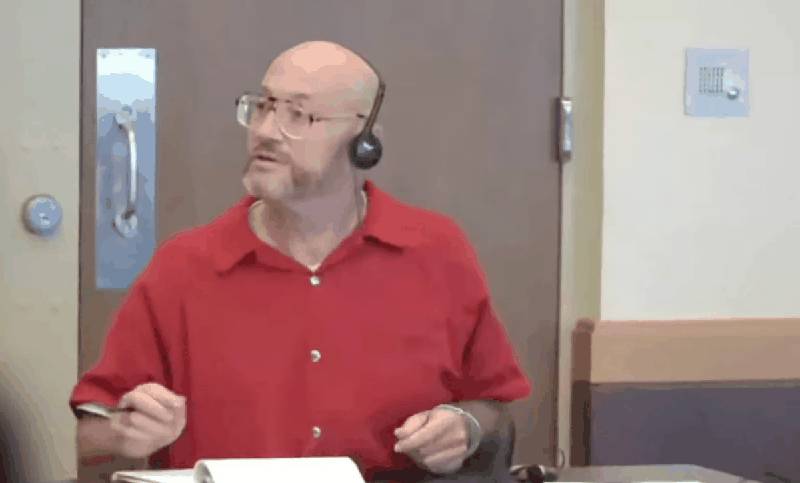
The testimony is done. The witnesses have been heard. And now Mark Sievers waits on death row while lawyers file written closing arguments and Judge Bruce Kyle decides whether his trial met constitutional standards.
I've been covering this post-conviction hearing since it began in October 2025, and today I'm releasing the final two segments from Day 2 of testimony. These aren't just procedural footnotes. One features Mark's mother and stepmother defending their son. The other features Jimmy Rodgers, the man convicted alongside Curtis Wayne Wright for actually killing Dr. Teresa Sievers, taking the stand to say Mark had nothing to do with it.
If you're new to this case, here's what you need to know.
The Murder
On June 28, 2015, Dr. Teresa Sievers returned home alone to Bonita Springs, Florida after cutting short a family vacation in Connecticut. Her husband Mark and their two daughters stayed behind. She walked into her home just before midnight. She never walked out.
Teresa was beaten to death with a hammer. Seventeen blows. Her body was found the next morning by a family friend after she didn't show up for work at her holistic medical practice.
Within weeks, investigators arrested two men from Missouri: Curtis Wayne Wright, Mark's childhood best friend, and Jimmy Ray Rodgers, a man Wright had met in prison. GPS data from their rental car traced their 1,100-mile journey from Missouri to Florida and back. Surveillance footage showed them shopping for supplies at Walmart. The case against them was overwhelming.
But the case against Mark? That depended almost entirely on Curtis Wayne Wright.
The Deal
Wright cut a deal. He pled guilty to second-degree murder and agreed to testify against both Rodgers and Mark in exchange for 25 years instead of death. His story: Mark asked him at Wright's own wedding in May 2015 to kill Teresa. Mark promised him at least $100,000 from the life insurance proceeds. Wright recruited Rodgers to help.
The prosecution's theory was straightforward. Mark wanted Teresa dead for the $4.4 million in life insurance and to avoid a custody battle over their daughters. He had the perfect alibi, hundreds of miles away in Connecticut while his childhood friend did the killing.
In December 2019, a jury convicted Mark of first-degree murder and conspiracy. They unanimously recommended death. Judge Bruce Kyle imposed the sentence in January 2020.
But here's what's been gnawing at this case ever since: Curtis Wayne Wright is a five-time convicted felon who gave at least five different statements to investigators, each one contradicting the others. He had every reason in the world to give prosecutors exactly what they wanted. And the physical evidence? It connects Wright and Rodgers to the murder scene. It doesn't connect Mark to anything except being married to Teresa and knowing Curtis Wayne Wright since childhood.
The Constitutional Questions
Mark's post-conviction attorneys filed a 163-page motion in September 2024 raising 18 claims. Judge Kyle granted an evidentiary hearing on six of them:
Newly discovered evidence. In December 2020, Jimmy Rodgers wrote a letter to Mark's mother claiming Mark had nothing to do with Teresa's murder. That Rodgers is now willing to testify to this in court is significant.
Unqualified counsel. Mark's lead trial attorney, Michael Mummert, didn't meet Florida Rule 3.112's requirements for capital case representation. The rule exists because death is different. The state can't take someone's life without ensuring they had lawyers qualified to defend against it.
Ineffective assistance. The claims here cut deep. Mummert testified at the hearing that he "feels like he failed." Co-counsel Gregory Messore admitted he regrets not calling Mark's young daughters to testify during the penalty phase. Mitigation specialist Donna Murray testified she had only three months to prepare and struggled with communication from the defense team.
The state's response is equally straightforward: Mark knew his attorneys might not meet the qualifications and proceeded anyway. He waived qualified counsel on the record. You can't complain about the lawyer you chose.
But here's what bothers me about that argument. The constitutional right to effective assistance of counsel isn't just about the defendant's comfort. It's about the integrity of the process. It's about making sure that when the state takes a life, we got it right. A waiver doesn't mean the trial was fair. It just means the defendant can't use that specific issue on appeal.
What the Hearing Revealed
Over two days in October, witness after witness painted a picture of a defense team that cared but may have been overwhelmed.
Mummert testified he visited Mark in jail every Sunday for hours. He worked over a thousand hours on the case. He still believes Mark is innocent. He still believes Curtis Wayne Wright was the real killer, motivated by what Mummert called an "infatuation" with Mark. But he also admitted the jury heard evidence he felt was "extraneous" and that hindsight has been brutal.
Messore, the qualified co-counsel who was supposed to be the death penalty expert, testified he was "largely not present" during trial preparation. He handled mitigation while Mummert handled the guilt phase. When asked what he would have done differently, his answer was haunting: he would have called Mark's daughters to testify. Those little girls who lost their mother might have been the only thing that saved their father from death row. And no one put them on the stand.
Forensic experts raised questions about Wright's testimony that don't match the physical evidence. Wright claimed Rodgers used the claw end of a ball-peen hammer for a final blow, but the autopsy shows no injuries consistent with claw marks. Small details, maybe. But in a case built on one man's word, every inconsistency matters.
Today's Videos: The Final Witnesses
The two videos I'm releasing today complete our coverage of the evidentiary hearing testimony.
The first features Jenny Weckelman and Bonnie Sievers, Mark's stepmother and mother. Their testimony speaks to what the jury should have heard about Mark's life, his character, his role as a father. Jenny testified she's known Mark since 1980, raised him from age 10 to 17, and still considers him her son. Bonnie, his biological mother, pushed back hard against the idea that anything in Mark's upbringing could explain or excuse violence. "He had a normal childhood," she said. "He was loved very much."
Both women testified that their preparation for the penalty phase was minimal. Most of their contact was with Jennifer Wood, Mummert's legal assistant and wife. When asked if anyone explained mitigation to her, Bonnie's answer was telling: "It was mostly, well, we want to see what happened to Mark type stuff. And I thought, my god, he had a normal childhood."
▶️ WATCH NOW Mark Sievers Hearing: His Mother and Stepmother Take the StandThe second video is the one that matters most.
Jimmy Ray Rodgers took the stand and told a completely different story than Curtis Wayne Wright. According to Rodgers, he thought they were going to Florida for legitimate work. Paint a house. Do some computer stuff. Wayne talked about the trip for a month before they left. Rodgers told his employer. He told his roommate Taylor Shomaker. He brought painting supplies and coveralls.
Rodgers testified that Wright claimed he and Mark had a secret homosexual relationship going back to their teenage years. That their Florida trips were really about maintaining that relationship. That Wright used a second phone to communicate secretly with Mark.
When they arrived at the Sievers home the morning of June 28, nobody was there. Wright had gotten the dates wrong, which Rodgers attributed to Wright's traumatic brain injury that caused him to constantly forget things. So they went to the beach. They went sightseeing. They waited.
Then Teresa came home. And according to Rodgers, she was furious to find Wright there. She screamed at him. Told him he did terrible IT work. Said she was going to hire someone local. Told him he was fired.
Rodgers testified that the hammer was already there, sitting on a deep freeze in the garage. He didn't bring it. Neither did Wright. Teresa ran into the house. Wright chased her, grabbed her by the hair, threw her to the ground, and kept hitting her.
When Rodgers walked into the home and saw what was happening, his exact words were: "F*** this. I'm out of here."
He testified he wiped his fingerprints off the garage door button and a motorcycle's handlebars in a panic. Wright continued beating Teresa's body even after she was clearly dead, calling her names.
The state hammered Rodgers on cross-examination. Why didn't you call the police? Why didn't you tell this story sooner? Why did you wait until December 2020 to write that letter?
Rodgers's answer: "Who was I supposed to tell this to? I told it to my attorneys." He testified that his lawyer advised him not to write the letter at all. She warned him that anything he wrote would be used against him. He wrote it anyway.
Is Rodgers credible? That's for Judge Kyle to decide. But here's what I know: Rodgers was acquitted of conspiracy. The jury that convicted him of second-degree murder found him not guilty of being part of a murder-for-hire plot. And now he's sitting in prison for life, with nothing to gain, saying Mark Sievers had nothing to do with his wife's death.
▶️ WATCH NOW Jimmy Rodgers Takes the Stand: "Mark Sievers Had Nothing to Do With It"What Happens Now
With testimony concluded, the case moves to paper. The court reporter prepares transcripts. Both sides have 30 to 45 days from that point to file written closing arguments. Mark's attorneys requested an extension in November because they're representing another death row inmate facing execution. Judge Kyle granted it.
Once the written arguments are in, Judge Kyle will issue his ruling. He could deny relief entirely. He could grant a new trial. He could grant a new penalty phase. He could modify the sentence. Whatever he decides will almost certainly be appealed.
Mark Sievers remains on death row at Union Correctional Institution in Raiford, Florida. He's been there since January 2020. His two daughters, who lost their mother when they were 8 and 11, are now young adults. One of them wrote to the court asking for mercy on her father. Having lost her mother, she said, losing her father too would be unbearable.
I don't know if Mark Sievers is guilty or innocent. A jury decided that question in 2019, and I wasn't in that room. What I do know is that the Constitution requires us to get the process right, especially when a life is on the line. The questions raised in this hearing deserve answers. Was his counsel truly effective? Does Jimmy Rodgers's testimony create reasonable doubt that didn't exist at trial? Did the system work the way it's supposed to?
These are the questions Judge Kyle will have to answer. And we'll be watching when he does.
Watch the system. Question everything.
— Justice
Explore More Coverage
Want More?
Subscribe to Justice Is A Process on YouTube for live trial coverage, No Breaks editions, and breaking news as it happens.
🔴 Subscribe on YouTube111,000+ subscribers watching the system with us
Discussion