One Witness, No Camera, 100 Days in Jail
When a cop shoots a cop and the only version of events comes from the shooter, is that enough to overcome the presumption of innocence?
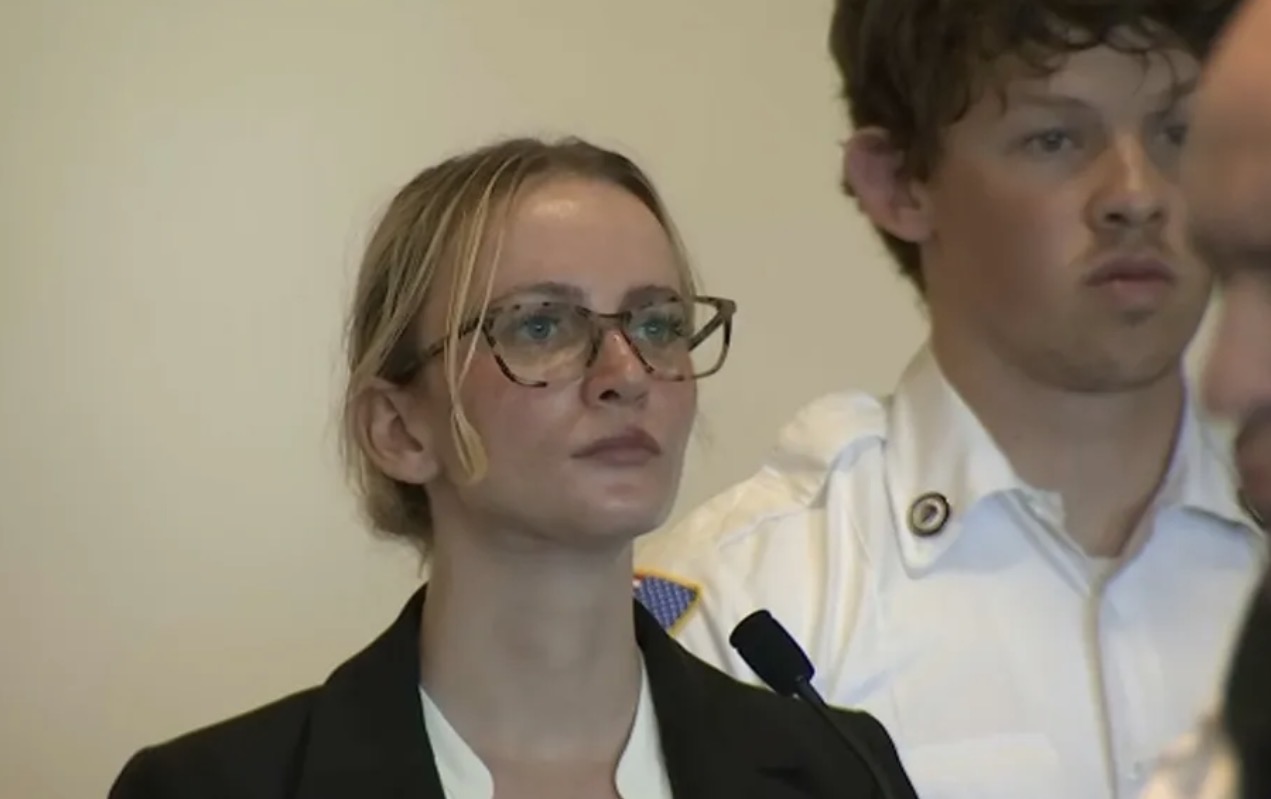
The Night Everything Fell Apart
At 6:12 p.m. on June 30, 2025, three North Andover police officers knocked on the door of 125 Phillips Brook Road. They were there to serve a restraining order on one of their own.
Kelsey Fitzsimmons, 28, opened the door. She was holding her four-month-old son. She had been on administrative leave from the department for months, struggling with postpartum depression that had sent her to a psychiatric hospital in March. Just twelve days earlier, she had been cleared to return to duty. Her gun license had been reinstated.
Now her colleagues stood at her door with paperwork that would take her baby away.
What happened in the next several minutes is the subject of a criminal trial set to begin February 9, 2026. Fitzsimmons is charged with assault by means of a dangerous weapon. She faces up to five years in prison.
The central question is devastatingly simple: Did she point a gun at a fellow officer, or at her own head?
The prosecution says she tried to kill Officer Patrick Noonan. Fitzsimmons says she tried to kill herself. Both agree she pulled the trigger. Both agree the gun didn't fire. Both agree Noonan then shot her twice in the chest.
One person was in the room when it happened. Officer Patrick Noonan. The man who pulled the trigger.
This is a case about what happens when presumption of innocence collides with law enforcement credibility. When the only witness to an alleged crime is the person who responded with lethal force. When a woman's injuries from that force then become the reason she's locked in jail for over 100 days.
Before we decide what happened in that bedroom, we need to understand how Kelsey Fitzsimmons got there.
The System Before the Shooting
Kelsey Fitzsimmons was sworn in as a North Andover police officer in May 2024. Before that, she worked as a correctional officer for Essex County Sheriff's Department. Before that, a legal assistant. She had dreamed of being a cop.
She was also pregnant when she took the job.
In August 2024, something happened that would reshape everything that followed. Fitzsimmons and Officer Patrick Noonan responded to a home on Turnpike Street in North Andover. Inside, they found Jennifer Paez, 35, dead from self-inflicted wounds. And her nine-month-old son, Valentino, stabbed and bleeding. The baby was rushed to Lawrence General Hospital. He didn't make it.
A mother had killed her infant son and then herself. Fitzsimmons was 20 weeks pregnant at the time.
She later called this moment the "catalyst" for her mental health issues. She and Noonan, the officer who would later shoot her, grew close after responding to that scene together. They shared the trauma of what they'd witnessed.
The Unraveling
Fitzsimmons gave birth to her son in February 2025. Her fiance was Justin Aylaian, a North Andover firefighter. They had a wedding planned for October in Maine. A registry online. Photos of them smiling.
Within weeks, everything fell apart.
Fitzsimmons was "emotional, crying, and seeking assistance" but made no homicidal or suicidal statements
Hospitalized for 12 hours, diagnosed with postpartum depression
According to Aylaian's affidavit: Fitzsimmons "drinking heavily," punched him three times, attacked bridesmaids, made suicidal statements
Look at that timeline. Twelve days. That's all the time between "cleared to return to duty with firearms" and "officers at her door to take her baby."
Something clearly went wrong at that wedding party. Aylaian's allegations are serious. He claimed she punched herself in the stomach while pregnant during a family vacation to Croatia. He claimed she threatened to kill herself, to kill him, to kill the baby. He allegedly warned police that when they served the restraining order, she "would attempt to kill the baby, any officers involved, and then herself."
These are his words. His affidavit. Filed in an ex parte proceeding, which means Fitzsimmons wasn't there to respond. Wasn't there to dispute any of it. Wasn't even notified it was happening.
Her lawyers call it "legal bullying." Fitzsimmons herself criticized "an abomination of a statute where the first person to get to Court and fill out a form can take a mother's newborn away from her if they can sneak in front of a judge without the mother's notice or opportunity to be heard."
That's worth sitting with for a moment.
And on the basis of those allegations, three officers showed up to take away her baby.
One Room, Two Stories, Zero Cameras
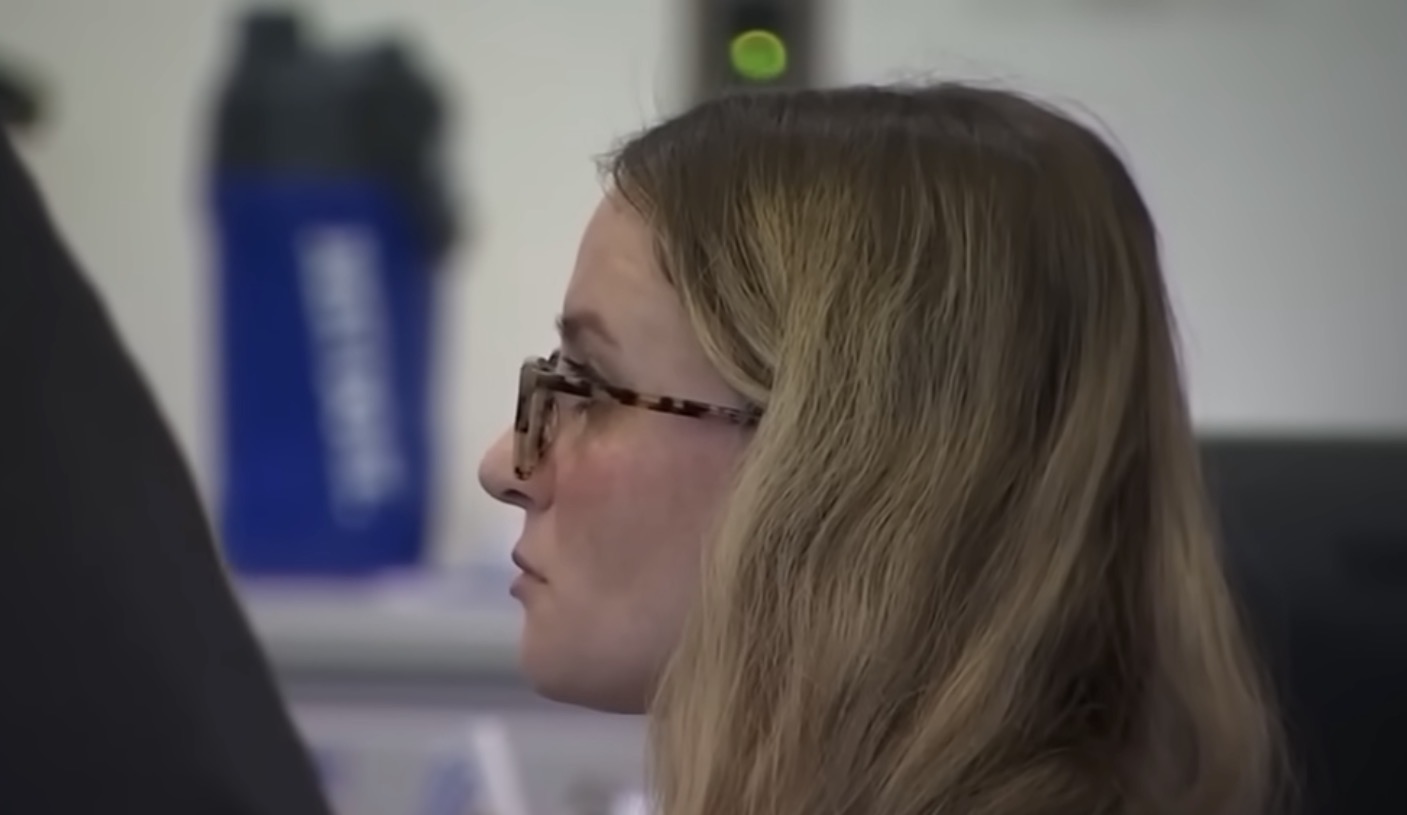
Fitzsimmons listens during a bail hearing. She maintains she never pointed a gun at anyone but herself.
This is what we know for certain:
At 6:12 p.m. on June 30, 2025, Officers Patrick Noonan, a lieutenant, and a third officer arrived at Fitzsimmons's home on Phillips Brook Road. They informed her of the restraining order and that her fiance would be taking custody of their son.
Fitzsimmons began gathering items for the baby. Diapers. Clothes. Books. She went upstairs to collect more belongings, escorted by two officers.
When Aylaian arrived at the home, Fitzsimmons asked to be kept separated from him. One officer went downstairs to handle Aylaian, leaving Fitzsimmons alone with Officer Patrick Noonan in the upstairs bedroom.
The lieutenant downstairs heard Noonan yell: "Kelsey don't do it. Kelsey don't do it."
Then two gunshots.
When officers ran upstairs, they found Fitzsimmons on the ground with a gunshot wound to the chest. Noonan said she had pointed a gun at him. She said she had pointed it at herself.
That's where the stories diverge completely.
The Prosecution's Version
According to the police report authored by Massachusetts State Police Sgt. David Strong:
Fitzsimmons told officers all her guns were locked in a safe in the basement. This was a lie. She had a firearm within arm's reach in the bedroom.
While kneeling on the ground packing baby items, she suddenly turned toward Noonan. She lunged for an area behind the door. She reappeared pointing a gun directly at him.
She pulled the trigger. Click. The gun didn't fire. It wasn't loaded, or the round failed to chamber.
She began to rack the slide to chamber a round. Noonan drew his weapon and yelled at her to drop the gun.
According to the report: "Officer Noonan stated that at this point he knew she was trying to kill him."
Noonan fired twice. One round struck Fitzsimmons in the chest.
A fourth officer arrived after the shooting and removed the magazine from Fitzsimmons's gun. There was a round of ammunition inside.
Fitzsimmons's Version
In her first public statement, released from her hospital bed weeks after the shooting:
"My firearm was NEVER pointed in any direction other than my temple. When I pulled the trigger, my gun did not fire. However, I immediately got shot in the chest by my colleague and friend."
She describes what happened as a "halfhearted attempt" to take her own life. In that moment, learning her baby was being taken away, believing her career as a police officer was over, she lost the will to live.
She is adamant: "As a police officer myself, I would never even think to intentionally hurt another police officer."
She points out that Noonan was her friend. They had bonded over the trauma of the murder-suicide case. "I especially would never hurt my friend," she wrote.
Her defense team, led by attorney Timothy Bradl and former Massachusetts Attorney General Martha Coakley, calls the prosecution's narrative a "smear" designed to "distract from the botched response" by the North Andover Police Department.
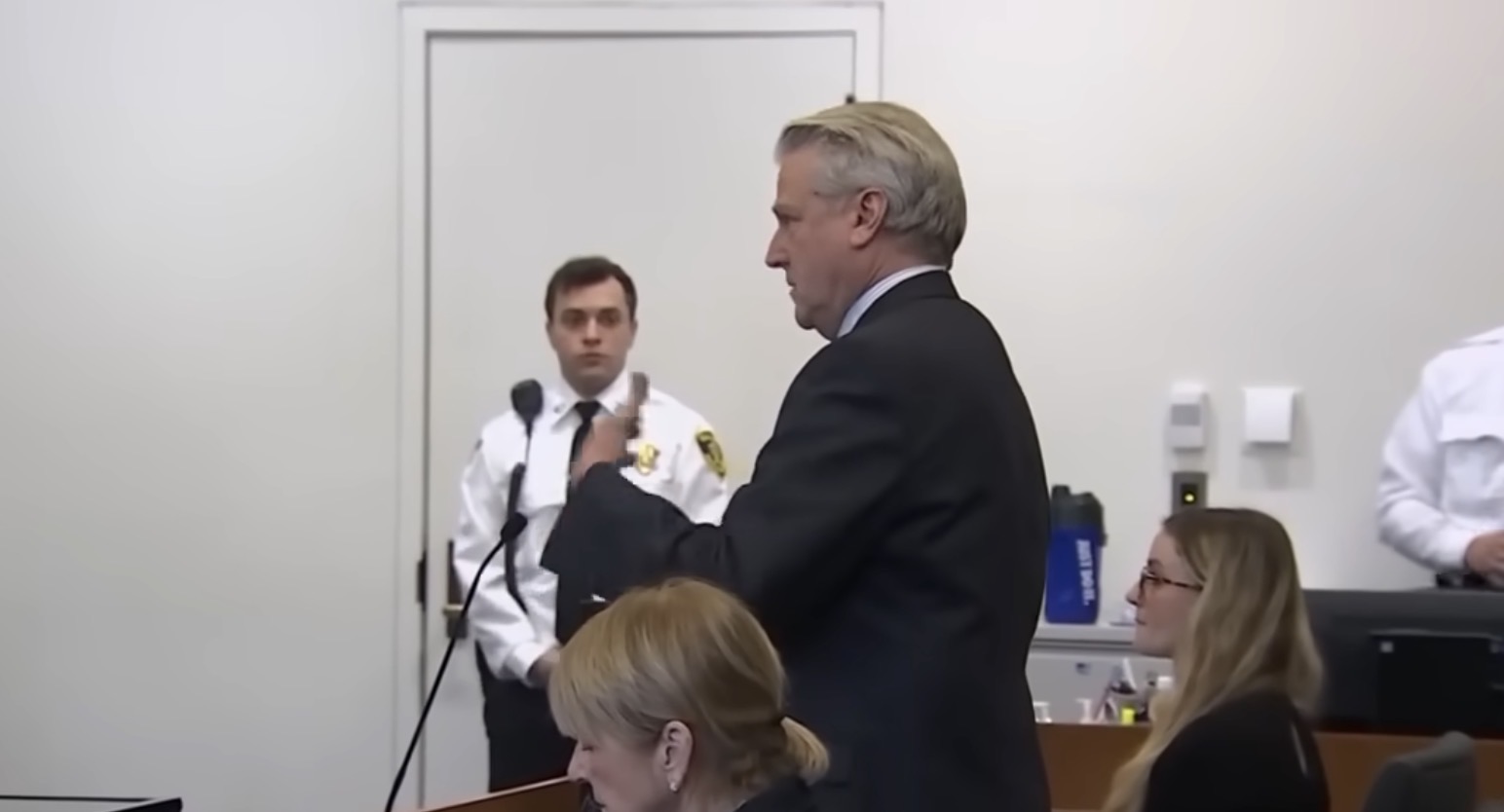
Defense attorney Timothy Bradl argues on behalf of Fitzsimmons. The defense team includes former Massachusetts Attorney General Martha Coakley.
"There's no body camera. There's no other officer up there. There's three different stories, versions of what exactly was said."
— Timothy Bradl, Defense AttorneyWhat the Evidence Shows
No video. No audio. No other witnesses in the room.
Police searched the home under warrant and found four semi-automatic firearms. Security cameras around the exterior of the home were reviewed by investigators, but none captured what happened inside that bedroom.
The gun clicked. It didn't fire. Fitzsimmons tried to chamber a round. Noonan shot her.
Those facts are not in dispute.
The direction she pointed the gun? That comes down to Officer Noonan's word against hers.
A grand jury didn't think the evidence supported the most serious charge. They declined to indict Fitzsimmons on armed assault with intent to murder. That charge, which implies she was actively trying to kill Noonan, didn't survive grand jury scrutiny.
What remains is assault by means of a dangerous weapon. The question for the jury: Did she point the gun at Noonan? If so, even without firing a shot, that's assault.
The answer depends almost entirely on who you believe.
Shot by the System, Punished for the Wound
Kelsey Fitzsimmons was shot on June 30, 2025. She spent 53 days in the hospital. Two surgeries. A bullet through her chest. Severe lung, diaphragm, and liver damage. Broken ribs. A collapsed lung.
When she was finally stable enough to leave the hospital, she wasn't released. She was transferred to jail.
At her initial appearance, she was arraigned on armed assault with intent to murder and two counts of assault with a dangerous weapon. She pleaded not guilty. A judge deemed her a danger and ordered her held without bail.
In late August, a grand jury declined the most serious charge, leaving only a single count of assault by means of a dangerous weapon, a charge carrying a maximum of five years. On September 8, Essex Superior Court Judge Kathleen McCarthy-Neyman granted her release on personal recognizance with conditions.
She would be under 24/7 house arrest at her mother's home in Methuen. GPS monitoring. No contact with her infant son. No firearms. No alcohol. And she would have to submit to alcohol testing using a SCRAM device, which requires blowing into a tube.
Fitzsimmons walked out of the courthouse that day. "The truth will come out," she said.
Three days later, she was back in jail.
The Breathalyzer She Couldn't Use
The SCRAM alcohol monitoring system requires users to blow intensely into a tube several times per test. For someone recovering from being shot through the chest, with broken ribs, damaged lungs, and still-healing internal trauma, this was physically excruciating.
Her lawyers filed an emergency motion. The testing, they said, was "physically impossible" for Fitzsimmons to complete "without experiencing severe abdominal pain and dizziness." She had almost died from the gunshot wound. The deep-lung exhale required for the test was beyond what her damaged body could produce.
Her defense asked the court for an alternative. Urine testing for alcohol. A different monitoring method. Anything that didn't require her to blow air through damaged lungs.
Judge McCarthy-Neyman said no. Without the breath testing, the court could not "ensure the safety of the community." She revoked Fitzsimmons's release and ordered her held without bail.
Her lawyers called it a "nightmare scenario." A "completely improper" decision. They accused the judge of "berating" the probation officer, cutting off defense counsel, and "walking off the bench" while the attorney was still arguing.
Fitzsimmons went to the Western Massachusetts Regional Women's Correctional Center. She would stay there for more than 100 days.
The Appeals
Her defense team, which includes former Massachusetts Attorney General Martha Coakley, filed appeal after appeal.
They went to a single justice of the Supreme Judicial Court. Denied.
They asked the full SJC to review the case. The court agreed to hear it.
In their briefs, Bradl and Coakley argued that the June 30 incident "had nothing whatsoever to do with alcohol." The alcohol testing requirement, they wrote, forced Fitzsimmons "to satisfy phantom concerns."
They noted her physical condition: "There is no likelihood that Ms. Fitzsimmons, stripped of her firearms, a bit over 5 feet tall and 110 pounds, who can barely take a deep breath, would put the SWAT-trained, armed officer, or anyone else in danger going forward."
Prosecutors pushed back. They noted that Fitzsimmons had a 2019 misdemeanor conviction for conduct while "intoxicated and disruptive." They pointed to Aylaian's allegations that she had become violent while drinking at the wedding party just days before the shooting. They called defense claims "baseless."
On December 22, 2025, the SJC issued a 10-page ruling. It upheld the lower court's decision. Fitzsimmons would remain in jail.
The ruling noted: "Although Fitzsimmons argues that alcohol did not play a role in the June 30 incident, the material submitted by the Commonwealth at the August 28 hearing indicated that she 'struggled with . . . aggression . . . and alcohol abuse,' that she had been convicted of an offense apparently arising from intoxicated and disruptive behavior, and that she was recently alleged to have become violent when drinking alcohol."
The very next day, December 23, Fitzsimmons was back in court. Her lawyers told the judge she had finally healed enough to pass the breath test. She successfully blew into the device. The judge granted her release.
"It's everything I've wished for these past few months," Fitzsimmons said. "All I wanted to do was be home with my family for Christmas."
The Constitutional Questions No One Is Asking
The Eighth Amendment to the United States Constitution prohibits cruel and unusual punishment. Massachusetts has its own constitutional provisions against excessive bail and pretrial detention.
Consider what happened to Kelsey Fitzsimmons:
A state agent shot her. That shooting caused severe physical damage. The state then required her to perform a physical task that her injuries made impossible. When she couldn't perform that task, the state imprisoned her for over 100 days.
Put simply: The government injured her, then punished her for being injured.
This isn't a question of whether Fitzsimmons is guilty or innocent. That's for the jury to decide. This is a question of whether pretrial detention conditions can be imposed that a defendant is physically incapable of meeting because of injuries inflicted by the state itself.
The defense raised an Americans with Disabilities Act claim, arguing that federal law required accommodations for Fitzsimmons's injuries. Prosecutors called it "baseless," arguing there was "a dearth of medical evidence" that her condition qualified as a disability.
Let's be clear about what that argument means. The prosecution's position is that being shot through the chest, suffering lung collapse, liver damage, broken ribs, and requiring multiple surgeries does not necessarily constitute a disability requiring accommodation.
The SJC didn't directly address the constitutional implications. The ruling focused on the procedural aspects of the bail determination. But the underlying principle should disturb anyone who cares about due process.
Kelsey Fitzsimmons spent over 100 days in jail not because she violated a condition of her release. Not because she committed a new offense. Not because she posed an imminent danger that couldn't be managed. She spent 100 days in jail because she couldn't pass a breathing test, and the reason she couldn't pass a breathing test is that a police officer shot her through the chest.
The system that injured her then punished her for being injured. That should bother everyone, regardless of what you think about the underlying charges.
What This Case Forces Us to Ask
On February 9, 2026, a jury in Essex Superior Court will hear Commonwealth v. Fitzsimmons. They will decide whether Kelsey Fitzsimmons is guilty of assault by means of a dangerous weapon.
The prosecution will present Officer Patrick Noonan's account. He will likely testify that Fitzsimmons pointed a gun at him and pulled the trigger. He will describe his fear for his life. He will explain why he shot her twice in the chest.
The defense will present Fitzsimmons's account. She will likely testify that she pointed the gun at her own head. She will describe her despair at losing her baby. She will explain why she pulled the trigger in what she calls a "halfhearted attempt" to end her own life.
There will be no video. No audio. No independent witness who was in the room.
The jury will have to choose.
Beyond Reasonable Doubt
The standard in criminal trials is proof beyond a reasonable doubt. Not proof beyond any doubt. Not absolute certainty. But the kind of doubt that would cause a reasonable person to hesitate before acting on it.
Is it reasonable to doubt Officer Noonan's account?
He shot an unarmed gun. No round fired. She was on the ground packing baby clothes moments before. They were friends who had shared trauma together. There were no other witnesses. There are no cameras.
Is it reasonable to doubt Fitzsimmons's account?
She lied about where her guns were. She was in crisis, allegedly making threats for days beforehand. Noonan heard her attempting to rack a round after the first click. A trained officer would recognize a suicide attempt versus an attack.
Both accounts have problems. Both have elements that make sense and elements that raise questions.
But here's the thing about presumption of innocence: Fitzsimmons doesn't have to prove she's telling the truth. The prosecution has to prove she's lying. Beyond a reasonable doubt. With no video, no audio, and no independent witness.
The Bigger Picture
This case matters beyond Kelsey Fitzsimmons.
North Andover police don't have body cameras. Neither do many departments across Massachusetts. There's no state mandate. Some departments can't afford them. Some unions don't want them. Some towns just haven't gotten around to it.
The result is cases like this one. A shooting happens. Two contradictory stories emerge. And there's nothing to resolve them except testimony and credibility.
Fitzsimmons's attorney put it bluntly: "Cities that have buckled under the pressure from officers who don't want cameras, or for other reasons, don't put the cameras in place, are making a real mistake as far as the protection of their own employees."
Body cameras protect everyone. They protect citizens from false accusations of resisting or threatening officers. They protect officers from false accusations of misconduct. They provide evidence that can confirm or refute competing narratives.
Without them, we're left with "he said, she said." In a system built on presumption of innocence, that should give us pause.
The Questions That Remain
How does a woman go from "cleared to return to duty" to "should never have access to a firearm" in twelve days? What does that say about the fitness-for-duty evaluation process?
Should restraining orders be served by armed officers when the subject is known to be in mental health crisis? Is there a better approach? Crisis intervention teams? Mental health professionals?
What does it mean for due process when an ex parte proceeding can remove a child from a parent based on one side's allegations, with no opportunity for the other side to respond before enforcement?
When the only witness to an alleged crime is the person who used lethal force in response, is their testimony alone ever sufficient to meet the beyond-reasonable-doubt standard?
These are the questions Kelsey Fitzsimmons's case forces us to ask. Not because she's innocent. Not because she's guilty. But because the process by which we determine guilt or innocence matters. Because presumption of innocence isn't just a legal technicality. Because "reasonable doubt" means something.
"We have the utmost faith in the jury system and are moving forward with absolute confidence. The healing of Kelsey's body has finally allowed the law to catch up with the facts."
— Timothy Bradl, Defense AttorneyKelsey Fitzsimmons is home for Christmas. She's under 24/7 house arrest at her mother's home. GPS monitoring. No contact with her son. Routine alcohol testing. She can leave only for medical appointments, legal meetings, and court appearances.
Her trial begins February 9, 2026. Twelve people will hear the evidence. They'll hear Noonan's version. They'll hear Fitzsimmons's version. They'll have no video to settle the dispute.
And they'll have to decide: Is the word of the officer who shot her, standing alone, enough to overcome the presumption that she is innocent?
That's the question at the heart of this case. Not just for Kelsey Fitzsimmons. For all of us.
Watch the system. Question everything.
— Justice