The Au Pair Affair Murder Trial
January 2026 | Justice Is A Process
Eight months after his wife was stabbed to death in their Herndon, Virginia bedroom, police returned to Brendan Banfield's home. They walked through the house where Christine Banfield had been killed alongside a stranger named Joseph Ryan. They photographed everything. And when they reached the master bedroom, they found something that would change everything about this case.
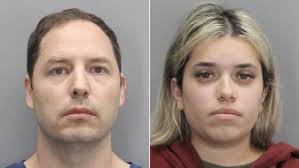
On the nightstand, in a frame, sat a photograph of Brendan Banfield smiling with another woman. Not his wife. Not a relative. The family's 23-year-old Brazilian au pair, Juliana Peres Magalhães.
That photo would become the centerpiece of one of the most complex murder cases in Fairfax County history. A case involving allegations of a secret affair, a fetish website, a catfishing scheme, and an elaborate plot prosecutors say was designed to eliminate a wife and frame an innocent man for her murder.
On February 24, 2023, Christine Banfield, 37, was found stabbed to death in her own home. Joseph Ryan, 39, a Springfield man who had no apparent connection to the family, was found shot dead beside her. Two people in the house that morning survived: Brendan Banfield and the au pair. Both initially claimed they had acted in self-defense, shooting Ryan after discovering him attacking Christine.
That story held for nearly eight months.
Now, almost three years later, Brendan Banfield sits in a Fairfax County courtroom facing four counts of aggravated murder. Prosecutors say he masterminded a plan to kill his wife so he could be with the young woman hired to care for their daughter. They say he created a fake online profile in Christine's name, lured Ryan to the house under the pretense of a sexual encounter, then shot him and stabbed his wife to make it look like a home invasion gone wrong.
The defense says it's a theory in search of facts. They point to a police digital forensics expert who concluded Christine was actually controlling her own accounts. They point to detectives who disagreed with the prosecution's theory and were transferred off the case. They point to what they call an investigation that decided on a conclusion first and then built a case around it.
This trial will determine whether Brendan Banfield orchestrated two murders with cold precision, or whether police pinned a tragedy on the wrong man because they couldn't accept the evidence in front of them.
A four-year-old girl lost her mother that day. She was in the house when it happened. Whatever the truth is, that fact doesn't change.
This is Justice Is A Process. I'm Steven M. Askin II. And this is everything you need to know before watching Virginia v. Brendan Banfield.
At 7:45 AM on a Friday morning, a 911 call came in from a home in the 13200 block of Stable Brook Way in Herndon, Virginia. The caller was identified as the family's au pair. The call disconnected almost immediately.
Fifteen minutes later, around 8 AM, another call came through. This time, a man got on the line. He told dispatchers he had just shot a man who was stabbing his wife. That man was Brendan Banfield.
When Fairfax County Police arrived at the upscale home in a quiet subdivision, they found a crime scene that didn't make sense. In the primary bedroom on the second floor, they discovered 37-year-old Christine Banfield suffering from multiple stab wounds to her upper body. Nearby lay the body of 39-year-old Joseph Nathan Ryan, shot dead from gunshot wounds.
Christine was rushed to the hospital. She died from her injuries.
Also present at the home: the Banfields' 4-year-old daughter and the family's live-in au pair, 23-year-old Juliana Peres Magalhães, who had been caring for the child since late 2021.
Police Chief Kevin Davis noted something immediately: there was no forced entry. No broken windows. No kicked-in doors. However Joseph Ryan got into that house, someone had let him in or he had a way to enter.
More troubling for investigators: how did Ryan, a Springfield resident with no apparent connection to the Banfield family, end up in their bedroom that morning?
In those first hours and days, Brendan Banfield and Juliana Peres Magalhães gave police an account that painted Ryan as a predator and themselves as defenders.
According to their initial statements, Magalhães had left the house that morning with the 4-year-old to run errands. She doubled back because she forgot to grab their packed lunches. When she returned, she saw an unfamiliar car in the driveway. She called Christine. No answer. She called Brendan, who returned home quickly.
They entered together through the basement with the child. Brendan went upstairs to the bedroom, where he said he found a stranger, Ryan, attacking his wife. Banfield fired his service weapon. Magalhães followed and, seeing Ryan still moving, fired as well.
Self-defense. A home invasion. A husband and au pair acting to stop an attacker. A wife who died despite their efforts.
It was a clean story. Except police weren't buying it.
Chief Davis later told reporters that from the very first moments, something didn't sit right. "I knew, I suspected, I had a feeling that there was a lot more to what met the eye that morning," he said.
The investigation would take 570 days to produce an indictment against Brendan Banfield. But detectives began pulling at threads almost immediately.
First, the lack of forced entry. If Ryan was a random predator, how did he get in?
Second, the question of motive. Joseph Ryan had no known connection to Christine Banfield. No history with the family. No criminal record suggesting he was a serial attacker. So why was he there?
Third, and most damaging, was what detectives found when they searched the family's computers. They discovered a profile on FetLife, a social media platform for people interested in sexual fetishes. The profile was in Christine Banfield's name. And the account had been communicating with Joseph Ryan, making plans to meet for a sexual encounter that would involve a knife and what prosecutors would later describe as "violent sexual role play."
The encounter was scheduled for the morning of February 24, 2023.
Joseph Ryan showed up that morning carrying a knife and restraints, apparently believing he was meeting Christine Banfield for consensual sexual activity. Instead, prosecutors allege, he walked into a trap designed to get him killed and frame him for Christine's murder.

Christine Ann Banfield grew up on Long Island, New York. She earned her nursing degree from Quinnipiac University in 2007 and built a career dedicated to helping the most vulnerable patients.
She wasn't just a nurse. She was a forensic nurse examiner, certified in both adult and pediatric sexual assault examinations. Before moving to Virginia, she worked with the Victim Information Bureau of Suffolk County in New York as a clinical supervisor for their Sexual Assault Nurse Examiner program. Her job was to provide trauma-informed care to survivors of sexual assault, collect forensic evidence, and testify in court when needed.
In a 2019 article from the Falls Church News-Press, her colleagues praised her for her "24/7 availability to consult in real time" during difficult cases and her dedication to supporting survivors of abuse. She was described as someone who went above and beyond for the people she served.
In 2019, Christine and Brendan relocated to Virginia following the birth of their daughter. Christine took a position at Inova Fairfax Hospital and planned to continue her SANE work in her new community.
One of her former patients, Rodrigo Valderrama, recalled how Christine wanted to hire an au pair from South America so the child would be exposed to different cultures. "She wanted me to recommend restaurants in the area," he told reporters. "That was her personality. She wanted the au pair to feel at home."
Christine Banfield was 37 years old when she died. Her funeral was held on March 6, 2023, at Moloney's Lake Funeral Home on Long Island. She was buried at Queen of All Saints Cemetery in Central Islip.
She left behind a four-year-old daughter who was in the house when her mother was killed.
Joseph Nathan Ryan, 39, of Springfield, Virginia, was a Fairfax County native. Unlike most murder victims, Ryan's story is complicated by the circumstances alleged by prosecutors.
According to the State's theory, Ryan believed he was going to the Banfield home for a consensual sexual encounter. The FetLife profile he had been communicating with appeared to belong to Christine Banfield. The messages discussed violent role play involving a knife. Ryan arrived carrying implements consistent with what had been discussed online.
Prosecutors say Ryan was not a predator. He was a victim, lured to that house to be killed and framed for Christine's murder. He was, in the State's telling, an unwitting participant in a scheme designed to make his death look justified and Christine's death look like a tragedy he caused.
Ryan's family has supported the prosecution's theory. After additional charges were filed against Banfield in December 2024, they released a statement saying they were "happy to hear that news" and expressing continued condolences to Christine's family.
The autopsy determined Ryan's cause of death was multiple gunshot wounds. His death was ruled a homicide.
Brendan Banfield, now 40, studied accounting at St. Joseph's University and started a children's math tutoring center before changing career paths. He became a special agent with the Criminal Investigation Division of the Internal Revenue Service, a federal law enforcement position that involves investigating tax fraud, money laundering, and other financial crimes.
As an IRS special agent, Banfield carried a service weapon. That weapon is the firearm prosecutors say he used to shoot Joseph Ryan in the head.
Banfield has been held without bond since his September 2024 arrest, more than 18 months after the killings. He has pleaded not guilty to all charges and maintains his innocence.
Through his attorney John Carroll, Banfield has argued that police decided on a theory early in the investigation and then worked to make the evidence fit. Carroll has pointed to multiple law enforcement officials who disagreed with the catfishing theory and were subsequently transferred to other units.
Juliana Peres Magalhães, now 25, came to the United States from Brazil in late 2021 to work as an au pair for the Banfield family. Her job was to help care for their young daughter.
Prosecutors say her relationship with Brendan Banfield changed in August 2022, when the two began an extramarital affair. By fall 2022, according to the State's proffer read at her plea hearing, Brendan had expressed to Magalhães his "desire to be rid of his wife" and the two began planning Christine's murder.
Magalhães was arrested in October 2023 and charged with second-degree murder. She remained in custody for over a year before entering a plea agreement in October 2024. She pleaded guilty to involuntary manslaughter, a significant reduction from the original murder charge.
Under the terms of her plea deal, prosecutors will recommend she receive time served if she testifies against Brendan Banfield. If the deal holds, Magalhães would walk free after spending approximately two years in jail, then face deportation to Brazil.
She is expected to be the prosecution's star witness at trial.
Brendan Banfield faces a total of seven charges in connection with the February 2023 killings:
What it means: Virginia's aggravated murder statute replaced capital murder when the state abolished the death penalty in 2021. It covers willful, deliberate, and premeditated killings committed under certain aggravating circumstances. The four counts relate to the deaths of both Christine Banfield and Joseph Ryan under multiple theories.
What the State must prove: That Banfield willfully, deliberately, and with premeditation caused the deaths of both victims. The indictment alleges he "willfully, deliberately, and with premeditation" killed Christine Banfield and Joseph Ryan.
Potential sentence: Mandatory life imprisonment without the possibility of parole for defendants 18 or older. No good conduct credits. No early release.
What it means: Banfield allegedly used his IRS service weapon to shoot Joseph Ryan. Using a firearm during the commission of a felony adds additional prison time to any underlying sentence.
Potential sentence: 3 years mandatory minimum for first offense, consecutive to other sentences.
What it means: The Banfields' 4-year-old daughter was present in the home during the killings. Prosecutors added this charge in December 2024, arguing that Banfield's alleged actions placed his child at serious risk of harm.
Potential sentence: 1 to 10 years imprisonment.
What it means: Related to the child abuse charge, this count addresses the cruel circumstances under which the child was allegedly exposed to violence and trauma.
Potential sentence: 1 to 5 years imprisonment.
If convicted on the aggravated murder charges, Brendan Banfield faces mandatory life imprisonment without parole. The child-related charges would add additional consecutive time.
According to prosecutors, this is what happened:
In August 2022, Brendan Banfield and Juliana Peres Magalhães began a romantic relationship. The affair continued while Magalhães lived in the Banfield home, cared for the couple's daughter, and maintained the facade of being simply the family's au pair.
By fall 2022, prosecutors say Banfield told Magalhães he wanted to "be rid of" his wife. Rather than pursue divorce, which would involve dividing assets and potentially losing custody of his daughter, Banfield allegedly began planning Christine's murder.
The plan, according to prosecutors, was elaborate. Banfield would create an account on FetLife, a social media platform for people interested in sexual fetishes, using Christine's name and photographs. He would then use that account to contact men interested in violent sexual role play. He would lure one of those men to the house, where he could kill both the man and his wife, staging it to look like the stranger had attacked Christine and Banfield and Magalhães had acted in self-defense.
Joseph Ryan was the man who responded.
Court documents indicate that in the weeks before the killings, someone using the fake Christine account communicated with Ryan through FetLife and the encrypted messaging app Telegram. They discussed a "rape fantasy" encounter involving a knife. They made plans for Ryan to come to the Banfield home on the morning of February 24, 2023.
Prosecutors say Banfield purchased a firearm on January 28, 2023, approximately four weeks before the killings. He gave that gun to Magalhães and trained her to shoot at a local gun range.
In the days before the planned encounter, Banfield allegedly directed Magalhães to speak with Ryan via Telegram to confirm consent and finalize the meetup details. Prosecutors say she expressed hesitation at various points but that Banfield insisted it was "too late for her to back out."
On February 24, 2023, prosecutors allege Banfield executed the final phase of his plan.
He allegedly turned off Christine's phone and left it in a kitchen drawer so she couldn't be reached. He then drove to a nearby McDonald's and waited, positioning himself to return quickly when Magalhães signaled.
When Ryan arrived at the house expecting to meet Christine for the sexual encounter they had planned, Magalhães made calls to both Christine's phone (knowing it would go unanswered) and Brendan's phone (to signal his return).
Brendan returned home. According to prosecutors, he and Magalhães entered through the basement with his 4-year-old daughter. They left the child downstairs and went up to the primary bedroom, Banfield carrying his service weapon and Magalhães carrying the gun he had purchased for her.
What happened next, according to the State's proffer: Banfield entered the bedroom, announced himself as a police officer, and shot Joseph Ryan in the head. Ryan fell away from Christine.
Magalhães called 911 but ended the call at Banfield's direction.
Banfield then allegedly stabbed his wife using Ryan's knife.
When Ryan showed signs of still being alive, Magalhães shot him again.
Then came the second 911 call, where Banfield got on the line and told dispatchers he had shot a man who was stabbing his wife. The cover story was in place.
Banfield accompanied Christine to the hospital, maintaining the appearance of a grieving husband. Magalhães went to police headquarters with the child.
Christine Banfield died from her injuries.
Brendan Banfield's attorney, John Carroll, has been blunt in his characterization of the prosecution's case.
"It is a theory in search of facts rather than a series of facts supporting a theory," Carroll said in court.
The defense has centered much of its argument on the digital forensics evidence and what they describe as an investigation that decided on a conclusion before following the evidence.
Master Police Officer Brendan Miller served as a digital forensic examiner with the Fairfax County Police Department. His job was to extract and analyze data from the dozens of devices seized in the investigation, including computers and phones belonging to Brendan Banfield, Christine Banfield, and others.
Miller reached a conclusion that directly contradicted the prosecution's theory.
According to Miller's executive summary, there was "no indication that Christine lost control of her devices" in the six weeks before the killings. His analysis found that Christine Banfield's laptop and phone were used to contact Joseph Ryan. Critically, one of Brendan Banfield's personal phones showed no evidence of connecting to the FetLife account or communicating with Ryan.
"Joe is not the only person Christine was making plans with on FetLife, or who received her Telegram username," Miller wrote in his report, suggesting Christine may have been active on the platform of her own accord.
Miller's findings were peer-reviewed and affirmed by an evidence analysis team at the University of Alabama.
But here's where the case takes a troubling turn for anyone watching the system.
In late 2024, Miller was transferred out of the digital forensics unit. He testified that he did not request the transfer and that it was related to "performance management." Defense attorney Carroll argued the transfer was directly connected to Miller's findings in the Banfield case.
Deputy Chief Patrick Brusch, who was the captain of the Major Crimes Bureau at the time, acknowledged he was involved in the transfer decision. He testified that he made statements about never wanting Miller to investigate digital evidence from the bureau again.
Miller wasn't the only investigator who had doubts about the catfishing theory.
Detective Kyle Bryant was the lead detective on the Banfield case. In a July 2025 pretrial hearing, he was called to testify about his experience working the investigation.
"Were you ever asked to adopt a theory that you didn't agree was supported by the investigation?" Carroll asked.
"Yes," Bryant replied.
Bryant testified he faced "mounting pressure from higher-ups at the department" to support the catfishing theory. He said he followed what he believed the evidence showed, but after Banfield was arrested in September 2024, Bryant was moved from the homicide unit to sex crimes and later to digital forensics.
Carroll has also pointed to an internal affairs complaint filed last year by nine homicide detectives, including Bryant, alleging a hostile work environment from commanders.
Fairfax Circuit Court Chief Judge Penney Azcarate presided over pretrial hearings addressing these concerns. While she did not find that prosecutors intentionally withheld evidence, she did order them to review personnel files related to Miller's transfer and turn over any exculpatory information.
"The transfer that gives the court pause is Miller's because it relates to the theory of this case," Judge Azcarate said.
This case raises questions that go beyond whether Brendan Banfield is guilty or innocent. It raises questions about how investigations are conducted and whether the system can correct itself when evidence points in unexpected directions.
Consider what the defense is alleging: that police command staff decided early in this investigation that Brendan Banfield was guilty. That they adopted a theory based on the affair and the suspicious circumstances. And that when their own digital forensics expert analyzed the evidence and reached a different conclusion, they didn't reconsider their theory. Instead, they transferred him out of the unit.
Whether that's true is for the jury to decide. But it's a pattern worth watching for.
My father, Steven M. Askin, spent his career defending people against a system that sometimes decides on guilt before weighing the evidence. He was twice prosecuted by that system himself. First for refusing to violate attorney-client privilege when federal investigators wanted him to testify about surveilled conversations. Later for helping people understand their constitutional rights from a coffee shop in Martinsburg, West Virginia.
What he taught me is that the system only works when we watch it. When we ask questions. When we demand that investigators follow evidence rather than theories.
In this case, the jury will have to decide several things:
First, did Brendan Banfield create the FetLife account that lured Joseph Ryan to the house? The prosecution says yes, backed by the cooperating testimony of Juliana Peres Magalhães. The defense points to a digital forensics expert whose analysis concluded Christine controlled her own devices, backed by a peer review from the University of Alabama.
Second, is Magalhães's testimony credible? She's facing time served on a manslaughter charge instead of life in prison for murder. She's getting everything she could possibly want in exchange for testifying against Banfield. Does that mean she's telling the truth now, or telling whatever story prosecutors need to hear?
Third, what do we make of the personnel transfers? Two investigators who questioned the catfishing theory were moved to different units. Is that coincidence? Internal politics? Or something more troubling?
The burden of proof remains where it always belongs: on the State. Brendan Banfield is presumed innocent until proven guilty beyond a reasonable doubt. That's not a technicality. That's the foundation of the entire system.
Whatever happened in that bedroom on February 24, 2023, the prosecution must prove it. And we'll be watching to see whether they can.

The trial is being held in Fairfax County Circuit Court before Chief Judge Penney Azcarate. If that name sounds familiar, it should. Judge Azcarate presided over the 2022 defamation trial between Johnny Depp and Amber Heard, one of the most watched civil trials in American history. She allowed cameras in that courtroom, a rarity in Virginia courts, and the trial was watched by millions worldwide.
Judge Azcarate is a former U.S. Marine who served during the Persian Gulf War. She graduated from George Mason University School of Law in 1998 and became the first female chief judge of the 19th Judicial Circuit in Virginia in 2015. She's known for running a tight courtroom and established Virginia's first Veterans Treatment Docket to help veterans with PTSD avoid criminal records.
The prosecution is led by Deputy Commonwealth's Attorney Eric Clingan. The Fairfax County Commonwealth's Attorney is Steve Descano.
Brendan Banfield is represented by defense attorney John Carroll.
Brendan Banfield: Held without bond since his September 2024 arrest. He has been in custody for over 16 months as of trial start. Bond was denied based on the severity of the charges and the strength of the evidence prosecutors presented.
Juliana Peres Magalhães: In custody since her October 2023 arrest, now over two years. Under her plea agreement, she will receive time served if she testifies as required and prosecutors follow through on their sentencing recommendation. Upon release, she faces deportation to Brazil.
Live broadcasts. No Breaks editions. Justice Breakdowns every night with deep analysis of the day's testimony.
Brendan Banfield is presumed innocent until proven guilty beyond a reasonable doubt. That's not a formality. That's the foundation of everything we do here.
The State has the burden. We're here to watch whether they meet it.
Let's watch the system together.
Subscribe to Justice Is A Process on YouTube for live trial coverage, No Breaks editions, and breaking news as it happens.
🔴 Subscribe on YouTube111,000+ subscribers watching the system with us
Join the Discussion