The First Criminal Trial Over the Uvalde School Shooting Police Response
January 6, 2026 | Trial Begins Today
For 77 minutes, children called 911 from inside two connected fourth-grade classrooms at Robb Elementary School in Uvalde, Texas.
"Please send the police now." "He's going to kill us." "I don't want to die. My teacher is dead."
While they waited, nearly 400 law enforcement officers from local, state, and federal agencies gathered in the hallways and outside the building. Body camera footage would later show some of those officers checking their phones. Sanitizing their hands. Retreating from the sound of gunfire. Waiting for instructions that never came.
By the time a Border Patrol tactical team finally breached the classroom at 12:50 p.m. on May 24, 2022, the gunman was dead. So were 19 children and two teachers.
The gunman, 18-year-old Salvador Ramos, had acted alone. He was killed on scene. There was no one left to prosecute for the murders.
But now, more than three and a half years later, a jury in Corpus Christi, Texas, will be asked a question that cuts to the core of how we understand police responsibility in America: Can a law enforcement officer be criminally liable for failing to act while children are being slaughtered?
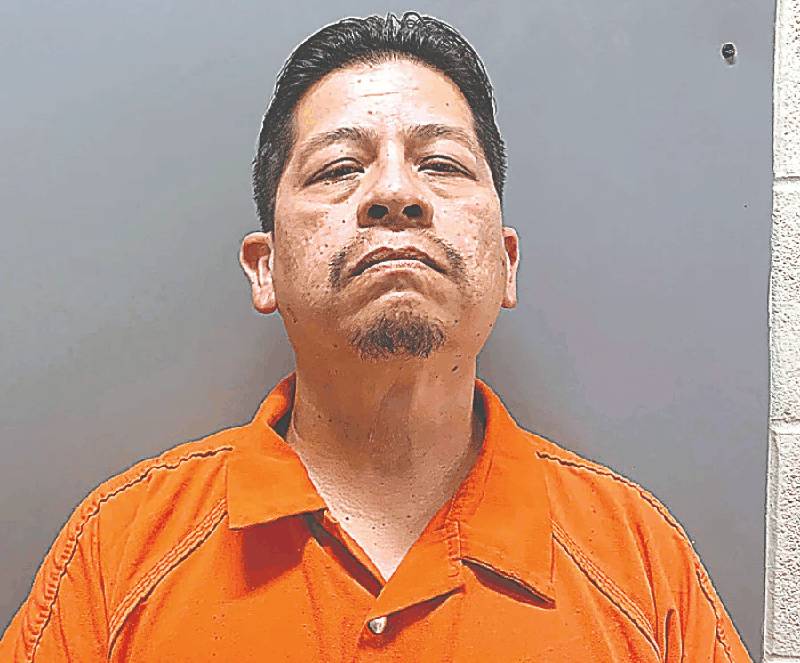
Adrian Gonzales was the first officer to arrive at Robb Elementary that day. According to a new CNN analysis, he was on scene before the shooter even entered the building. He heard the gunshots. A teacher told him what the shooter was wearing and which direction he was heading.
And according to prosecutors, he failed to engage, distract, or delay the shooter. He failed to follow the active shooter training he himself had taught to other officers just two months earlier.
His trial begins today. It is the first criminal case arising from the law enforcement response to the Uvalde massacre. It won't be the last.
This is Justice Is A Process. We're not here to convict or acquit. We're here to watch whether the system does what it's supposed to do: prove its case beyond a reasonable doubt while protecting the rights of everyone involved, including the defendant.
But make no mistake about what's at stake here. This trial isn't just about one officer's actions on one terrible day. It's about whether the system that failed those children and teachers will finally hold anyone accountable for that failure.
Let's begin.
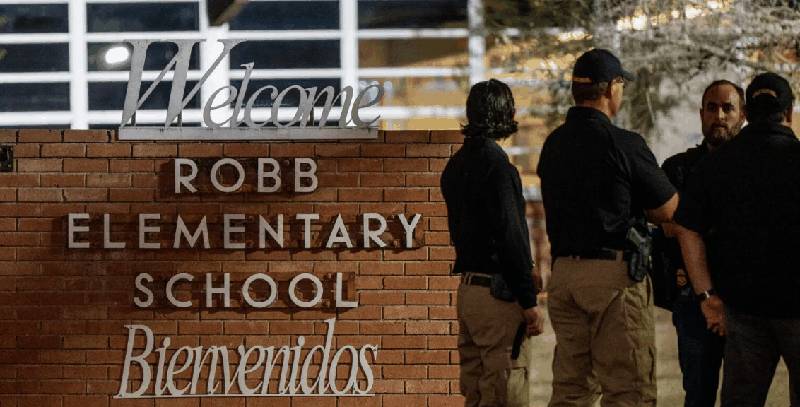
May 24, 2022, started as a day of celebration at Robb Elementary. It was the last week of school. Just that morning, students and parents had gathered for an awards ceremony. Fourth-graders received honor roll certificates and good citizenship awards. Mothers took photos with their children, not knowing those photos would be the last.
At approximately 11:21 a.m., Salvador Ramos shot his 66-year-old grandmother in the face at their home in Uvalde. She survived. She ran to neighbors for help while Ramos took her Ford F-150 pickup.
Minutes later, Ramos crashed the truck in a drainage ditch near Robb Elementary. A teacher outside the school witnessed the crash and saw a man emerge with what appeared to be a rifle. She ran inside to call for help, using a rock to prop open an exterior door.
At 11:29 a.m., Officer Adrian Gonzales heard radio traffic about a vehicle accident near the school. He was at a high school event at Jardin de los Heroes Park, less than a mile away.
"When I was actually getting in my car, I heard the radio traffic that the guy has a gun," Gonzales would tell investigators the following day.
What happened next is the heart of the case against him.
Unreleased surveillance video obtained by CNN shows Gonzales driving onto school grounds through a wide-open gate at approximately 11:31 a.m. He drove across a field, seconds after the shooter had walked across the same area heading toward the teacher parking lot.
A funeral home coach, Nicole Ogburn, met Gonzales outside the building. She told him what she saw: a man with a rifle, dressed in black, heading toward the west side of the school.
Then they both heard gunshots.
About 20 seconds after Gonzales arrived at the buildings, the gunman fired at the fourth-grade wing from the parking lot. Gonzales broadcast: "Shots fired! Shots fired, Uvalde, at Robb school."
At that point, according to CNN's analysis, Gonzales was no more than 200 feet away from the shooter, on the other side of a building. The shooter had not yet entered the school.
Fifty-nine seconds passed between those first shots in the parking lot and the moment Ramos walked through an unlocked exterior door into the building. Another 23 seconds passed before he shot his way into connected classrooms 111 and 112 and began slaughtering children and teachers with an AR-15-style rifle.
Gonzales, armed with a Glock pistol, said he never saw the gunman. He did not fire a shot.
"I locked in on her; that was my mistake," Gonzales told investigators, referring to his focus on the teacher. "It was just the adrenaline rush going and shots fired and stuff like that."
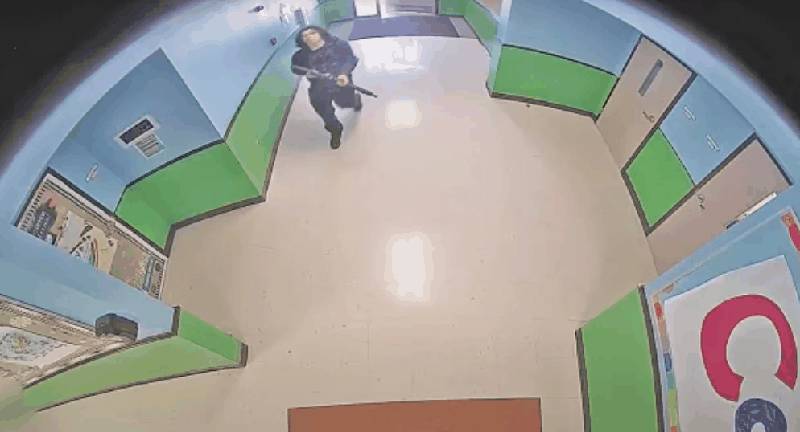
At 11:33 a.m., Ramos entered classrooms 111 and 112. He fired more than 100 rounds in the first few minutes. Within those two connected rooms were three teachers and 33 students. Most of the killing happened immediately.
Gonzales entered the hallway behind an officer from the Uvalde Police Department at 11:35 a.m., body camera footage showed. He was followed shortly by Chief Pete Arredondo and another city officer. They approached the classrooms from one end while other officers approached from the other.
The gunman fired at the officers approaching from the opposite direction. Bullet fragments grazed two of them. All of the officers retreated.
Then the shooting inside the classrooms stopped. For a moment.
Asked by investigators whether anyone said "we need to find this shooter," Gonzales replied no.
"It did cross our mind. You know, we just never, nobody ever made, you know, we're just covering each other," he said. "You know, that's what, basically, we're doing."
Gonzales said he tried to call for a SWAT team on his radio but couldn't transmit from inside the building. So he left.
"Once I got out to get radio reception, I never went back in," Gonzales told investigators.
While Gonzales waited outside, children inside the classrooms were calling 911.
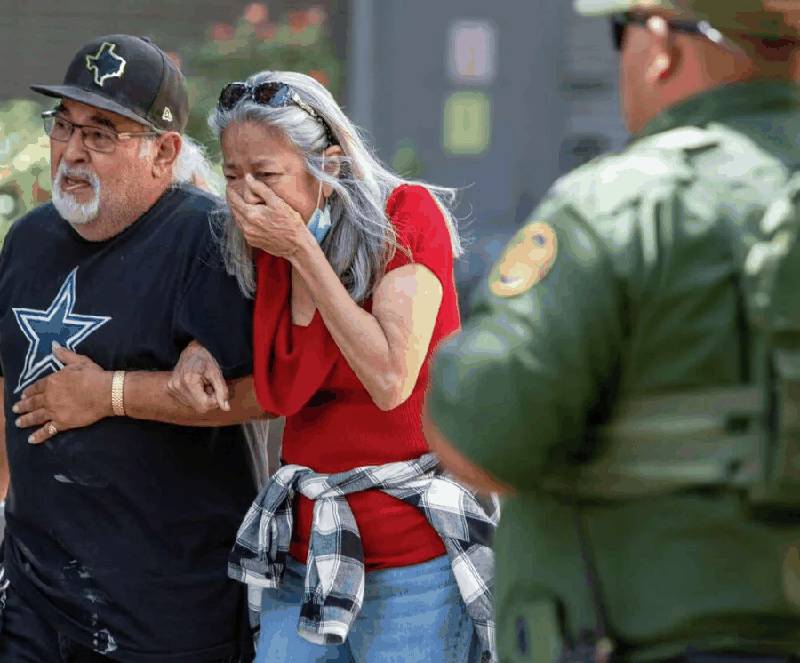
The survivors were carried out of the classrooms covered in the blood of their classmates and teachers. Some were so badly wounded they were mistaken for dead. Some were placed on buses to a reunification center without medical evaluation. Parents who had been begging officers to go inside for over an hour waited even longer to learn whether their children had survived.
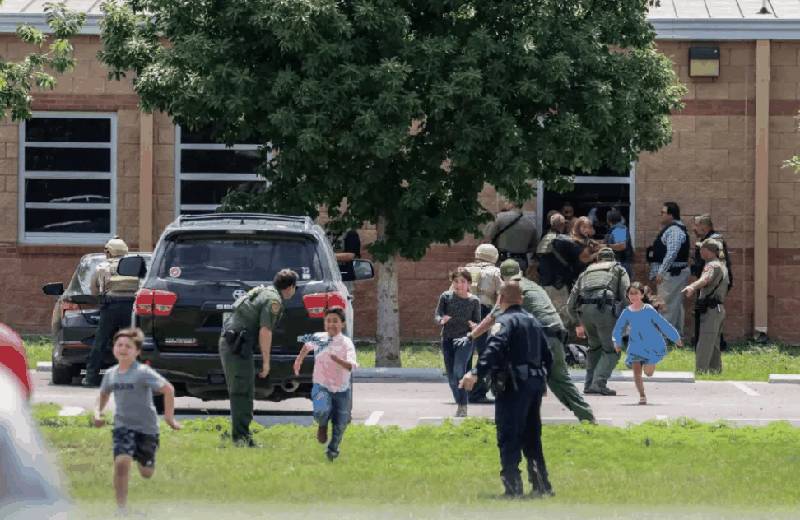
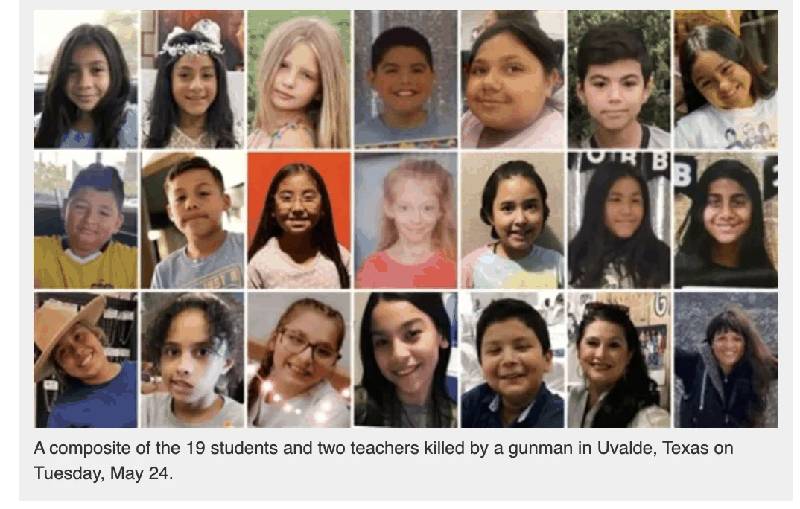
Nineteen children were killed that day. All were fourth graders. All were between nine and eleven years old. They had names and dreams and families who loved them.
Nevaeh Bravo, 10. Her name is heaven spelled backwards.
Jacklyn Cazares, 9. A free spirit who wanted to be a veterinarian.
Makenna Lee Elrod, 10. She loved softball and gymnastics and singing.
Jose Flores Jr., 10. He made his grandparents a pot of coffee every morning.
Eliahna Garcia, 9. She was supposed to play her last softball game that day.
Irma Garcia, 48. A fourth-grade teacher for 23 years. Her husband Joe died of a heart attack two days after she was killed. Their four children lost both parents in the span of 48 hours.
Uziyah Garcia, 10. His grandfather called him "the sweetest little boy I've ever known."
Amerie Jo Garza, 10. She had just celebrated her birthday and received her first cellphone. She tried to call 911 before she was shot.
Xavier Lopez, 10. He had received honor roll recognition at the awards ceremony just hours before the shooting.
Jayce Luevanos, 10. He loved to make people laugh. His cousin Jailah was also killed.
Tess Mata, 10. She loved TikTok dance videos, Ariana Grande, and the Houston Astros.
Eva Mireles, 44. A fourth-grade teacher for 17 years. She died trying to protect her students.
Alithia Ramirez, 10. She loved soccer and drawing. Her artwork had won a bullying prevention poster contest.
Annabell Rodriguez, 10. She was in the same classroom as her cousin, who also died.
Maite Rodriguez, 10. She wore lime green Converse with a heart she had drawn on them. She wanted to be a marine biologist.
Alexandria Rubio, 10. She had just received a good citizenship award. She wanted to be a lawyer.
Layla Salazar, 11. Every morning, her father drove her to school playing "Sweet Child O' Mine" and they would sing along.
Jailah Silguero, 10. Her mother said she didn't want to go to school that day, as if she sensed something was wrong.
Eliahna Torres, 10. She loved softball. Her team kneeled in a moment of silence for her that day.
Rojelio Torres, 10. His mother called him "a very smart and loving child."
These are the 21 people whose deaths are at the center of this trial. Nineteen children and two teachers. Twenty-nine charges against Adrian Gonzales, one for each of the 19 killed and one for each of the 10 children who survived in classroom 112.
Adrian Gonzales is 52 years old. He joined the Uvalde Police Department in 2009 after graduating from the Middle Rio Grande Law Enforcement Academy. In August 2021, he moved to the Uvalde Consolidated Independent School District Police Department under Chief Pete Arredondo.
On March 21, 2022, two months before the massacre, Gonzales served as one of the instructors at an active shooter training course for school-based law enforcement. The course was held at Uvalde High School. One of the sessions was titled "Stop the Killing: Solo Response to Active Shooter Events." Another focused on priorities of action for school-based law enforcement. One scenario involved a person walking into a school with a high-powered rifle.
He taught officers what to do in exactly the situation he would face two months later.
In October 2022, five months after the shooting, the Uvalde school district suspended its entire police department. Gonzales left the department in February 2023. No specific reason was given for his departure.
On June 27, 2024, a grand jury in Uvalde County indicted Gonzales on 29 counts of child endangerment. He was booked into the Uvalde County Jail and released on $10,000 bond. On July 25, 2024, he appeared in court and pleaded not guilty.
"Mr. Gonzales' position is he did not violate school district policy or state law," his attorney, Nico LaHood, said after the arraignment. "The application of this statute, to law enforcement, under these circumstances is unprecedented in the state of Texas."
LaHood has maintained that Gonzales is innocent and that public anger over the shooting is being misdirected.
"Those precious souls were stolen by a monster that day, but that monster was not Adrian Gonzales," LaHood told reporters. "He was there, he was present. He was going into danger. He was focused on getting children out of that building. He knows where his heart was and what he tried to do for those children."
According to the state review, Gonzales told investigators that once police realized there were students still sitting in other classrooms, he helped evacuate them.
Gonzales is not the only officer indicted. Former Chief Pete Arredondo faces 10 counts of child endangerment for allegedly endangering the 10 survivors by delaying the law enforcement response and not following active shooter protocols. His trial date has not been set.
Of the nearly 400 officers who responded that day, only these two face criminal charges.
Gonzales is charged with 29 counts of abandoning or endangering a child under Texas Penal Code Section 22.041. This is classified as a state jail felony, the lowest level of felony in Texas.
What it means: Prosecutors allege Gonzales intentionally or knowingly placed 19 children in imminent danger of death, bodily injury, or physical or mental impairment.
What they must prove: That Gonzales had a duty to act, that he failed to act, and that his failure placed children in danger.
Penalty if convicted: 180 days to 2 years in state jail per count.
What it means: Prosecutors allege Gonzales intentionally or knowingly placed 10 surviving children from classroom 112 in imminent danger.
What they must prove: Same elements as above.
Penalty if convicted: 180 days to 2 years in state jail per count.
The indictment specifically alleges that Gonzales:
• Failed to engage, distract, or delay the shooter
• Failed to act in any way to impede the shooter before he entered classrooms 111 and 112
• Failed to follow his active shooter training to respond to gunfire by advancing toward it
• Failed to assist victims with getting medical attention
If convicted on all 29 counts with maximum consecutive sentences, Gonzales could face up to 58 years in prison. However, consecutive sentencing for state jail felonies is rare, and defense attorneys have noted that the law has never been applied to a police officer in Texas under these circumstances.
The burden of proof is entirely on the prosecution. Gonzales does not have to prove anything. He does not have to testify. The jury must find him guilty beyond a reasonable doubt on each count.
This case breaks new ground in Texas law. No police officer has ever been criminally charged under the child endangerment statute for failing to act during an active shooter event. The prosecution is attempting something that has never been done before.
The legal questions are genuinely difficult.
Do police officers have a legal duty to protect specific individuals during an emergency? The U.S. Supreme Court said no in Castle Rock v. Gonzales (2005), ruling that police generally do not have a constitutional duty to protect individuals from harm by third parties. But that was a federal constitutional question. Texas state law may impose different obligations, particularly for school district police officers specifically hired to protect children.
Can the child endangerment statute apply to a law enforcement officer's inaction? The statute prohibits abandoning or endangering a child by intentionally, knowingly, recklessly, or with criminal negligence placing the child in imminent danger. The defense argues this was never intended to apply to police officers responding to emergencies. The prosecution argues it applies to anyone who has a duty to protect children and fails to do so.
What is the standard for evaluating an officer's decision-making in a chaotic emergency? Officers are trained to run toward gunfire in active shooter situations. But split-second decisions made under extreme stress have traditionally been evaluated generously by courts and juries. Gonzales was armed with a handgun facing a shooter with an AR-15-style rifle. Does that matter legally?
There is only one direct precedent, and it does not favor the prosecution.
In June 2023, former Broward County Sheriff's Deputy Scot Peterson was acquitted on all charges related to his response to the 2018 Parkland school shooting in Florida. Peterson, the school resource officer at Marjory Stoneman Douglas High School, remained outside the building while 17 people were killed inside. He was charged with felony child neglect and culpable negligence.
The jury deliberated for about 20 hours over four days before finding Peterson not guilty. Jurors later said they struggled with the question of what Peterson should have done and whether his actions, or inaction, rose to the level of criminal conduct.
The Parkland acquittal looms over this case. Prosecutors in Uvalde must convince a jury to do what a Florida jury would not: hold a police officer criminally responsible for failing to confront an active shooter.
But there are differences. Peterson was outside the building. Gonzales was inside, according to his own statements. Peterson never heard the shooter's location. Gonzales was told by a witness where the shooter was heading and what he was wearing. Peterson had not recently taught active shooter training. Gonzales had, two months earlier, at a course titled "Stop the Killing: Solo Response to Active Shooter Events."
Whether those differences matter to a jury remains to be seen.
The law enforcement response to Uvalde has been the subject of more official investigations than almost any police action in American history.
In January 2024, the U.S. Department of Justice released a 600-page critical incident review concluding that the response was a catastrophic failure at every level. Attorney General Merrick Garland said publicly that lives would have been saved if officers had followed standard active shooter protocols.
The DOJ report found "cascading failures of leadership, decision-making, tactics, policy, and training." It documented how officers treated the situation as a "barricaded subject" rather than an active shooter, waiting for tactical equipment and negotiation attempts while children bled out in the classrooms.
A Texas House committee report released in July 2022 reached similar conclusions. So did an internal review by the Texas Department of Public Safety. Every investigation found the same thing: officers failed to follow their training, failed to establish command, failed to act.
Yet of the nearly 400 officers who responded that day, only two face criminal charges.
Why Gonzales? The indictment suggests it is because he was the first on scene, because he had information about the shooter's location and description, and because he had just completed active shooter training that he himself helped teach. He had every reason to know what to do. Prosecutors allege he did not do it.
Why not the others? That question hangs over this trial. Families of the victims have asked it repeatedly. If the response was a systemic failure involving hundreds of officers, why are only two being held accountable? Is this justice, or is this scapegoating?
The path from massacre to courtroom took more than two years.
In the immediate aftermath, public attention focused on the shooter, on gun control debates, on the grief of families. The law enforcement response came under scrutiny, but criminal accountability seemed unlikely. Officers rarely face charges for how they respond to emergencies, and when they do, convictions are rare.
In October 2022, Uvalde CISD suspended its police department and placed Gonzales on administrative leave. Pete Arredondo had already resigned as school district police chief in August 2022, facing pressure from families and community members.
In June 2024, a Uvalde County grand jury changed everything. Gonzales was indicted on 29 counts of child endangerment. Arredondo was indicted on 10 counts. For the first time, officers would face criminal prosecution for their response.
Gonzales pleaded not guilty on July 25, 2024. His attorney argued the charges were unprecedented and that the statute was never intended to apply to law enforcement officers responding to emergencies.
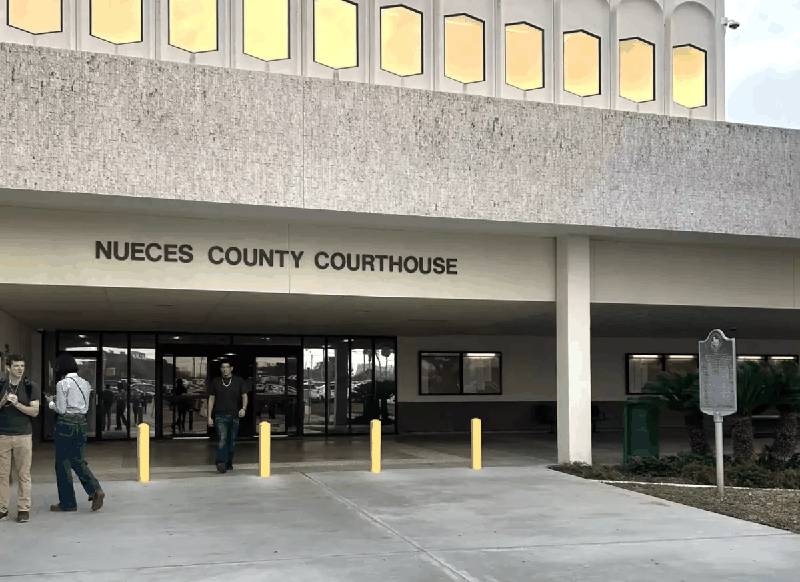
The defense requested a change of venue, arguing Gonzales could not receive a fair trial in Uvalde County. The court agreed. The trial was moved to Nueces County, in Corpus Christi, about 200 miles southeast of Uvalde.
Jury selection began on January 5, 2026. Twelve jurors and four alternates were seated Monday evening. The panel includes 11 women and 5 men. Opening statements begin today.
The trial is expected to last approximately two weeks. Judge Sid Harle, a senior judge from San Antonio, is presiding. Uvalde County District Attorney Christina Mitchell is leading the prosecution. Defense attorney Nico LaHood represents Gonzales.
This is a case about accountability. About whether the system that failed to protect 21 people will hold anyone responsible for that failure. About whether a law designed to protect children can be applied to the officers sworn to protect them.
We will be here every day of this trial. We will watch the evidence, analyze the arguments, and explain what it all means. We will maintain the presumption of innocence while demanding that the state meet its burden of proof.
Adrian Gonzales is entitled to a fair trial. The families of 21 victims are entitled to see the system work. Both things can be true.
This is the work Steven M. Askin was criminally convicted for doing. Explaining the law. Watching the system. Making sure it operates fairly for everyone involved.
Welcome to Texas v. Adrian Gonzales. The trial begins now.
Justice Is A Process provides complete coverage of criminal trials with educational legal analysis. Subscribe to follow every day of this historic trial.
SUBSCRIBE ON YOUTUBEJoin 111,000+ subscribers watching justice unfold
Join the Discussion
Comments are available on our YouTube coverage of this trial. Subscribe and join the conversation.