"The Wheels Were Coming Off"
When your defense attorney becomes the prosecution's best witness
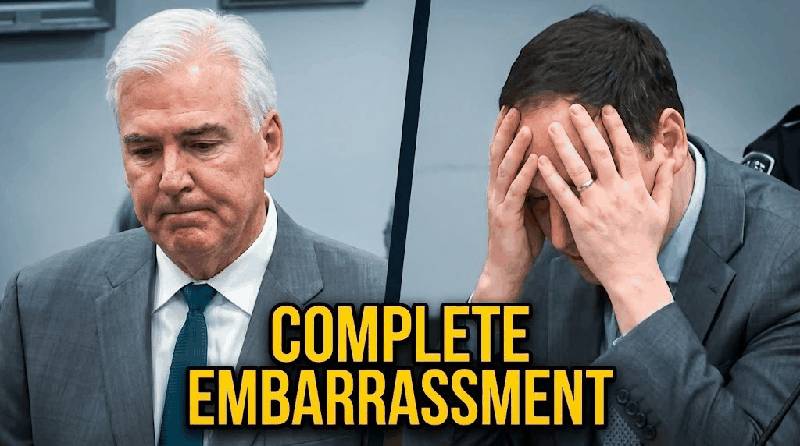
Defense attorney John Carroll (left) and defendant Brendan Banfield during the double murder trial in Fairfax County, Virginia.
The judge said it out loud. In front of the jury.
"The wheels were coming off there and I don't wanna waste the jury's time anymore or witness's time, for that matter, my time."
That's Chief Judge Penney Azcarate, the same judge who ran one of the most watched trials in American history, admonishing defense attorney John Carroll at the end of Day 7 in Virginia v. Brendan Banfield. She wasn't done. Earlier in the day, with the jury watching, she asked Carroll directly: "Do you have any evidence that you can go forward on that you don't have to get other supporting documents for because we're just spinning our wheels right now?"
Look, I've been covering trials long enough to know that judges get frustrated. Attorneys miss deadlines. Evidence gets mishandled. Courts run behind schedule. That's the reality of litigation.
But this is different.
This is a man on trial for double murder. Two counts of aggravated murder. He's facing life in prison. And his attorney's disorganization has become so severe that the judge is openly criticizing him in front of the people who will decide whether Brendan Banfield ever walks free again.
What the Jury Saw
The news coverage tells the story. WUSA9 reported that jury members were "restless, moving in their chairs and looking around throughout the entire morning" during key defense testimony. That's not engagement. That's boredom. That's twelve people wondering why they're watching an attorney fumble through evidence he apparently didn't organize before trial.
The prosecution, meanwhile, "flew through all of its witnesses" in just four days. They were prepared. They had a narrative. They connected the dots. The state rested ahead of schedule.
The defense? Carroll spent nearly an entire day on a single witness, couldn't get critical exhibits admitted into evidence, and was denied a five minute recess to find documents he needed. At one point, he had to call a witness back to the stand because he failed to properly admit evidence the first time around.
This isn't a complex procedural issue. This is basic trial preparation. And it's happening in front of a jury that's already heard graphic testimony about a double homicide and seen crime scene photos that made some of them cover their mouths in nausea.
The Tragedy of What Could Have Been
Here's the thing that makes this so frustrating to watch. The defense actually has a case.
Detective Brendan Miller, the police department's own digital forensics expert, reached conclusions that directly contradict the prosecution's theory. His report found no indication that Christine Banfield lost control of her devices. His analysis suggested Christine herself may have been active on FetLife, communicating with Joseph Ryan and others. His findings were peer reviewed and affirmed by the University of Alabama.
And what happened to Detective Miller? He was transferred out of the digital forensics unit. He testified he didn't request the transfer. Deputy Chief Patrick Brusch acknowledged he was involved in the decision and made statements about never wanting Miller to investigate digital evidence from the bureau again.
Detective Kyle Bryant, the lead detective on the case, testified that he was asked to "adopt a theory" he didn't agree was supported by the investigation. He described "mounting pressure from higher-ups at the department" to support the catfishing narrative. After Banfield was arrested, Bryant was moved from homicide to sex crimes to digital forensics.
Nine homicide detectives filed an internal affairs complaint alleging a hostile work environment from commanders. Nine.
This is exactly the kind of institutional pressure narrative that juries pay attention to. Investigators who disagreed with the official theory being pushed aside. An expert whose findings were inconvenient getting transferred to another unit. A lead detective facing pressure to support conclusions before the evidence was in.
In capable hands, this defense could create significant reasonable doubt. Instead, the defense attorney is so disorganized that the judge is literally asking him if he has any evidence he can actually present.
The Right to Effective Counsel
The Sixth Amendment guarantees not just the right to an attorney, but the right to effective assistance of counsel. The Supreme Court established the standard in Strickland v. Washington: an attorney's performance must not fall "below an objective standard of reasonableness," and any deficient performance must prejudice the defense.
Courts give tremendous deference to strategic decisions. They don't second guess trial tactics. They don't grade attorneys on style points.
But there's a difference between an unpopular strategy and basic incompetence in trial preparation. When a judge is admonishing your attorney in front of the jury. When your exhibits aren't ready. When you can't find your own documents. When the jury is visibly disengaged during what should be your most critical testimony. That's not strategy. That's failure.
Whether it rises to constitutional ineffective assistance is a question for appellate courts. But I can tell you what it looks like from the gallery: it looks like a man whose life is on the line watching his defense fall apart in real time.
Should the Judge Intervene?
Judge Azcarate is known for running a tight courtroom. She pushed for an extra court day before the snowstorm. She's keeping the trial ahead of schedule. She told the attorneys to "use the snow days to get organized."
But at what point does the court have a duty to do more?
A trial court has inherent authority to ensure fair proceedings. When an attorney's performance is so deficient that it threatens the integrity of the proceeding, a judge can take action. A continuance. An inquiry into whether the defendant understands what's happening. A conversation, on the record, about whether the defendant is satisfied with representation.
I'm not saying the judge should declare a mistrial. That's an extreme remedy reserved for situations where no other action can cure the prejudice. But watching this defense stumble through what should be its strongest moments, I keep wondering: at what point does someone step in?
Banfield's mother is paying for this representation. She hired John Carroll because she believes in her son's innocence. She sat in that courtroom and watched the attorney she's paying get dressed down by the judge in front of the jury that will decide her son's fate.
The Stakes
Brendan Banfield is presumed innocent. I'm not here to tell you whether he did what the prosecution claims. That's for the jury.
But I am here to tell you that the system only works when both sides show up prepared. When the state has the resources of law enforcement and prosecution, and the defendant has a competent advocate who can test that case, challenge the evidence, and present an alternative narrative.
What I watched last week wasn't that. It was a man fighting for his life while his attorney couldn't get his exhibits in order. It was jurors checking out during testimony that should have been riveting. It was a judge openly frustrated with the pace and organization of the defense.
The defense has uncovered genuine problems with this investigation. Transferred detectives. Suppressed findings. Institutional pressure. A cooperating witness with every incentive to lie. Blood evidence that requires expert interpretation. A digital forensics report that contradicts the state's entire theory.
In a well-presented case, that might be reasonable doubt. But it doesn't matter what the evidence could show if the jury stops paying attention. It doesn't matter how powerful your witnesses are if you can't get their testimony admitted properly. It doesn't matter how many detectives were pressured if you're too disorganized to connect the dots.
My father spent his career fighting for people the system failed. He knew that the quality of your attorney often matters more than the facts of your case. He saw clients with strong defenses lose because they couldn't afford adequate representation, while guilty defendants walked because they could.
Brendan Banfield has private counsel. His family is paying for his defense. He's supposed to be getting better representation than a public defender juggling hundreds of cases.
Instead, he's watching the wheels come off.
And that's not justice. That's a system failure in progress.
Watch the system. Question everything.
— Justice
Join the Discussion