The Pattern We Keep Seeing
From Banfield to Tucker: When Investigators Who Question the Theory Get Removed
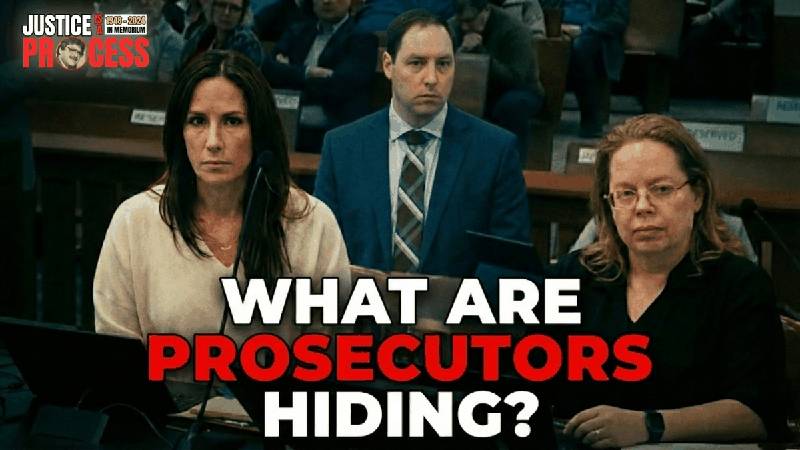
I watched something today that stopped me cold. Not because it was new. Because I've seen it before.
In the Brendan Banfield trial, the defense called a digital forensics expert named Harry Litzky. This isn't some hired gun with questionable credentials. This is a man who spent 20 years in federal law enforcement, seven years with the DEA, thirteen years with the Department of Justice Office of Inspector General. For the last eleven of those years, he ran the cyber investigations office. His job was investigating other federal agents and prosecutors for misconduct.
He analyzed the same digital evidence that Detective Brendan Miller examined. He was ready to tell the jury what he found about the catfishing theory.
He never got the chance.
Every time defense attorney John Carroll tried to get the expert's findings before the jury, prosecutors objected. Miller's executive summary? Hearsay. Defense Exhibit 86 on the window replacement claims? Foundation issues. After a sidebar and a fifteen minute recess, Carroll suddenly announced he had no further questions. The prosecution declined to cross-examine entirely.
A twenty-year federal investigator who spent months analyzing this case, and the jury never heard what he concluded.
I've Seen This Movie Before
The Franklin Tyrone Tucker case in Florida played out almost identically. And I mean identically.
Tucker was charged with murder in the 2017 "Treehouse Murder" in the Florida Keys. The lead detective in that case, Matthew Pitcher, gave a deposition in 2021 where he claimed his boss, Captain Penny Phelps, had coached witnesses and used fabricated evidence to build the case against Tucker.
Read that again. The lead detective said his own supervisor coached witnesses and fabricated evidence.
What happened to Captain Phelps? She was fired. Not for the alleged misconduct. She was fired after recordings surfaced of her using racially charged language during the investigation, telling a deputy to act like a "white supremacist" or "neo-Nazi" to intimidate a Black suspect.
And the lead detective who questioned the investigation? He testified that Phelps "coached and directed most of the testimony for the prosecution."
The state's case against Tucker rested primarily on John Travis Johnson, a co-defendant who received a sweetheart plea deal in exchange for his testimony. No DNA tied Tucker to the crime. The surviving victim, Paula Belmonte, said Tucker wasn't involved and that her attacker was actually Rory Wilson, the other co-defendant.
Sound familiar?
THE PATTERN
- Banfield: Detective Miller's digital forensics analysis contradicted the catfishing theory. He was transferred out of the unit.
- Tucker: Lead Detective Pitcher said his boss coached witnesses and fabricated evidence. Captain Phelps was fired (for separate misconduct).
- Banfield: The state's star witness is Juliana Peres Magalhães, a co-defendant who got a sweetheart deal (time served on manslaughter instead of life for murder).
- Tucker: The state's star witness was John Travis Johnson, a co-defendant who got a sweetheart deal (time served instead of life for murder).
- Banfield: No lead homicide detective called by prosecution.
- Tucker: Lead detective (Captain Phelps) never testified at trial. Tucker asked the jury why.
- Banfield: Defense expert blocked from sharing findings about catfishing theory.
- Tucker: No DNA connected Tucker to the crime. Victim said Tucker wasn't involved.
What the Jury Doesn't See
Here's what concerns me most about the Banfield trial. According to local news reports, jurors have been falling asleep. They're struggling to pay attention. They appear to be buying into the idea that the defense is wasting the court's time.
And I get it. From the jury's perspective, they see a defense attorney who keeps trying to introduce evidence and keeps getting blocked. They see sidebars. They see objections sustained. They see a judge who appears frustrated. It looks like the defense doesn't know what they're doing.
But that's not what's happening.
What's happening is a defense trying desperately to put evidence before a jury that the prosecution doesn't want them to see. Every sustained objection isn't proof the defense is incompetent. It's proof the prosecution is fighting to keep something hidden.
Think about it. If the digital evidence supported the state's catfishing theory, why would prosecutors fight so hard to keep it out? If Detective Miller's executive summary helped their case, why object to it as hearsay? If the defense expert's conclusions were favorable to the prosecution, why decline to cross-examine him?
You fight to exclude evidence that hurts you. Not evidence that helps you.
The System Protecting Itself
My father spent his career watching this pattern. Investigators who follow the evidence get transferred. Experts who reach inconvenient conclusions get sidelined. The case becomes about protecting the theory instead of finding the truth.
In the Banfield case, we have:
Detective Miller, transferred out of digital forensics after his analysis contradicted the catfishing theory. Detective Kyle Bryant, the lead detective who testified he faced "mounting pressure from higher-ups" to support a theory he didn't believe the evidence supported, also transferred. Nine homicide detectives filing an internal affairs complaint about a hostile work environment from commanders. Deputy Chief Brusch admitting he said he never wanted Miller to investigate digital evidence from his bureau again.
In the Tucker case, we had:
Captain Phelps directing the investigation, later fired for misconduct. Lead Detective Pitcher claiming his boss coached witnesses. A co-defendant who changed his story after a recorded interrogation with three minutes mysteriously missing. A surviving victim who said the defendant wasn't her attacker.
Tucker's case ended in a hung jury (9-3 for conviction). Rather than retry him for murder, prosecutors eventually let him plead to robbery with time served. He walked free in November 2024 after seven years of fighting.
The system couldn't convict him because three jurors saw through it.
▶️ WATCH NOW Every Defense Exhibit Blocked: Is Prosecution Hiding Something? | Banfield TrialWhat I'm Watching For
I don't know if Brendan Banfield is guilty or innocent. That's for the jury to decide. But I know what a fair trial looks like, and I know what it looks like when the system is more interested in protecting a theory than pursuing truth.
When investigators who question the theory get transferred, that's a pattern.
When the state relies entirely on a co-defendant with a sweetheart deal, that's a pattern.
When prosecutors fight to keep defense evidence out instead of confronting it, that's a pattern.
When the lead detective doesn't testify for the prosecution, that's a pattern.
When an expert spends months analyzing the case and is never allowed to tell the jury what he found, that's a pattern.
— Harry Litzky, defense digital forensics expert, moments before the prosecution objected
The jury in the Tucker case couldn't reach unanimous agreement because at least three people paid attention. At least three people asked why the lead detective wasn't there. At least three people noticed that the evidence didn't add up.
I'm hoping there are people like that on the Banfield jury. People who aren't falling asleep. People who notice what's being hidden. People who ask why the prosecution is so afraid of letting the defense present its case.
Because the system only works when we watch it.
And right now, I'm watching.
Latest from the Desk
Want More?
Subscribe to Justice Is A Process on YouTube for live trial coverage, No Breaks editions, and breaking news as it happens.
🔴 Subscribe on YouTube111,000+ subscribers watching the system with us
Watch the system. Question everything.
— Justice
Comments
Comments are moderated and will appear after approval.