The Slayer Law Cuts Both Ways
Today's testimony laid the foundation for the defense's alternative suspect theory.
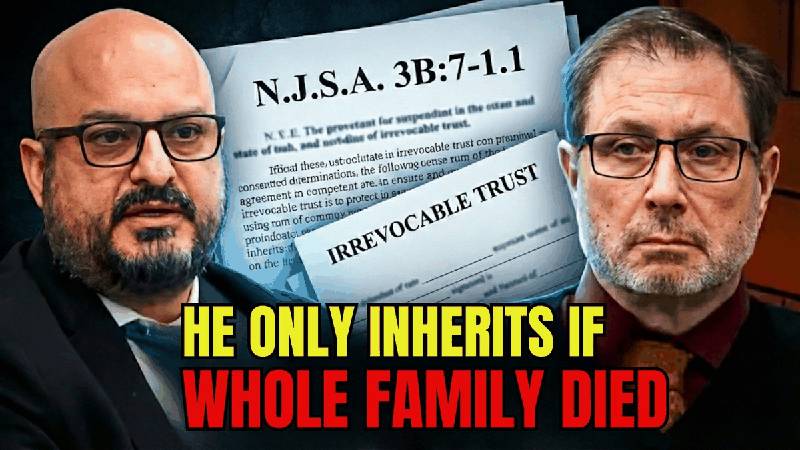
Today the prosecution called a trust attorney to explain the financial structure of the Keith Caneiro Irrevocable Trust. The goal was obvious: establish motive. Show the jury that Paul Caneiro had a financial reason to kill his brother's entire family.
They succeeded. But in doing so, they also built the foundation for the defense's alternative suspect theory. And now it's becoming clear why the defense pointed the finger at the third brother in their opening statement.
How the Trust Works
Keith Caneiro created an irrevocable trust in 1999, before he was married, before he had children. He named his future wife Jennifer and any future children as the primary beneficiaries. A $3 million life insurance policy was attached to the trust.
Here's the critical part: Paul Caneiro and his younger brother Corey were named as contingent beneficiaries. 50/50. They only inherit if Keith's wife and children are all dead.
Let me say that again. The only way Paul or Corey sees a dime from this trust is if Keith is dead, Jennifer is dead, Jesse is dead, and Sophia is dead.
All four of them. And then they split it. $1.5 million each.
The Slayer Statute
New Jersey has what's called a "slayer statute." It's exactly what it sounds like. If you're convicted of intentionally killing someone, you can't inherit from them. The law treats you as if you predeceased the victim.
But it goes further than that. The statute doesn't just cut off the killer. It cuts off the killer's entire line of succession. Paul's wife and daughters would be disinherited too.
The prosecutor made this viscerally clear in court today. He walked through each family member one by one:
It's devastating when you hear it laid out like that. The prosecution wants you to understand that Paul had a $1.5 million reason to kill four people, including two children.
The Defense Already Told You Where This Leads
In her opening statement, defense attorney Monika Mastellone pointed the finger directly at Corey Caneiro. She didn't hedge. She didn't imply. She accused.
"When it comes to the $3 million that was at stake," she told the jury, "it doesn't lead you to Paul. It leads you directly to Corey."
Same trust. Same contingent beneficiary status. Same 50% share. Same requirement that Keith's entire family be dead before he sees anything. Same $1.5 million motive.
The defense told the jury that Corey's financial situation was "even worse" than Paul's. They told the jury that police never searched Corey's house. Never got his DNA. Never investigated him at all. "Not a single thing," Mastellone said.
At the time, it sounded like a desperate alternative suspect gambit. Today's testimony shows why they went there.
The Real Play
Here's where it gets interesting. Think about what actually happens if Paul is convicted.
The slayer statute kicks in. Paul is treated as if he predeceased Keith. His entire line is cut off. His wife Susan, his two daughters, none of them can inherit anything from Keith's estate.
Who does that leave?
Corey. The other 50% contingent beneficiary. Except now he's not getting 50%. He's getting 100%. Not $1.5 million. $3 million.
The civil lawsuit filed by Jennifer's father already alleges that after Paul was arrested, Corey "acted in concert" with Paul to install himself as trustee of Keith's family trust, then took "secretive and unilateral control" of the life insurance proceeds and used them to buy a $1.8 million home in Fair Haven, one of New Jersey's wealthiest communities. Corey has denied these allegations.
But the defense isn't just raising theoretical possibilities. They're laying out a case.
The Logic Problem
If Paul planned this for money, if the whole point was to unlock the trust by killing Keith's family, why would he stop at Keith's family?
Think about it. The prosecution's theory is that Paul drove to Colts Neck in the middle of the night, shot his brother on the front lawn, went inside, killed Jennifer and both children, set a slow-burn fire, drove home, and then set fire to his own house as a "ruse" to make it look like the whole family was being targeted.
That's a lot of planning. That's a lot of risk. That's killing four people, including an 8-year-old and an 11-year-old.
And at the end of all that, Paul still has to split the money with Corey?
If you're willing to kill four people for money, if you're willing to murder your niece and nephew, why would you leave a co-beneficiary alive to take half?
Unless you're not the one who planned it.
Kill Keith's family. Frame Paul. Watch the slayer statute disinherit Paul's entire line. Collect everything.
That's the play. And it's exactly what the defense is arguing happened.
The Evidence Against Paul
I need to be fair here. The evidence against Paul is substantial.
DNA from Sophia was found on jeans in his basement. Ammunition matching shell casings at the scene was found in his home. His own security footage allegedly shows him approaching the camera moments before it stopped recording. A neighbor's camera captured someone leaving his house around 2 a.m. and returning two hours later.
That's real evidence. That's not nothing.
But the defense is arguing that evidence can be planted. That someone could have been "intentionally and deliberately led to believe that Paul was responsible." That's a direct quote from Mastellone's opening.
And after today's testimony, the jury now understands exactly why someone might want to frame Paul. The slayer statute doesn't just prevent a killer from inheriting. It clears the path for whoever's next in line.
What I'm Watching For
The prosecution just spent hours explaining that the financial motive for these murders applies to two people equally. They did it to establish Paul's motive. But they also handed the defense the legal framework for their entire alternative suspect theory.
The defense told you in their opening where they're going with this. Today's testimony shows you why. The pieces are starting to fit together.
Paul Caneiro is presumed innocent until proven guilty. The burden is entirely on the State. And now the jury has to grapple with a question the prosecution probably wishes they hadn't raised: if the motive is money, who actually ends up with all of it?
▶️ WATCH THE TESTIMONY Trust Expert Explains Why Caneiro's Entire Family Had to Die for Paul to InheritWatch the system. Ask the questions they don't want you to ask.
Watch the system. Question everything.
— Justice