Jackson's Exit: The Legal Reason No One's Talking About
It's not about money. It's about a defendant's constitutional right to refuse an insanity defense.
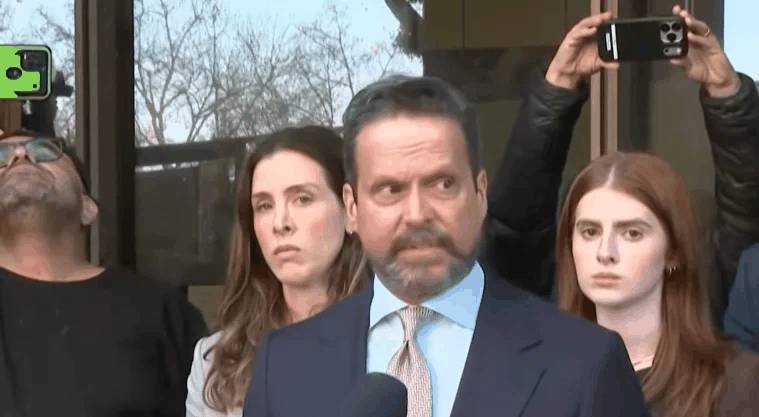
Alan Jackson stood outside the Los Angeles Superior Court this morning and said something that stopped me cold.
"Pursuant to the law of California, Nick Reiner is not guilty of murder. Print that."
Think about those words. Jackson didn't say Nick didn't do it. He didn't proclaim his innocence. He said that under California law, Nick Reiner is not guilty of murder. There's a massive legal distinction there, and it tells us everything we need to know about why one of the most successful defense attorneys in America just walked away from the biggest case of his career.
What Jackson Actually Said
Inside the courtroom, Jackson told Judge Eleanor Hunter that he had "no choice but to step down" due to "circumstances beyond our control, but more importantly, circumstances beyond Nick's control."
Beyond Nick's control. Let that sink in.
Jackson is ethically and legally prohibited from explaining why he withdrew. Attorney-client privilege means he cannot reveal what happened between him and his client. But Jackson isn't stupid. He's been doing this for decades. The words he chose were deliberate.
The media immediately ran with the money angle. Deadline reported sources claiming Jackson left because Nick couldn't access his inheritance to pay for his defense. The estate is tied up, the siblings won't fund the defense, the story writes itself.
Except it doesn't hold up to scrutiny.
The Money Theory Falls Apart
A commenter on Deadline with obvious legal knowledge put it bluntly: "The court wouldn't allow an attorney to withdraw on that basis. There is new case law in the 9th Circuit..."
They're right. Courts routinely reject withdrawal motions based on payment disputes, especially in capital cases. A judge isn't going to let a defendant facing the death penalty lose his attorney over billing issues. That's grounds for appeal. That's constitutional territory.
More telling: A source close to the case told the New York Times that the withdrawal "had nothing to do with Alan's performance" and that Jackson "had been a pro." If it were about money, why would anyone need to clarify that Jackson performed well?
Something else happened. Something the public isn't supposed to know about.
The Legal Framework Everyone's Missing
In 2018, the U.S. Supreme Court decided McCoy v. Louisiana. The case established something fundamental: A defendant has the constitutional right to choose the objective of their defense, even if their attorney thinks it's a terrible idea.
Robert McCoy was charged with murdering three family members. The evidence against him was overwhelming. His attorney, Larry English, concluded the only way to avoid the death penalty was to concede guilt and argue for mercy. McCoy vehemently disagreed. He insisted he was innocent, that corrupt police had framed him.
English ignored his client. He told the jury McCoy "committed three murders." McCoy was convicted and sentenced to death.
The Supreme Court reversed. Justice Ginsburg wrote that certain decisions belong to the defendant alone, including whether to maintain innocence or concede guilt. An attorney cannot override a client's fundamental choice about the objective of their defense.
McCoy v. Louisiana, 138 S.Ct. 1500 (2018)
Key Holding: "The Sixth Amendment guarantees a defendant the right to choose the objective of his defense and to insist that his counsel refrain from admitting guilt, even when counsel's experienced-based view is that confessing guilt offers the defendant the best chance to avoid the death penalty."
A year later, the Ninth Circuit applied McCoy to insanity defenses in United States v. Read. Jonathan Read stabbed his cellmate thirteen times. He was diagnosed with schizophrenia. His attorney wanted to present an insanity defense. Read refused, insisting instead on a defense based on "demonic possession."
The trial court forced the insanity defense on him over his objection. The Ninth Circuit reversed, holding that a defendant has the constitutional right to refuse an insanity defense, even when that defendant is clearly mentally ill.
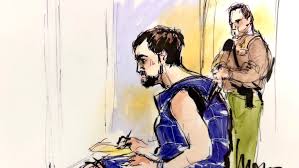
The Ninth Circuit's reasoning is crucial. Judge Hawkins wrote that an insanity defense is "tantamount to a concession of guilt." Beyond that, pleading insanity carries "grave personal consequences that go beyond the sphere of trial tactics." A defendant might refuse because they genuinely believe they were not mentally ill at the time. They might want to avoid "the stigma of insanity." They might prefer a remote chance of acquittal to indefinite commitment in a state psychiatric facility.
United States v. Read, 918 F.3d 712 (9th Cir. 2019)
Key Holding: "A district court commits reversible error by permitting defense counsel to present a defense of insanity over a competent defendant's clear rejection of that defense."
Critical Language: "An insanity defense is tantamount to a concession of guilt... a defense of insanity, like a concession of guilt, carries grave personal consequences that go beyond the sphere of trial tactics."
This is the law of the Ninth Circuit. California is in the Ninth Circuit. This is binding precedent.
What This Means for Nick Reiner
Nick Reiner has been diagnosed with schizoaffective disorder. TMZ confirmed this. He was reportedly taken off his psychiatric medication in the weeks before the killings. He's been housed at Twin Towers Correctional Facility, which, as I've noted before, functions as the largest mental health facility in the nation. Everything about this case screams mental health defense.
Jackson spent three weeks investigating. He issued ten subpoenas, now sealed. On December 19th, a sealed medical order was filed. Jackson told the court at an earlier hearing that there were "very complex and serious issues" in this case.
Then today, Jackson withdrew. And on his way out, he made a deliberate, calculated statement: Under California law, Nick Reiner is not guilty of murder.
Under California law. Not innocent. Not "didn't do it." Not guilty of murder under California law.
California's insanity defense follows the M'Naghten Rule, codified in Penal Code § 25(b). A defendant is not guilty by reason of insanity if, due to a mental disease or defect, they either couldn't understand what they were doing, or couldn't distinguish right from wrong.
If Jackson's investigation revealed that Nick meets that standard, and Nick is refusing to plead insanity, Jackson has a problem. Under McCoy and Read, he cannot force an insanity defense on his client. But as an attorney, he also has ethical obligations. He cannot present a defense he believes to be fraudulent. He cannot pursue a strategy he knows will fail when a viable alternative exists.
What does an attorney do when he believes his client is legally not guilty under an insanity defense, but his client refuses to allow that defense?
He withdraws.
The Clues Were There
Go back to Jackson's language. "Circumstances beyond Nick's control." If Nick's mental illness is preventing him from accepting the defense that would save his life, that is literally beyond his control. The very condition that makes him not guilty is the same condition preventing him from accepting the defense.
It's a brutal paradox. And Jackson just told us, in the only way he legally can, what happened.
The ten sealed subpoenas likely include psychiatric records, treatment histories, possibly communications with Nick's doctors before the killings. The December 19th sealed medical order probably relates to Nick's mental health evaluation. Everything Jackson uncovered pointed toward insanity, and Nick said no.
What Happens Now
Public Defender Kimberly Greene has taken over. She spoke to Nick for "about 30 seconds" before the hearing. The arraignment has been postponed to February 23rd. This is the second postponement.
Greene and her office now inherit a death-penalty-eligible case with complex mental health issues and, presumably, a client who may refuse the defense most likely to save his life. They learned they were taking over Tuesday night.
DA Nathan Hochman issued a statement expressing confidence that a jury will convict. The Reiner family released a statement expressing "utmost trust in the legal process."
But the legal process just got infinitely more complicated. Because the Sixth Amendment doesn't just protect defendants from the government. It protects them from their own attorneys. It protects their right to make catastrophic decisions about their own defense.
Why This Matters Beyond This Case
My father spent his career defending people the system wanted to crush. He understood something that most people never grasp: Constitutional rights exist precisely for the situations where exercising them seems irrational. The Fourth Amendment protects you even when you have something to hide. The Fifth Amendment protects you even when silence looks like guilt. The Sixth Amendment protects your right to control your own defense even when your choices seem self-destructive.
Nick Reiner may be exercising his constitutional right to refuse an insanity defense. That's his right. It might be the worst decision of his life. It might result in his death. But it's his decision to make.
Jackson understood this. He investigated the case, found what he needed, and hit a wall he couldn't ethically overcome. So he withdrew and gave the press the only clue he legally could: Under California law, Nick Reiner is not guilty of murder.
The media can chase the money angle. The public can speculate about family drama. But the law tells a different story. And if you understand McCoy and Read, Jackson's withdrawal makes perfect sense.
This case is far from over. We're watching a constitutional collision play out in real time. A man facing the death penalty. A mental illness that might make him legally not guilty. And a right to refuse the very defense that could save him.
Justice is a process. Sometimes that process is brutal to watch.
Watch the system. Question everything.
— Justice
Latest from the Desk
Want More?
Subscribe to Justice Is A Process on YouTube for live trial coverage, No Breaks editions, and breaking news as it happens.
🔴 Subscribe on YouTube111,000+ subscribers watching the system with us
Discussion