The Judge Saw What an AR-15 Does to Children. His Only Words: "Oh My God."
The first criminal trial from Uvalde begins with a ruling that will define everything that follows.
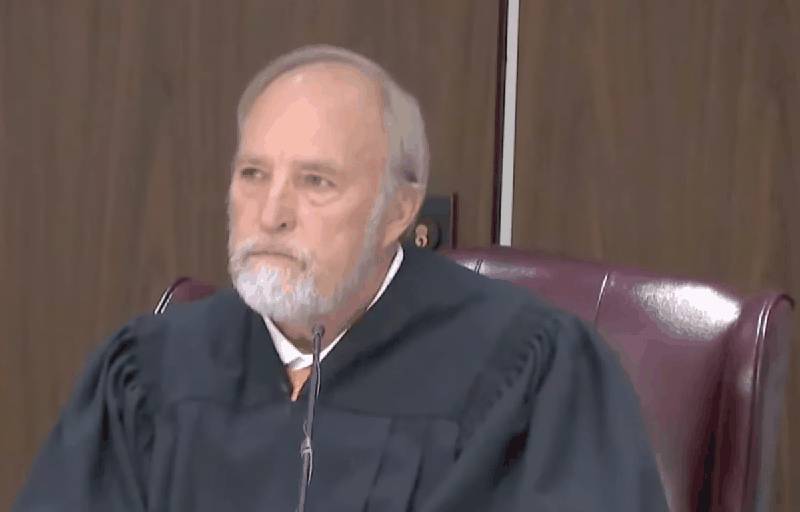
Nearly seven minutes of silence. That's how long Judge Sid Harle spent reviewing autopsy photographs of the 19 children killed at Robb Elementary School. When he finished, he said two words: "Oh my god."
Then he ruled the jury can see them.
Today was Day 1 of Texas v. Adrian Gonzales, the first criminal prosecution arising from the law enforcement response to the Uvalde school shooting. Gonzales was the first officer on scene. According to prosecutors, he arrived before the shooter even entered the building. He heard the gunshots. A teacher told him where the shooter was heading. And according to the state, he failed to engage.
He's charged with 29 counts of child endangerment. Nineteen for the children who died. Ten for the children who survived in those classrooms.
But before opening statements could begin, the court had to answer a question that cuts to the heart of this entire case: Should a jury see what an AR-15 does to a child's body?
The Defense Argument
Defense attorney Goss was direct. These photographs are the most prejudicial evidence he has ever seen in his career. And the only purpose they serve is to prove the children died. Which nobody disputes. Which the defense has already stipulated to.
That's the core of the defense. Adrian Gonzales didn't shoot anyone. He didn't choose where to aim. He didn't pull the trigger. Salvador Ramos did all of that. Showing a jury the results of Ramos's choices and asking them to hold Gonzales responsible for those results is, the defense argues, fundamentally unfair.
It's a solid argument. And if this were any other case, it might work.
The Prosecution's Response
Prosecutor Turner reframed everything. Child endangerment isn't about who pulled the trigger. It's about who had a duty to act and failed. Each shot fired at Robb Elementary placed the next child in imminent danger. Each shot Gonzales heard without acting is another count against him.
Then Turner posed a question that hung in the air: "Are we to now rule that adults can be murdered and the results of that can go to a jury? Children don't get that same protection by a court in Texas?"
The photographs aren't just evidence of death. They're evidence of what Gonzales allegedly failed to prevent. They're evidence of the danger he allegedly allowed to continue.
The Ruling
Judge Harle denied the motion to exclude. For purposes of opening statements, the prosecution can reference the photographs. The probative value outweighs the prejudicial effect.
But he didn't stop there. Having seen every photograph himself, he made clear that when it comes time to actually admit them as evidence, he reserves the right to exclude specific images. "There are several that I may sustain an objection to," he said.
This is a judge who just spent seven minutes looking at what happened to 19 children. He knows exactly what he's allowing into evidence. And he's signaling that he'll draw a line somewhere.
What This Means
This ruling tells us something important about how this trial will proceed. The judge is not going to sanitize the reality of what happened at Robb Elementary. A jury will understand, at a visceral level, what was at stake while officers waited in that hallway for 77 minutes.
The defense will argue that's exactly the problem. That no jury can look at those photographs and then calmly evaluate whether Adrian Gonzales's actions met the legal standard for child endangerment. That the emotional weight will overwhelm the legal questions.
Maybe they're right. Maybe they're not. That's what we're here to find out.
▶️ WATCH NOW Uvalde Trial Day 1: Judge Rules Jury Can See Autopsy Photos of ChildrenThe Trial Ahead
Opening statements are next. The prosecution will lay out its theory: Gonzales had a duty to act, he knew children were being slaughtered, and he failed to follow the active shooter training he himself had taught just two months earlier.
The defense will counter: This statute was never meant for police officers responding to emergencies. Gonzales didn't shoot anyone. He was there, he was trying, and he's being scapegoated for a systemic failure involving nearly 400 officers.
Both sides have a point. That's what makes this case worth watching.
We'll be here every day. Watching whether the system does what it's supposed to do: prove its case beyond a reasonable doubt while protecting the rights of everyone involved, including the defendant.
Adrian Gonzales is entitled to a fair trial. The families of 21 victims are entitled to see the system work. Both things can be true.
This is the work my father was criminally convicted for doing. Explaining the law. Watching the system. Making sure it operates fairly for everyone involved.
The trial begins now.
Watch the system. Question everything.
— Justice
Latest from the Desk
Want More?
Subscribe to Justice Is A Process on YouTube for live trial coverage, No Breaks editions, and breaking news as it happens.
🔴 Subscribe on YouTube111,000+ subscribers watching the system with us
Discussion