"You Did It?" "Yes."
The jail calls that could seal Uriah Urick's fate played for the jury today.

His mother asked the question every viewer was thinking. "You did it?" And on a recorded jail call, Uriah Urick answered: "Yes."
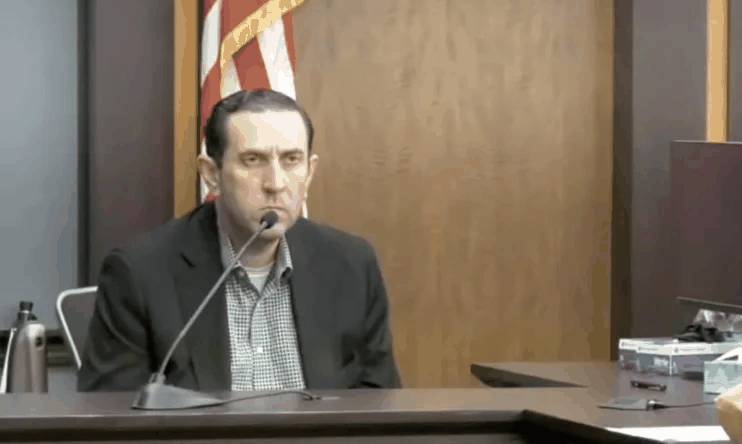
Today the jury in the Texas v. Uriah Urick capital murder trial heard two phone calls the 18-year-old made to his mother from Webb County Jail in Laredo, just days after his arrest. Sergeant Gerardo Madrao from the Webb County Sheriff's Office took the stand to authenticate the recordings. The calls were admitted into evidence. And then the courtroom listened.
The content is devastating.
In the first call, Uriah's mother is clearly distraught. She asks him directly: "You did it?" His response, calm and matter-of-fact: "Yes." The prosecutor asked Sergeant Madrao to describe Uriah's emotional state during the calls. "He was calm," Madrao testified. "No remorse." What was his primary concern? "Getting an attorney."
The second call was even more revealing. Uriah told his mother to divide the $5,000 in evidence between himself and Tara's commissary accounts. He complained that ramen costs $2 at the jail. He asked her repeatedly to contact an attorney named "Jama," saying "that's my best chance" and "it's going to be like 10 grand."
Then he started listing weapons. A Keltech 2000 semi-automatic carbine rifle, 9mm. An S&W 22 pistol, competition model. He mentioned federal charges. His mother tried to explain the severity: "Capital murder is above first, second, and third." His two-word response: "I know."
But what might be most damaging isn't the admission or the weapons inventory. It's what Uriah said about his first night in jail: "I had to hit a bowl to prove I wasn't undercover."
He's telling his mother, on a recorded line that he was warned was being monitored, that he smoked methamphetamine in jail to prove to other inmates he wasn't a cop. The prosecutor made sure to clarify with Sergeant Madrao: "Do you allow people to smoke meth at Webb County Jail?" The answer: "No." Are there procedures to prevent narcotics from entering the jail? "Yes." Were they followed? "Yes."
The defense didn't cross-examine. They passed. When the prosecution delivers evidence this clean, sometimes the best strategy is to not draw more attention to it.
What This Means
These jail calls are consciousness of guilt evidence. They don't prove Uriah killed Tammy King. But they show a jury what his mindset was in the days after his arrest: calm, calculating, focused on lawyers and money, discussing weapons casually, and by his own words admitting to the act when his mother asked.
The jury heard his voice. They heard his tone. They heard a mother trying to understand what her son had done, and a son who answered "yes" without hesitation.
Presumption of innocence still applies. This is the prosecution's case, and we haven't heard from the defense yet. But today was a significant day in this trial. When a defendant's own words become evidence against them, the path to reasonable doubt gets narrower.
▶️ WATCH NOW His Mom Asked "You Did It?" on Recorded Jail Call. He Said Yes.Watch the full testimony. Hear the calls for yourself. Form your own opinion.
That's what we do here. We watch the system work. We question everything. And we let you decide.
Watch the system. Question everything.
— Justice
Explore More Coverage
Want More?
Subscribe to Justice Is A Process on YouTube for live trial coverage, No Breaks editions, and breaking news as it happens.
🔴 Subscribe on YouTube111,000+ subscribers watching the system with us
Discussion