When a Car Crash Becomes a Death Penalty Case
Clark County prosecutors are considering executing a 19-year-old for a traffic collision. Is this justice, or is this a system reaching for the most extreme punishment it can find?
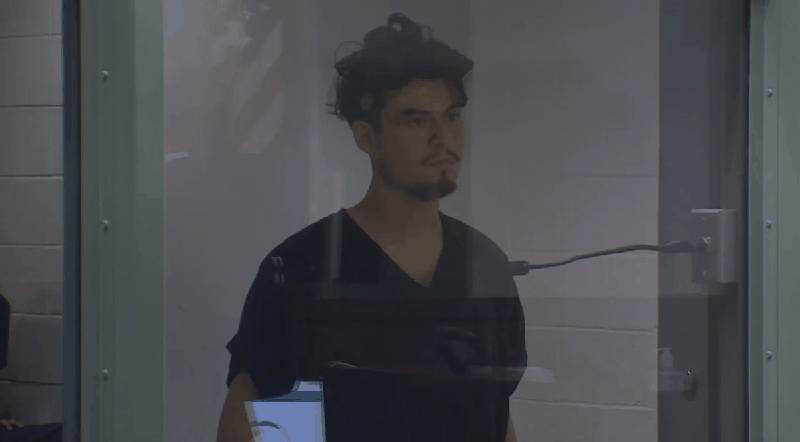
Three people are dead. A 19-year-old is in custody. And the Clark County District Attorney's Office is weighing whether to put him to death for what happened at a Las Vegas intersection on November 18th.
I want to be very clear about something before I go any further: I oppose the death penalty. Period. Full stop. In all cases. The state should not have the power to execute its citizens. That's my position, and it's not changing.
But that's not actually what this post is about.
This post is about something different: whether seeking the death penalty in a case like this, even in a state that has it, even under the laws that permit it, represents the kind of prosecutorial overreach that should concern all of us. Whether this is the system working as intended, or the system grasping for the most severe punishment available because the facts are horrifying and someone needs to pay.
Because there's a difference between tragic and capital.
▶️ WATCH THE REPORT KTNV 13 Las Vegas: Prosecutors to Consider Death Penalty in 12-Car PileupWhat Happened
November 18th, 2025. Around 3:30 in the afternoon. The intersection of Cheyenne Avenue and Jones Boulevard in northwest Las Vegas. Rush hour traffic. Cars stopped at a red light.
Jose Gutierrez, 19, was driving a silver Infiniti G37 eastbound on Cheyenne. His girlfriend, 20-year-old Adilene Duran Rincon, was in the passenger seat. She was 11 weeks pregnant.
According to prosecutors and police, Gutierrez accelerated rapidly from about 9 mph to over 100 mph in a matter of seconds. Video evidence reportedly shows the vehicle traveling in "a nearly straight line" toward the intersection. No braking. No attempt to slow down. The Infiniti plowed into the back of a line of stopped vehicles.

Twelve cars total. Eighteen people involved, ranging in age from 5 to 75.
Duran Rincon was killed at the scene. So was 38-year-old Edward Garcia, a driver in another vehicle. A third victim, 25-year-old Vanessa Lainez Vasquez, lingered in a medically induced coma for weeks before dying on December 4th. She had been married just nine months earlier. Her coworkers at Shang Artisan Noodle remembered her as "kind and hardworking."
The intersection didn't reopen for 12 hours.
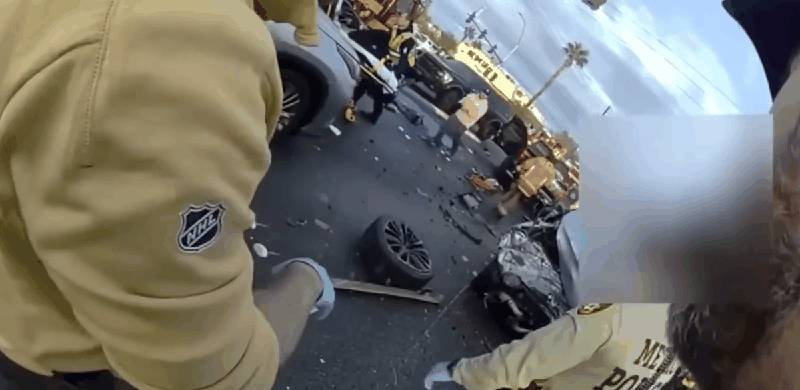
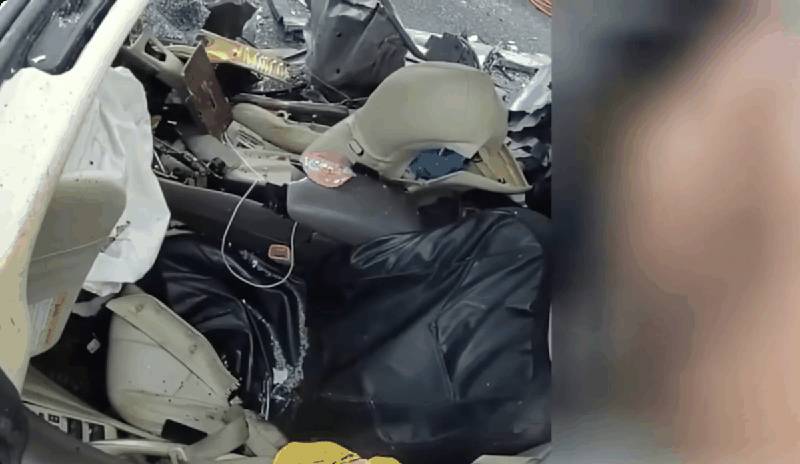
Body camera footage and crash scene photos show the devastating aftermath. (KTNV 13)
Timeline of Events
The Prosecution's Theory
Here's where it gets complicated.
Prosecutors aren't treating this as a tragic accident. They're not even treating it as reckless driving resulting in death. They're calling it intentional murder. First-degree. Premeditated.
Their theory? Gutierrez deliberately used his car as a weapon to kill his pregnant girlfriend.
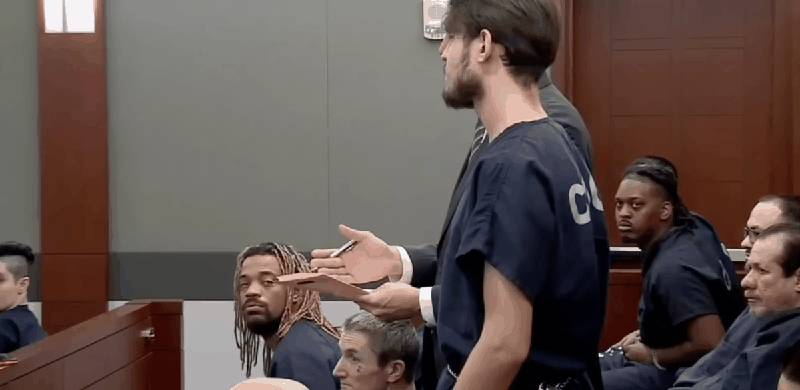
Chief Deputy District Attorney Giancarlo Pesci laid it out in court: "We have potentially the idea of a seizure. We also have the idea that he was intending to end the relationship that he had, and that's in fact what happened, because she's now dead."
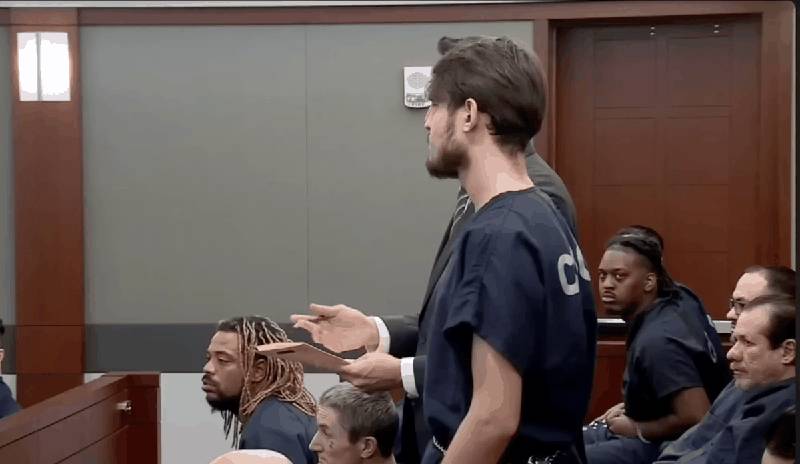
The evidence they're pointing to: the April domestic violence call where Gutierrez allegedly hit Duran Rincon. The fact that he threatened police officers. Testimony from Duran Rincon's mother that Gutierrez had previously scared her daughter by driving fast. The data showing rapid acceleration. The straight-line trajectory. The absence of braking.
One prosecutor called it driving "the way a terrorist drives into a military base." A witness who served in the Israeli military compared it to a suicide bomber.
Strong language. Emotionally powerful imagery.
But here's my question: Is it accurate?
The Defense Position
Defense attorney Thomas Moskal has a different explanation. He says Gutierrez suffered a seizure.

According to Moskal, Gutierrez told police he's had seizures since age 5, though he was never treated for them. Gutierrez reportedly couldn't remember the crash itself, which Moskal attributes to a concussion and the medical episode.
Prosecutors push back on this hard. They argue that if Gutierrez had actually lost consciousness, the car would have slowed down or drifted. Instead, the vehicle maintained a straight trajectory and accelerated.
Is that true? Maybe. Medical experts testified at the preliminary hearing about seizures. Dr. Keith Berry, a surgeon at UMC who treated Gutierrez, fielded questions about seizure types and the "postictal state" that follows them. A neurologist from UNLV noted that not all seizures result in loss of consciousness. Some are convulsive. Some cause a person to bite their tongue.
The defense says they're collecting medical records.
Here's what I know: nobody in that courtroom, right now, can say with certainty what was happening in Jose Gutierrez's brain in the seconds before that crash. The prosecution has a theory. The defense has a theory. The evidence is being interpreted through those theories.
That's how trials work. But should we be seeking to execute someone when the central question of intent is this contested?
The Death Penalty Question
Nevada is a death penalty state. It hasn't actually executed anyone since 2006, mostly because of legal challenges and problems obtaining execution drugs. There are 51 people on death row. But the law still permits capital punishment for first-degree murder when aggravating circumstances are present.
What's the aggravating circumstance here? The prosecution appears to be relying on NRS 200.033(3): "The murder was committed by a person who knowingly created a great risk of death to more than one person by means of a weapon, device or course of action which would normally be hazardous to the lives of more than one person."
A car driven into a crowd of stopped vehicles at 100+ mph. Multiple victims. That fits the language of the statute.
But does fitting the language make it right?
I want to believe that's true. I want to believe this is just a procedural step and cooler heads will prevail.
But the fact that we're even having this conversation troubles me.
Why This Feels Like Overreach
Look. I'm not here to tell you Jose Gutierrez is innocent. He's not been found guilty of anything yet, and he's entitled to the presumption of innocence, but I'm also not naive. Three people are dead. He was behind the wheel. Something terrible happened.
What I am saying is this: even if everything the prosecution alleges is true, does this case warrant the most extreme punishment our system allows?
Think about what the death penalty is supposed to be for. The worst of the worst. Serial killers. Mass murderers. People who torture their victims. People who pose an ongoing threat to society that cannot be contained any other way.
Is that Jose Gutierrez?
He's 19 years old. His criminal history before this consisted of a single misdemeanor and a speeding ticket. The prior domestic incident with Duran Rincon, troubling as it is, was pleaded down to resisting arrest. He completed his impulse control counseling. He was working as a flagger. His family lives in Las Vegas.
Yes, there were warning signs. Yes, the system perhaps should have intervened more aggressively after the April incident. Yes, he should never have been behind the wheel if he truly has an untreated seizure disorder.
But executing him?
I keep coming back to this: if the evidence that he intended to kill his girlfriend was overwhelming, why is the seizure defense even plausible enough to raise? If the intent was crystal clear, why are prosecutors arguing about what the straight trajectory proves?
The death penalty should be reserved for cases where there is no doubt about what happened and no question that the defendant represents the most dangerous category of offender. This case has doubt. This case has questions. This case has competing medical theories about what was happening in the defendant's brain.
That's not a death penalty case. That's a case where we're still trying to figure out what actually happened.
The Victims Deserve Justice
And before anyone says I've forgotten about them: I haven't.
Adilene Duran Rincon was 20 years old. Her mother remembered her as someone who "always makes everybody happy." She worked at a landscaping company. She was three months pregnant. Her brother said she always told jokes.
Edward Garcia was 38. A father, a driver, someone going about his day who had the terrible luck to be stopped at that intersection at that moment.
Vanessa Lainez Vasquez was 25. Married nine months. Kind and hardworking. Her husband Jose Pena-Dominguez survived the crash but had to testify about his injuries while his wife lay dying in a hospital bed.

These people mattered. Their deaths matter. The pain their families are experiencing is real and permanent.
But executing the person responsible doesn't bring them back. It doesn't heal the wounds. It doesn't make the system work better. And if we execute someone based on a theory of intent that might be wrong, we've only added another tragedy to the pile.
Justice for the victims doesn't require the state to kill. It requires the state to hold the responsible party accountable in a way that is proportionate, certain, and fair.
What Should Happen
Jose Gutierrez should stand trial. If convicted of murder, he should spend the rest of his life in prison. He should face the full consequences of what happened at that intersection.
But the death penalty? In a case where the central question of intent is genuinely contested? Where medical defenses are being raised? Where the defendant is 19 years old with minimal criminal history?
No.
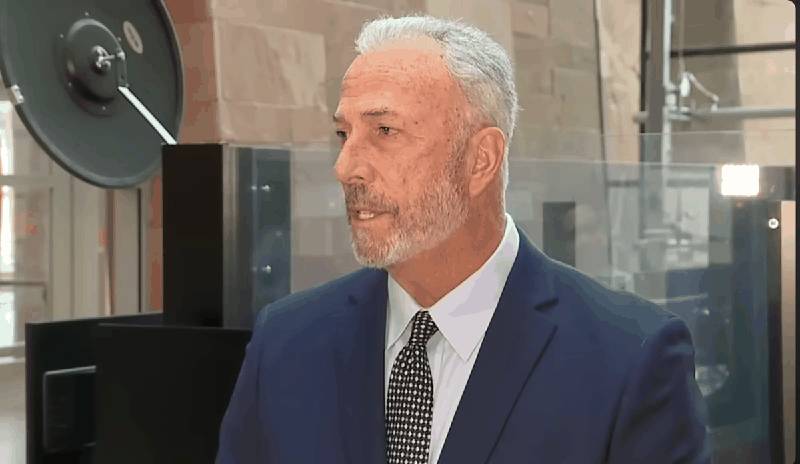
I hope the death penalty review committee reaches the same conclusion. I hope District Attorney Steve Wolfson exercises the discretion his office has and declines to seek capital punishment. I hope someone in that room recognizes that just because a statute permits something doesn't mean it's the right thing to do.
Seeking the death penalty in this case wouldn't be justice. It would be the system reaching for the most extreme tool in its arsenal because the facts are horrible and someone needs to be punished as severely as possible.
That's not how due process is supposed to work.
That's not justice.
That's vengeance with a legal seal on it.
We Watch. We Question.
The arraignment is scheduled for January 6th. The death penalty review committee is meeting. We'll know soon enough which direction this case is headed.
I'll be watching. You should be too.
Because if the system can seek to execute a 19-year-old for a traffic accident where intent is contested and medical defenses are viable, what's stopping them from reaching for that same tool in any case where the facts are bad enough?
The guardrails around capital punishment exist for a reason. They exist because the state killing its citizens is the most extreme power a government can exercise, and it should only happen in the most extreme circumstances with the most certain evidence.
This isn't that case.
And we should be paying attention to what it means if prosecutors act like it is.
Explore More Coverage
Want More?
Subscribe to Justice Is A Process on YouTube for live trial coverage, No Breaks editions, and breaking news as it happens.
🔴 Subscribe on YouTube111,000+ subscribers watching the system with us
Watch the system. Question everything.
— Justice